Research · 2026-05-01
What is GHK-Cu? Research & mechanisms
Research-use notice: This article is laboratory and educational information only. It is not medical or legal advice, and it does not include how-to-use instructions. BlueNex Labs materials are research-use only and are not intended for human or veterinary use. Research-use-only labeling is not a Health Canada authorization.
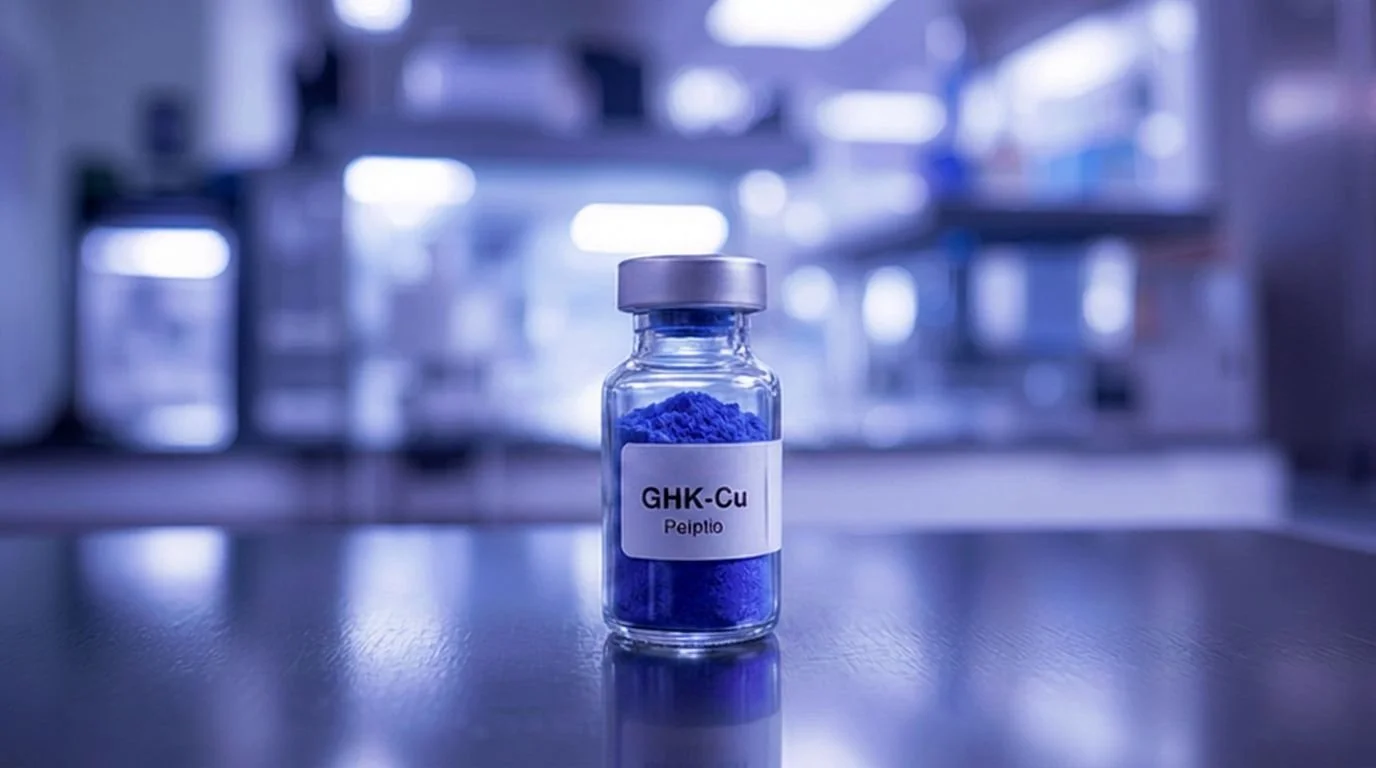
GHK-Cu is glycyl-L-histidyl-L-lysine coordinated to Cu²⁺. It was originally identified in human plasma. Laboratory papers discuss it in extracellular-matrix remodeling, fibroblast signaling, and gene-expression assays. That literature is preclinical and model-dependent. This page is a reading note, not a shop listing.
Why copper is part of the structure
Copper is a cofactor for enzymes such as lysyl oxidase and superoxide dismutase. Binding copper to GHK creates a distinct complex that researchers separate from uncomplexed GHK or from unrelated cosmetic peptide trademarks. Sequence and metal occupancy should be confirmed on the Certificate of Analysis, not assumed from the common name “copper peptide.”
What this note is not
It is not a cosmetic finished-good page, a clinic protocol, or advice about visible aging. Cosmetic-ingredient rules and drug rules in Canada turn on intended use and advertising. BlueNex Labs intended use for the matching SKU is laboratory work.
Related catalog items that contain GHK-Cu in a blend, such as GLOW 70mg and KLOW 80mg, are separate SKUs with their own lots and reports. Open those product pages when you need vial size and stock.
Documentation
The GHK-Cu 50mg catalog listing is the buy/COA page. Mass/purity and, where published, endotoxin links sit in the GHK-Cu section of the COA library.
For a broader class overview see copper and GHK-Cu in published physiology literature. For legal framing see Are research peptides legal in Canada?.
How to use this note with the catalog
The buy-intent URL for the 50mg fill is GHK-Cu 50mg. Blends that contain GHK-Cu are separate lots: do not reuse this COA on GLOW or KLOW.
Orders ship inside Canada only after Interac e-Transfer checkout. Sold-out SKUs remain listed and cannot be added to the cart. Match each vial to its own Certificate of Analysis when a lot is published. Research-use only. Not for human or veterinary use.
Research-use only. BlueNex Labs does not provide medical or veterinary advice. Confirm your institution’s policies before purchase.