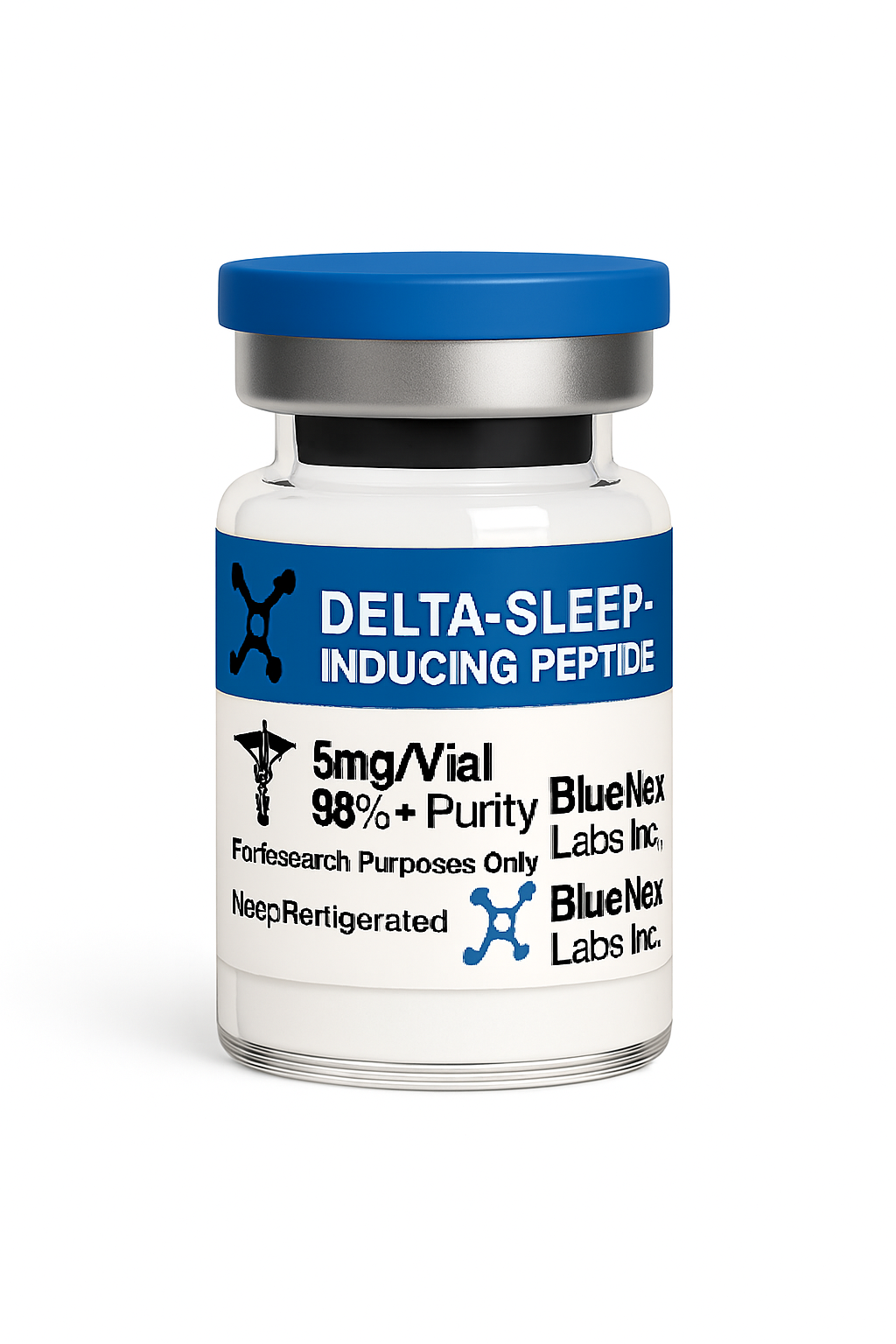
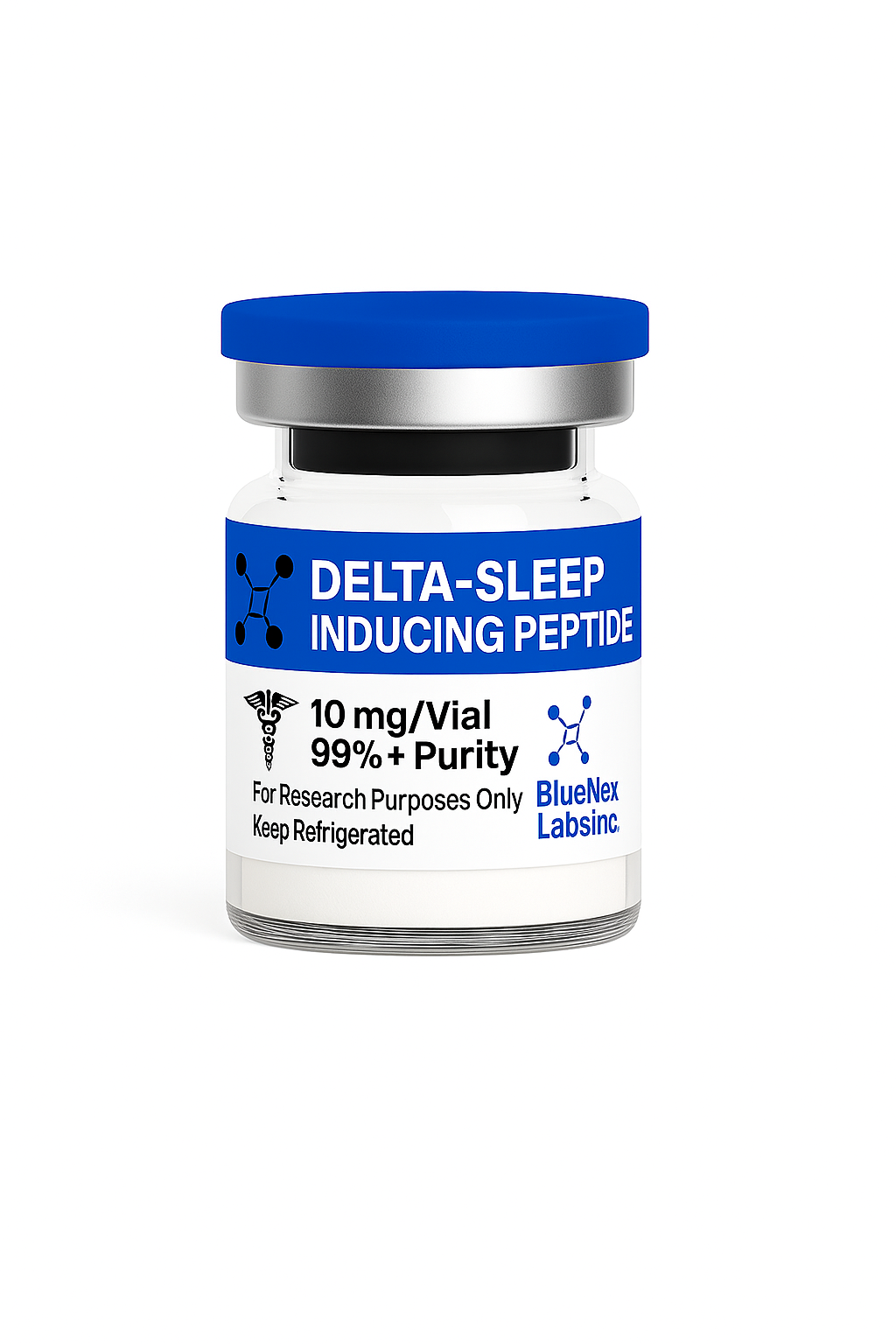
laboratory models for its involvement in neuropeptide signaling, sleep‑related regulatory pathways, and circadian rhythm modulation. Originally identified in neuroendocrine tissues, DSIP has become a key molecule of interest for understanding how peptides influence sleep architecture, stress adaptation, and central nervous system communication.
In research environments, DSIP is studied for its potential roles in:
Circadian rhythm regulation and sleep‑wake cycle balance
Neuropeptide‑mediated signaling within the CNS
Stress‑response pathways and adaptive neuroendocrine activity
Homeostatic regulation across neural and hormonal systems
Interactions with other regulatory peptides involved in rest, recovery, and autonomic function
Because of its unique structure and its association with sleep‑related biological processes, DSIP continues to attract interest in studies exploring sleep regulation, neuroendocrine communication, and peptide‑based signaling mechanisms. Its broad relevance to circadian and neurochemical pathways makes it a valuable model compound for advancing research in restorative physiology, neuromodulation, and central nervous system balance.
For research purposes only. Not for human or veterinary use.
laboratory models for its involvement in neuropeptide signaling, sleep‑related regulatory pathways, and circadian rhythm modulation. Originally identified in neuroendocrine tissues, DSIP has become a key molecule of interest for understanding how peptides influence sleep architecture, stress adaptation, and central nervous system communication.
In research environments, DSIP is studied for its potential roles in:
Circadian rhythm regulation and sleep‑wake cycle balance
Neuropeptide‑mediated signaling within the CNS
Stress‑response pathways and adaptive neuroendocrine activity
Homeostatic regulation across neural and hormonal systems
Interactions with other regulatory peptides involved in rest, recovery, and autonomic function
Because of its unique structure and its association with sleep‑related biological processes, DSIP continues to attract interest in studies exploring sleep regulation, neuroendocrine communication, and peptide‑based signaling mechanisms. Its broad relevance to circadian and neurochemical pathways makes it a valuable model compound for advancing research in restorative physiology, neuromodulation, and central nervous system balance.
For research purposes only. Not for human or veterinary use.