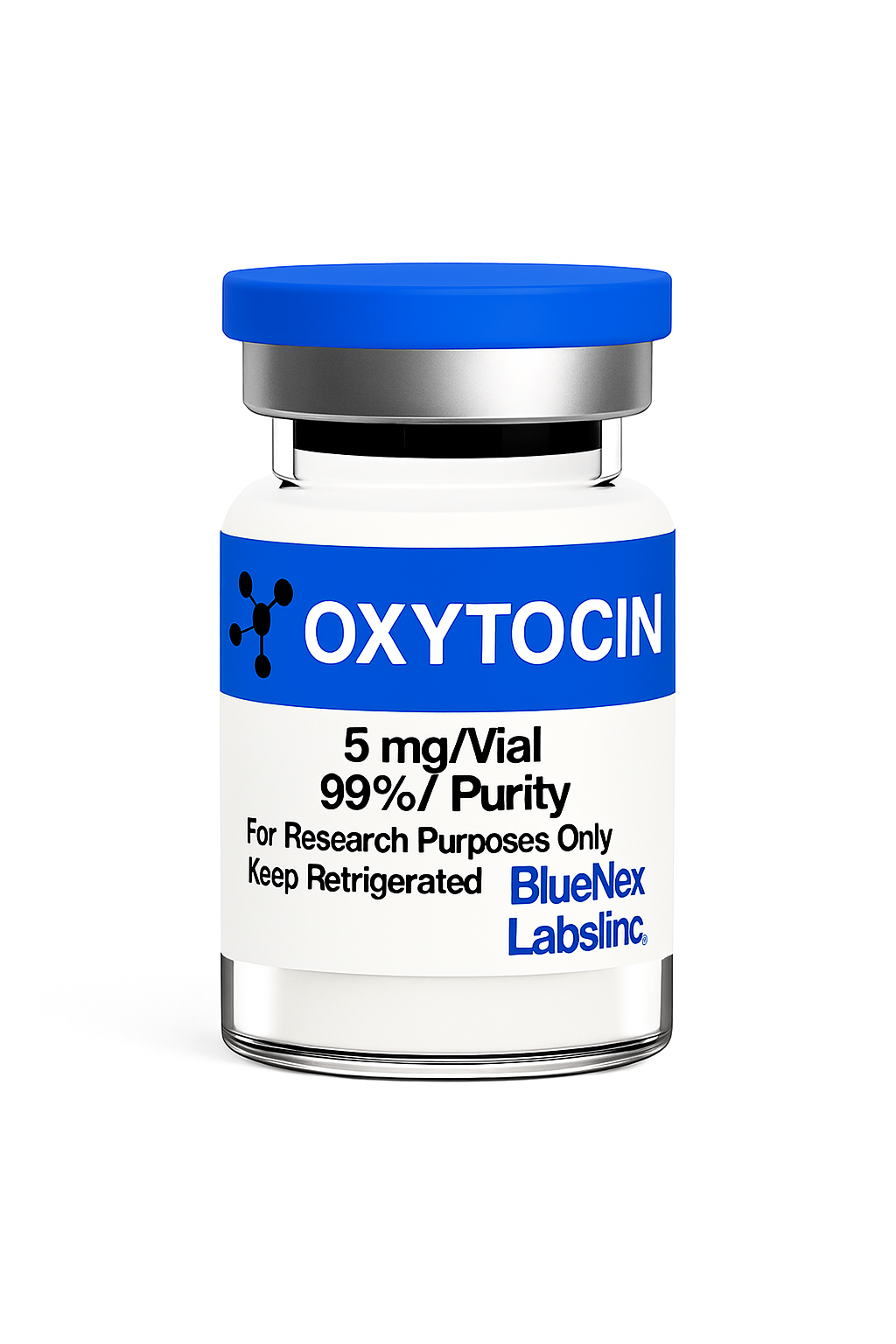
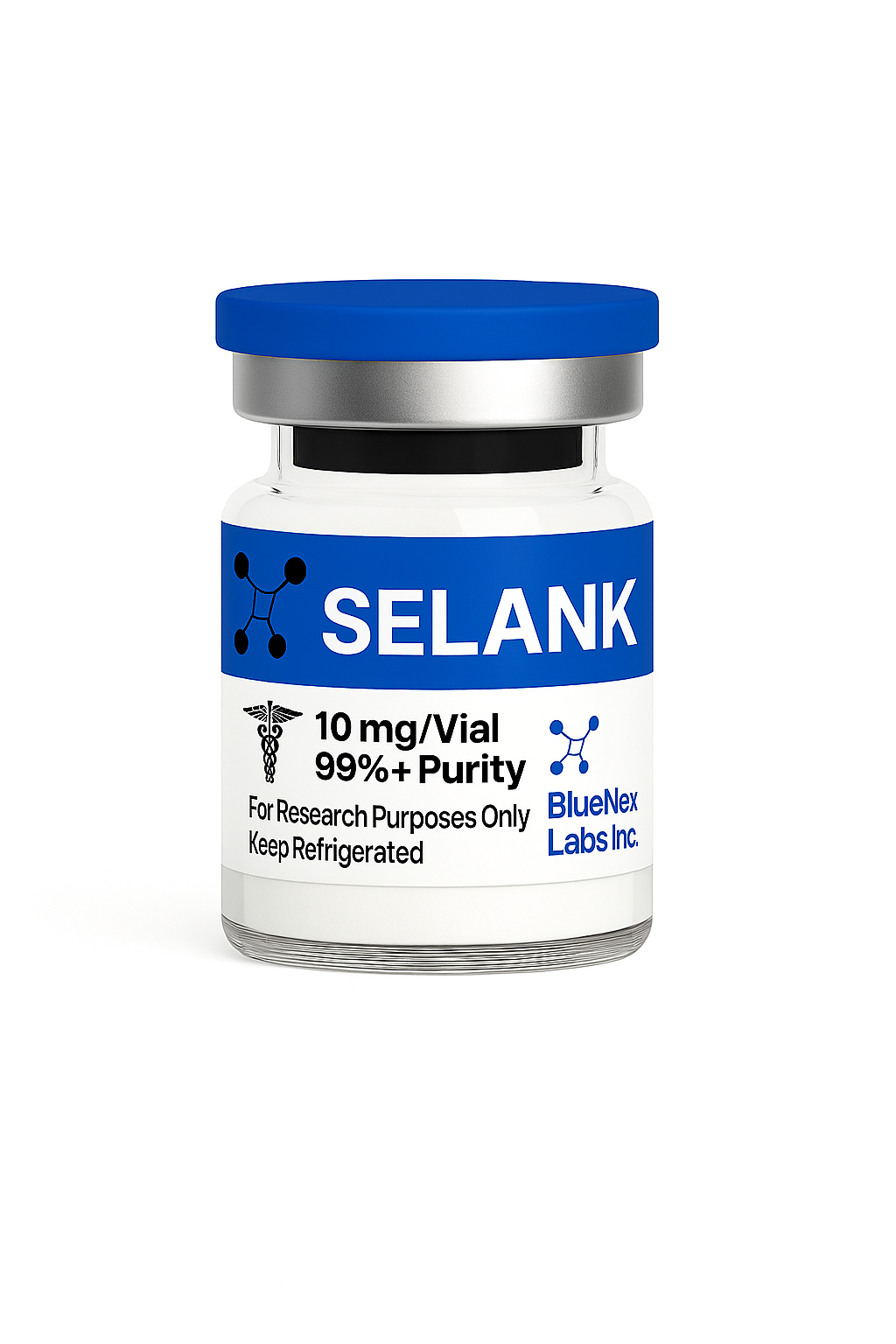
🧬 Oxytocin (5mg) — High‑Purity Neuropeptide for Social‑Behavior, Stress‑Response & Receptor‑Signaling Research
Oxytocin (5mg) is a high‑purity, research‑grade nonapeptide widely referenced in Canadian laboratory environments for studies involving neuromodulation, social‑behavior signaling, stress‑response pathways, and oxytocin‑receptor (OXTR) interaction dynamics.
As an endogenous neuropeptide involved in complex behavioral and physiological signaling networks, Oxytocin is frequently used in in‑vitro and preclinical research exploring cellular communication, receptor‑binding kinetics, and multi‑pathway neuroendocrine modeling.
Engineered for controlled laboratory use, Oxytocin offers predictable behavior, strong analytical visibility, and broad mechanistic relevance, making it a preferred peptide for Canadian researchers studying OXTR‑linked pathways, transcriptional activity, and peptide‑mediated cellular signaling.
🔍 What Is Oxytocin?
Oxytocin is a synthetic nonapeptide identical to the endogenous hormone, designed for research involving:
Oxytocin‑receptor (OXTR) signaling
Social‑behavior and neuromodulatory pathway modeling
Stress‑response and adaptation studies
Peptide–receptor binding and structural‑interaction assays
Neuroendocrine transcriptional‑cascade mapping
Peptide stability and degradation‑resistance profiling
Its compact structure and well‑characterized receptor interactions make Oxytocin a widely used model compound for neurochemical, behavioral, and peptide‑mechanism research across Canada.
📡 Mechanistic Overview (Audit‑Safe)
🔷 Neuromodulatory & Behavioral Signaling
Referenced in studies involving social‑behavior pathways
Supports mapping of OXTR‑mediated signaling cascades
Used in models examining peptide‑driven neuromodulation
🔶 Stress‑Response & Adaptation Pathways
Applied in research involving stress‑response markers
Supports investigations into cellular resilience and adaptive signaling
Used in multi‑pathway neuroendocrine modeling
🔵 Peptide–Receptor Interaction Dynamics
Examined in OXTR‑binding affinity studies
Supports structural‑interaction modeling and receptor‑activation mapping
Used in comparative studies vs. other neuropeptide analogs
🧱 Structural Overview
🧪 Molecular Composition
Type: Synthetic nonapeptide
Form: Lyophilized powder (5mg fill)
Identity: Verified via MS and HPLC/UPLC
Origin: Identical to endogenous Oxytocin sequence
🧬 Functional Domains
Receptor‑activation domain: OXTR‑linked signaling
Neuromodulation domain: Behavioral and social‑pathway models
Interaction domain: Peptide–protein binding and structural modeling
🎯 Pathway Targets
Oxytocin‑receptor (OXTR) signaling
Social‑behavior and neuromodulatory pathways
Stress‑response and adaptation markers
Transcriptional‑activation cascades
Peptide–receptor interaction networks
🔬 Research Focus Areas
Oxytocin is referenced in research involving:
Social‑behavior and neuromodulation modeling
Stress‑response and neuroendocrine pathway studies
Peptide‑receptor interaction assays
Transcriptional‑cascade and signaling‑pathway mapping
Comparative neuropeptide analysis
Multi‑pathway behavioral‑signaling investigations
Its clean mechanistic profile makes it suitable for controlled, pathway‑specific research environments across Canada.
🇨🇦 Optimized for Canadian Research Environments
BlueNexLabs supplies Oxytocin to laboratories across Vancouver, Toronto, Montreal, Calgary, Edmonton, Ottawa, and Canada‑wide, offering:
High‑purity, COA‑verified peptide materials
Consistent batch quality and traceability
Audit‑safe RUO labeling
Fast, Canada‑wide fulfillment
Research‑focused support for neurochemical and behavioral‑signaling studies
This ensures Canadian researchers have reliable access to premium neuropeptides for advanced mechanistic modeling.
Each batch includes:
MS identity confirmation
HPLC purity profile
Solvent system details
RUO‑only designation
All documentation is structured for audit‑safe compliance and laboratory reproducibility.
❄️ Storage & Handling
Store lyophilized peptide at –20°C, protected from light and humidity
Reconstituted solutions should be stored at 2–8°C
Avoid repeated freeze–thaw cycles
Use sterile technique during preparation
⚠️ Compliance Notice
Oxytocin is supplied for laboratory research only. Not for human or veterinary use. No therapeutic, behavioral, or performance‑related claims are made or implied.
🧬 Oxytocin (5mg) — High‑Purity Neuropeptide for Social‑Behavior, Stress‑Response & Receptor‑Signaling Research
Oxytocin (5mg) is a high‑purity, research‑grade nonapeptide widely referenced in Canadian laboratory environments for studies involving neuromodulation, social‑behavior signaling, stress‑response pathways, and oxytocin‑receptor (OXTR) interaction dynamics.
As an endogenous neuropeptide involved in complex behavioral and physiological signaling networks, Oxytocin is frequently used in in‑vitro and preclinical research exploring cellular communication, receptor‑binding kinetics, and multi‑pathway neuroendocrine modeling.
Engineered for controlled laboratory use, Oxytocin offers predictable behavior, strong analytical visibility, and broad mechanistic relevance, making it a preferred peptide for Canadian researchers studying OXTR‑linked pathways, transcriptional activity, and peptide‑mediated cellular signaling.
🔍 What Is Oxytocin?
Oxytocin is a synthetic nonapeptide identical to the endogenous hormone, designed for research involving:
Oxytocin‑receptor (OXTR) signaling
Social‑behavior and neuromodulatory pathway modeling
Stress‑response and adaptation studies
Peptide–receptor binding and structural‑interaction assays
Neuroendocrine transcriptional‑cascade mapping
Peptide stability and degradation‑resistance profiling
Its compact structure and well‑characterized receptor interactions make Oxytocin a widely used model compound for neurochemical, behavioral, and peptide‑mechanism research across Canada.
📡 Mechanistic Overview (Audit‑Safe)
🔷 Neuromodulatory & Behavioral Signaling
Referenced in studies involving social‑behavior pathways
Supports mapping of OXTR‑mediated signaling cascades
Used in models examining peptide‑driven neuromodulation
🔶 Stress‑Response & Adaptation Pathways
Applied in research involving stress‑response markers
Supports investigations into cellular resilience and adaptive signaling
Used in multi‑pathway neuroendocrine modeling
🔵 Peptide–Receptor Interaction Dynamics
Examined in OXTR‑binding affinity studies
Supports structural‑interaction modeling and receptor‑activation mapping
Used in comparative studies vs. other neuropeptide analogs
🧱 Structural Overview
🧪 Molecular Composition
Type: Synthetic nonapeptide
Form: Lyophilized powder (5mg fill)
Identity: Verified via MS and HPLC/UPLC
Origin: Identical to endogenous Oxytocin sequence
🧬 Functional Domains
Receptor‑activation domain: OXTR‑linked signaling
Neuromodulation domain: Behavioral and social‑pathway models
Interaction domain: Peptide–protein binding and structural modeling
🎯 Pathway Targets
Oxytocin‑receptor (OXTR) signaling
Social‑behavior and neuromodulatory pathways
Stress‑response and adaptation markers
Transcriptional‑activation cascades
Peptide–receptor interaction networks
🔬 Research Focus Areas
Oxytocin is referenced in research involving:
Social‑behavior and neuromodulation modeling
Stress‑response and neuroendocrine pathway studies
Peptide‑receptor interaction assays
Transcriptional‑cascade and signaling‑pathway mapping
Comparative neuropeptide analysis
Multi‑pathway behavioral‑signaling investigations
Its clean mechanistic profile makes it suitable for controlled, pathway‑specific research environments across Canada.
🇨🇦 Optimized for Canadian Research Environments
BlueNexLabs supplies Oxytocin to laboratories across Vancouver, Toronto, Montreal, Calgary, Edmonton, Ottawa, and Canada‑wide, offering:
High‑purity, COA‑verified peptide materials
Consistent batch quality and traceability
Audit‑safe RUO labeling
Fast, Canada‑wide fulfillment
Research‑focused support for neurochemical and behavioral‑signaling studies
This ensures Canadian researchers have reliable access to premium neuropeptides for advanced mechanistic modeling.
Each batch includes:
MS identity confirmation
HPLC purity profile
Solvent system details
RUO‑only designation
All documentation is structured for audit‑safe compliance and laboratory reproducibility.
❄️ Storage & Handling
Store lyophilized peptide at –20°C, protected from light and humidity
Reconstituted solutions should be stored at 2–8°C
Avoid repeated freeze–thaw cycles
Use sterile technique during preparation
⚠️ Compliance Notice
Oxytocin is supplied for laboratory research only. Not for human or veterinary use. No therapeutic, behavioral, or performance‑related claims are made or implied.