
COA‑Certified Research Peptides in Canada
FREE SHIPPING on orders of $299+ or a flat rate of $25
Why researchers choose BlueNexLabs?
We focus on consistency, transparency, trust, and excellent client service. You will always be able to get a hold of us, and getting a response to any questions is guaranteed! Each client is treated individually and we have open lines of communication for any questions, details and discussions. Every major product is supported by a certificates of analysis, sourced with care, and shipped quickly across Canada (1 - 3 business days) for reliable research use.
What we offer?
We offer a large array of various peptides designed to be used for research purposes only, not for human consumption or veterinary use.
About our products:
COA‑verified peptides - see our Certificates of Analysis Page
Batch‑specific documentation
Fast Domestic Canadian shipping - typically 1 - 3 business days. See shipping terms under Frequently Asked Questions
No customs or border inspections, no duties and no cross‑border delays
Products are sourced and tested from highly vetted and audited manufacturers - see how we ensure high quality peptides from our manufacturers under Frequently Asked Questions.
To order click below and fill out the form:
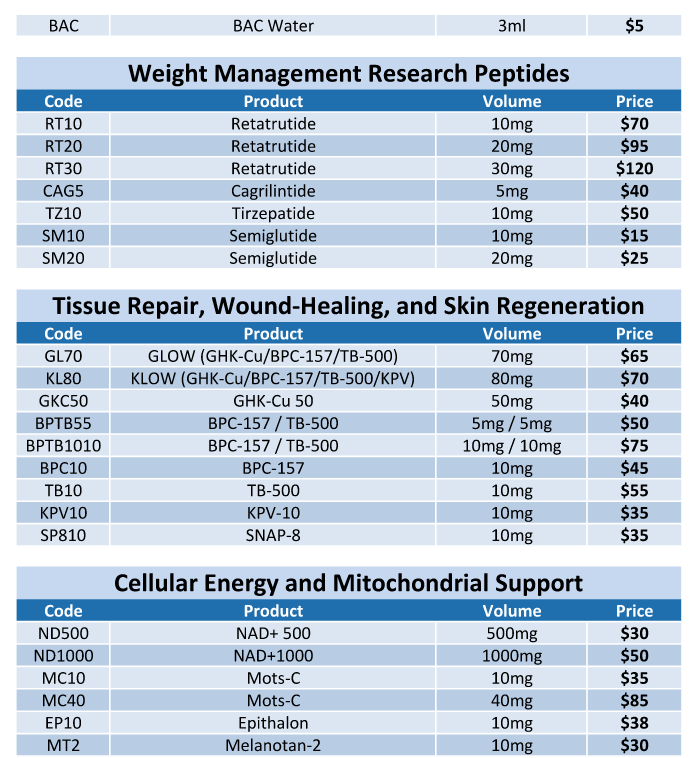
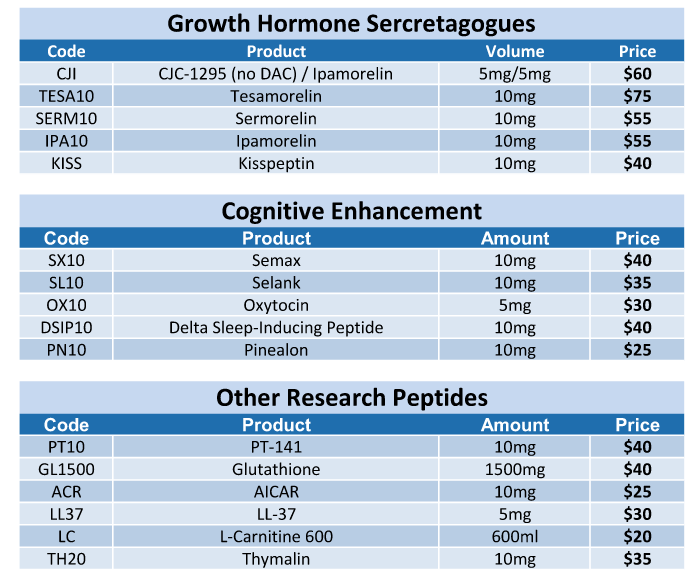
Once we receive your order form we will e-mail you an invoice with your Order Number, Products and Total Due and Payment Instructions (please wait for the email and be patient there is a short delay in response).
To keep costs low and affordable, we take E-Transfer Interact as payment and provide you with a shipping / tracking number within 24 hours of payment.
Featured Products
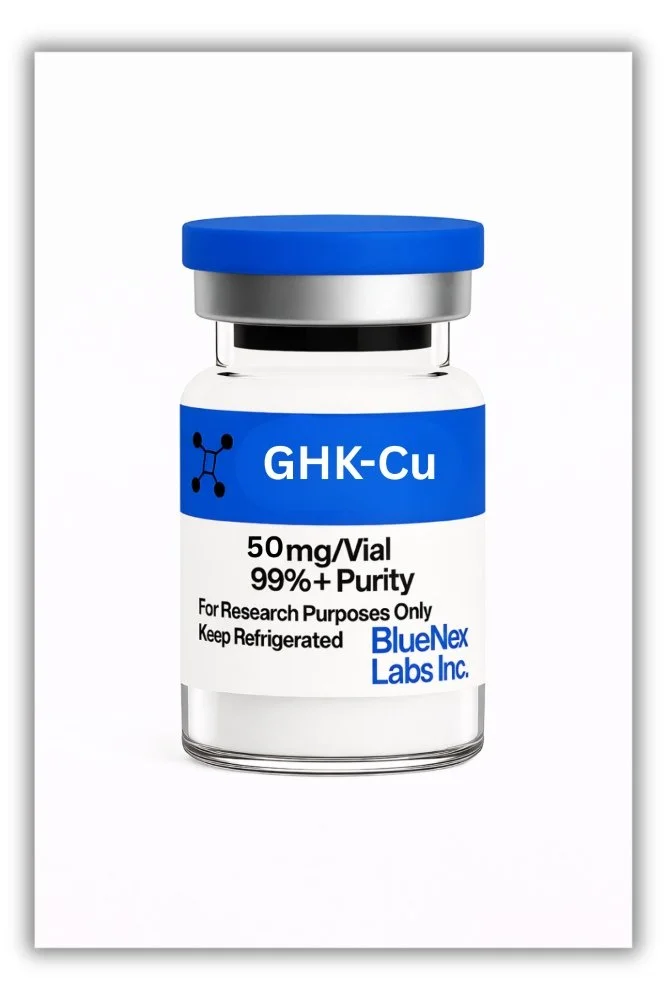
🧬 GHK‑Cu Peptide — 50 mg
High‑Purity Copper‑Binding Tripeptide for Regenerative Signaling, Gene Expression & Cellular Repair Research (Canada)
GHK‑Cu (glycyl‑L‑histidyl‑L‑lysine copper complex) is a high‑purity, research‑grade copper‑binding tripeptide widely referenced in laboratory research involving gene‑expression regulation, extracellular‑matrix (ECM) remodeling, cellular‑repair signaling, and copper‑dependent biochemical pathways.
Supplied by BlueNexLabs, GHK‑Cu is provided as a lyophilized peptide (50 mg) with COA‑verified purity, analytical consistency, and audit‑safe Research‑Use‑Only (RUO) labeling, supporting reproducible experimental workflows across Canadian research environments.
🔬 Overview of GHK‑Cu in Research Settings
GHK‑Cu is a naturally occurring copper‑binding peptide complex originally identified in human plasma and frequently used as a model compound in studies examining how copper availability influences cellular signaling and transcriptional activity. In controlled laboratory settings, GHK‑Cu is commonly referenced in research involving:
Gene‑expression and transcriptional‑cascade modulation
Extracellular‑matrix organization and collagen‑associated signaling
Cellular repair and structural remodeling pathways
Oxidative‑stress response and cellular‑resilience mechanisms
Peptide–metal binding and copper‑transport dynamics
Its strong affinity for copper ions and broad mechanistic scope make GHK‑Cu a valuable tool for regenerative‑signaling and peptide‑metal interaction research.
🧪 What Is GHK‑Cu?
GHK‑Cu is a glycyl‑L‑histidyl‑L‑lysine tripeptide complexed with Cu²⁺ ions and used in laboratory research involving:
Copper‑dependent enzymatic and regulatory pathways
Gene‑expression and transcriptional‑network studies
ECM remodeling and collagen‑associated signaling models
Oxidative‑stress and inflammatory‑marker assays
Peptide–metal binding kinetics and interaction analysis
Cellular repair and tissue‑modeling environments
Its well‑characterized binding behavior supports predictable performance in controlled in‑vitro and preclinical systems.
📡 Mechanistic Research Overview (Audit‑Safe)
🧬 Gene Expression & Transcriptional Modulation
Referenced in studies examining ECM‑related gene networks
Used in mapping transcriptional‑cascade and regulatory activity
Supports modeling of copper‑dependent signaling pathways
🧱 Extracellular Matrix & Structural Remodeling
Applied in research involving collagen‑associated markers
Supports fibroblast‑activity and ECM‑organization studies
Used in multi‑pathway tissue‑remodeling research models
⚖️ Oxidative Stress & Cellular Resilience
Examined in oxidative‑stress and adaptation assays
Supports investigations into cellular‑repair signaling
Used in comparative studies versus non‑metal‑binding peptides
🧱 Molecular & Chemical Characteristics
Type: Copper‑binding tripeptide (GHK‑Cu)
Form: Lyophilized powder
Fill Size: 50 mg
Origin: Naturally occurring peptide sequence
Identity Verification: Mass Spectrometry (MS)
Purity Analysis: HPLC / UPLC
Structural & Biochemical Notes
Demonstrates strong affinity for Cu²⁺ ions
Predictable behavior in peptide–metal interaction studies
Sensitive to oxidation and hydrolysis following reconstitution if improperly handled
🔬 Research Focus Areas
GHK‑Cu is commonly referenced in laboratory research involving:
Gene‑expression and transcriptional‑cascade modeling
ECM remodeling and fibroblast‑activity studies
Oxidative‑stress and inflammatory‑marker assays
Copper‑binding and metal‑transport investigations
Cellular‑repair and structural‑remodeling environments
Multi‑pathway regenerative‑signaling research
Its broad mechanistic profile supports controlled, pathway‑specific research workflows in regulated laboratory environments.
❄️ Storage & Handling Guidelines
Store lyophilized peptide at –20 °C, protected from light and moisture
Reconstituted solutions: 2–8 °C, short‑term research use only
Avoid repeated freeze–thaw cycles; aliquot where necessary
Avoid prolonged exposure to room temperature after reconstitution
Use sterile preparation techniques and low‑binding labware
📄 Certificate of Analysis & Documentation
Each batch of GHK‑Cu supplied by BlueNexLabs includes audit‑ready documentation, ensuring traceability and reproducibility:
Mass Spectrometry identity confirmation
HPLC / UPLC purity profile
Solvent system disclosure
Lot and batch traceability
Research‑Use‑Only (RUO) designation
🔗 View Certificate of Analysis (COA)
🔗 Learn About Our Testing Standards
🔗 Explore the BlueNexLabs Research Peptide Catalog
🇨🇦 Supplied for Canadian Research Laboratories
BlueNexLabs supplies GHK‑Cu research peptide to laboratories across Vancouver, Toronto, Montreal, Calgary, Edmonton, Ottawa, and throughout Canada.
Why Researchers Choose BlueNexLabs
🇨🇦 Canada‑wide domestic shipping
📄 COA‑verified, traceable batches
🧪 Audit‑safe RUO labeling
⚡ Fast fulfillment & responsive support
🔬 Research‑focused peptide & cofactor catalog
⚠️ Compliance Notice
This product is supplied strictly for laboratory research use only (RUO).
Not for human or veterinary use.
No medical, therapeutic, cosmetic, diagnostic, or performance‑related claims are made or implied.
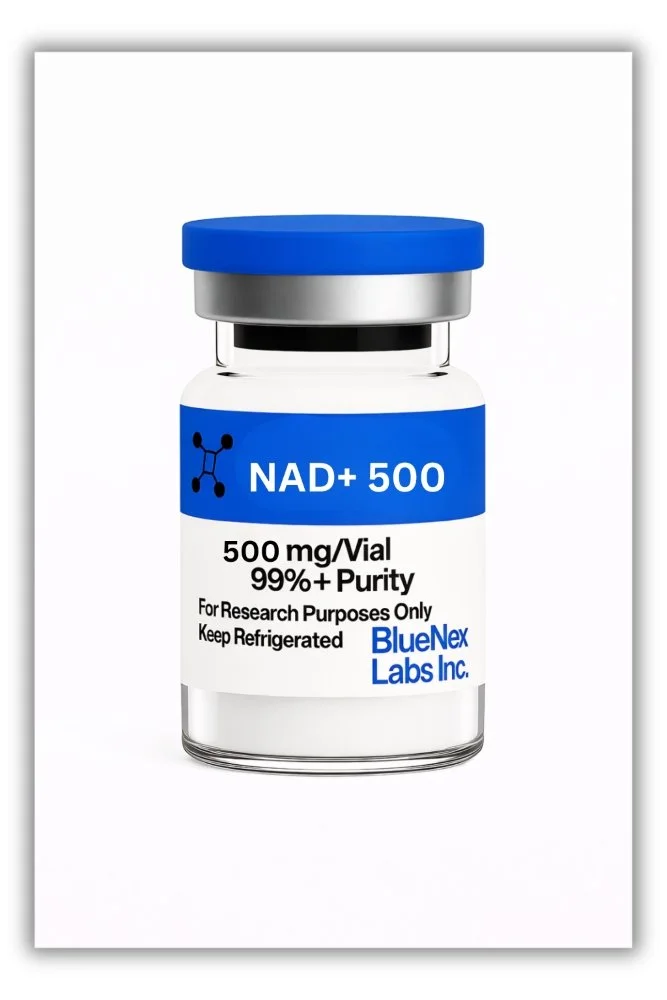
🧬 NAD⁺ (Nicotinamide Adenine Dinucleotide) — 500 mg / 1000mg
High‑Purity Research‑Grade Cofactor for Cellular Energy, Redox & Metabolic Signaling Studies (Canada)
NAD⁺ (Nicotinamide Adenine Dinucleotide) is a high‑purity, research‑grade pyridine nucleotide coenzyme widely used in laboratory research involving cellular energy metabolism, redox‑state regulation, mitochondrial function, and NAD‑dependent enzymatic pathways.
Supplied by BlueNexLabs, NAD⁺ 1000 mg is manufactured and tested to support advanced biochemical and metabolic research in Canadian laboratory environments, offering COA‑verified purity, analytical consistency, and audit‑safe RUO labeling.
🔬 Overview of NAD⁺ in Research Applications
NAD⁺ is a central cofactor in oxidation–reduction reactions, making it a critical model compound in studies examining:
Cellular‑energy and mitochondrial signaling pathways
Redox‑state cycling and oxidative‑stress mechanisms
NAD‑dependent enzymes involved in transcriptional regulation
DNA‑repair‑associated signaling cascades
Metabolic‑stress adaptation and cellular‑resilience models
Because of its broad mechanistic relevance, NAD⁺ is frequently used in in‑vitro and preclinical research focused on energy homeostasis, redox biology, and metabolic signaling networks.
🧪 What Is NAD⁺?
NAD⁺ (nicotinamide adenine dinucleotide) is a naturally occurring pyridine nucleotide coenzyme referenced in research involving:
ATP production and mitochondrial function
Redox‑state cycling (NAD⁺ / NADH systems)
NAD‑dependent enzymatic pathways, including sirtuin‑ and PARP‑related models
DNA‑repair‑associated transcriptional signaling
Metabolic‑marker and cofactor‑interaction studies
Its essential role in cellular energetics and redox balance makes NAD⁺ a widely utilized compound in biochemical, metabolic, and molecular‑biology research across Canada.
📡 Mechanistic Research Overview (Audit‑Safe)
🔋 Cellular Energy & Mitochondrial Pathways
Referenced in ATP‑linked metabolic pathway studies
Used in models examining mitochondrial redox dynamics
Applied in investigations of metabolic‑stress signaling
⚖️ Redox‑State & Oxidative‑Stress Modeling
Supports research involving NAD⁺ / NADH cycling
Used in oxidative‑stress and redox‑marker assays
Suitable for multi‑pathway redox‑biology analysis
🧬 NAD‑Dependent Enzymatic Studies
Examined in sirtuin‑linked transcriptional models
Referenced in PARP‑associated DNA‑repair research
Used in comparative cofactor‑interaction assays
🧱 Molecular & Chemical Characteristics
Type: Pyridine nucleotide coenzyme
Form: Lyophilized powder
Fill Size: 1000 mg (also available in 500 mg formats)
Origin: Synthetic, high‑purity NAD⁺
Identity Verification: Mass Spectrometry (MS)
Purity Analysis: HPLC / UPLC
Structural & Biochemical Notes
Central role in energy‑metabolism and redox systems
Participates in multiple NAD‑dependent enzymatic pathways
Solubility influenced by pH, buffer composition, and ionic strength
Sensitive to hydrolysis and oxidation after reconstitution
🔬 Research Focus Areas
NAD⁺ 1000 mg is commonly referenced in laboratory research involving:
Cellular‑energy and mitochondrial‑function models
Redox‑state and oxidative‑stress assays
Sirtuin‑associated transcriptional studies
PARP‑linked DNA‑repair signaling
Metabolic‑marker, cofactor, and pathway‑interaction analysis
Its versatility supports controlled, pathway‑specific research workflows in regulated laboratory settings.
❄️ Storage & Handling Guidelines
Store lyophilized NAD⁺ at –20 °C, protected from light and moisture
Reconstituted solutions: 2–8 °C, short‑term use only
Avoid extended exposure to room temperature
Use sterile preparation techniques
Avoid repeated freeze–thaw cycles; aliquot if required
📄 Certificate of Analysis & Documentation
Each batch of NAD⁺ supplied by BlueNexLabs includes audit‑ready documentation, ensuring transparency and reproducibility:
Mass Spectrometry identity confirmation
HPLC purity profile
Solvent system disclosure
Batch & lot traceability
Research‑Use‑Only (RUO) designation
🔗 View Certificate of Analysis (COA)
🔗 Learn About Our Testing Standards
🔗 Explore the BlueNexLabs Research Compound Catalog
🇨🇦 Supplied for Canadian Research Laboratories
BlueNexLabs supplies NAD⁺ research‑grade material to laboratories across Vancouver, Toronto, Montreal, Calgary, Edmonton, Ottawa, and throughout Canada.
Why Researchers Choose BlueNexLabs
🇨🇦 Canada‑wide domestic shipping
📄 COA‑verified, traceable batches
🧪 Audit‑safe RUO labeling
⚡ Fast fulfillment & responsive support
🔬 Research‑focused biochemical catalog
⚠️ Compliance Notice
This product is supplied strictly for laboratory research use only (RUO).
Not for human or veterinary use.
No medical, therapeutic, metabolic, diagnostic, or performance‑related claims are made or implied.
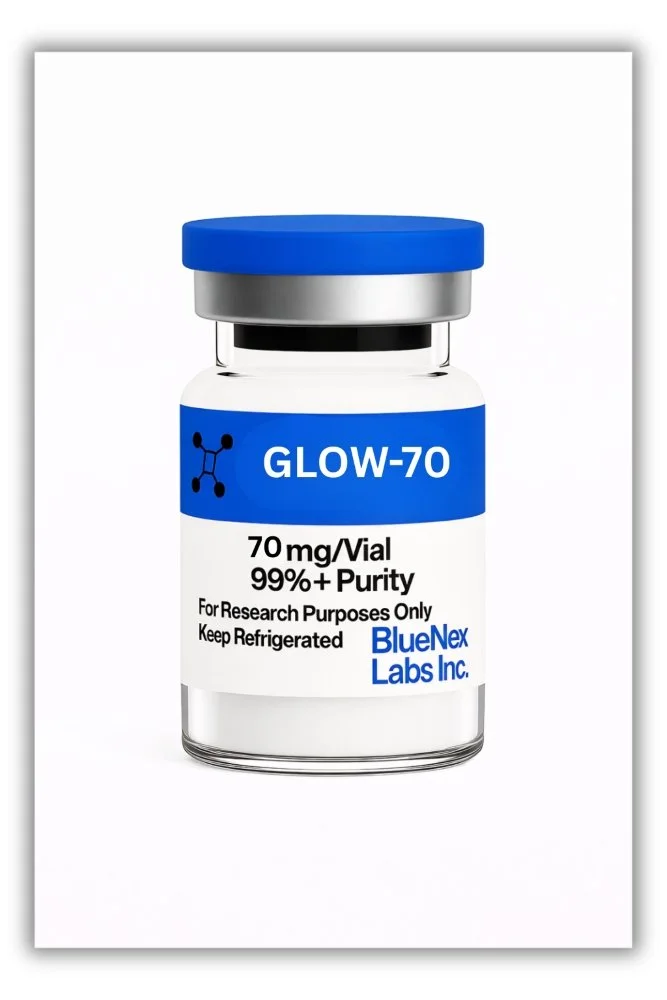
✨ GLOW‑70 Research Peptide — 70 mg
High‑Purity Multi‑Peptide Complex for Cellular Signaling & Stress‑Response Research (Canada)
GLOW‑70 is a high‑purity, research‑grade peptide complex supplied as a 70 mg lyophilized formulation and designed for advanced cellular‑signaling, stress‑response, and peptide–protein interaction research. This formulation combines GHK‑Cu, TB‑500, and BPC‑157—three peptides commonly referenced in controlled laboratory research environments for multi‑pathway cellular studies.
Supplied by BlueNexLabs, GLOW‑70 is manufactured and tested to support in‑vitro and preclinical research workflows, offering COA‑verified purity, consistent batch quality, and audit‑safe Research‑Use‑Only (RUO) labeling for Canadian laboratories.
🔬 Overview of GLOW‑70 in Research Settings
GLOW‑70 is formulated to support multi‑mechanism cellular research, where investigators seek to explore how distinct peptide systems interact within complex signaling environments. In laboratory settings, it is frequently referenced in studies examining:
Cellular‑signaling pathway integration
Stress‑response and adaptive signaling models
Peptide–protein and peptide–receptor interactions
Transcriptional‑cascade and metabolic‑marker analysis
Comparative multi‑peptide pathway studies
Its combined composition makes GLOW‑70 a useful model system for researchers conducting broad, pathway‑focused cellular investigations.
🧪 What Is GLOW‑70?
GLOW‑70 is a lyophilized research peptide complex (70 mg) intended for laboratory studies involving:
Cellular signaling and pathway mapping
Stress‑response and adaptation modeling
Protein–peptide interaction analysis
Transcriptional‑activity and metabolic‑marker investigations
In‑vitro and preclinical research requiring high‑purity peptide materials
Its broad mechanistic scope allows for multi‑pathway experimental design in regulated research environments.
📡 Mechanistic Research Overview (Audit‑Safe)
🔗 Cellular Signaling & Pathway Modulation
Referenced in studies examining receptor‑level and downstream signaling
Supports mapping of transcriptional‑cascade activity
Used in multi‑pathway cellular‑signaling research models
⚡ Stress‑Response & Cellular Adaptation
Applied in research involving oxidative‑ and metabolic‑stress markers
Supports investigations into adaptive cellular signaling
Used in controlled stress‑response modeling systems
🧬 Peptide–Protein & Interaction Dynamics
Referenced in peptide‑binding and interaction studies
Supports structural‑modeling and pathway‑integration research
Used in proliferation‑ and metabolism‑related laboratory assays
🧱 Molecular & Chemical Characteristics
Type: Multi‑component research peptide complex
Form: Lyophilized powder
Fill Size: 70 mg
Purity Verification: HPLC / UPLC
Identity Confirmation: Mass Spectrometry (MS)
Structural & Biochemical Notes
Designed for predictable behavior in controlled research systems
Stability influenced by buffer composition and handling technique
Sensitive to degradation following reconstitution if improperly stored
🔬 Research Focus Areas
GLOW‑70 is commonly referenced in laboratory research involving:
Cellular‑signaling and transcriptional‑cascade studies
Stress‑response and oxidative‑marker analysis
Peptide–protein and interaction‑network modeling
Proliferation and metabolic‑marker research
Multi‑pathway peptide comparison and integration studies
Its formulation supports controlled, pathway‑specific experiments requiring high‑purity, reproducible peptide materials.
❄️ Storage & Handling Guidelines
Store lyophilized peptide at –20 °C, protected from light and moisture
Reconstituted solutions: 2–8 °C, short‑term research use only
Avoid repeated freeze–thaw cycles; aliquot where appropriate
Use sterile technique during preparation
Employ low‑binding labware when possible
📄 Certificate of Analysis & Documentation
Each batch of GLOW‑70 supplied by BlueNexLabs includes audit‑ready documentation, supporting traceability and reproducibility:
Mass Spectrometry identity confirmation
HPLC / UPLC purity profile
Solvent system disclosure
Batch and lot traceability
Research‑Use‑Only (RUO) designation
🔗 View Certificate of Analysis (COA)
🔗 Learn About Our Testing Standards
🔗 Explore the BlueNexLabs Research Peptide Catalog
🇨🇦 Supplied for Canadian Research Laboratories
BlueNexLabs supplies GLOW‑70 research peptide to laboratories across Vancouver, Toronto, Montreal, Calgary, Edmonton, Ottawa, and throughout Canada.
Why Researchers Choose BlueNexLabs
🇨🇦 Canada‑wide domestic shipping
📄 COA‑verified, traceable batches
🧪 Audit‑safe RUO labeling
⚡ Fast fulfillment & responsive support
🔬 Research‑focused peptide catalog
⚠️ Compliance Notice
This product is supplied strictly for laboratory research use only (RUO).
Not for human or veterinary use.
No medical, therapeutic, cosmetic, diagnostic, or performance‑related claims are made or implied.
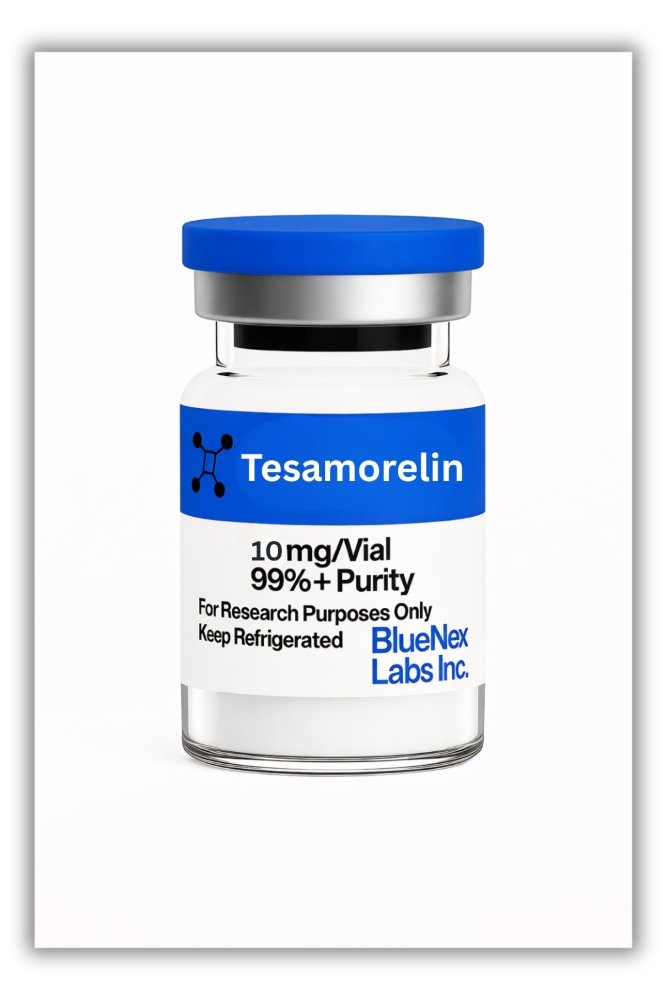
🧬 Tesamorelin Peptide — 10 mg
High‑Purity GHRH Analog for Endocrine Signaling, Metabolic Pathway & Cellular Regulation Research (Canada)
Tesamorelin is a high‑purity, research‑grade synthetic Growth Hormone–Releasing Hormone (GHRH) analog widely referenced in laboratory research involving pituitary‑axis signaling, GH/IGF‑1‑linked transcriptional pathways, metabolic‑regulation models, and peptide–receptor interaction dynamics.
Supplied by BlueNexLabs, Tesamorelin is provided as a lyophilized peptide (10 mg) with COA‑verified purity, analytical consistency, and audit‑safe Research‑Use‑Only (RUO) labeling, supporting reproducible experimental workflows in Canadian research environments.
🔬 Overview of Tesamorelin in Research Settings
Tesamorelin is a stabilized 44‑amino‑acid GHRH analog designed to support controlled investigation of endocrine‑axis communication and downstream metabolic signaling. In laboratory settings, it is frequently referenced in studies examining:
Pituitary‑axis and GHRH receptor (GHRH‑R) signaling
GH/IGF‑1‑associated transcriptional cascades
Metabolic‑regulation and lipid‑signaling pathways
Cellular growth and protein‑synthesis models
Peptide stability and receptor‑binding kinetics
Its receptor specificity and predictable in‑vitro behavior make Tesamorelin a valuable model compound for endocrine and metabolic research.
🧪 What Is Tesamorelin?
Tesamorelin is a synthetic GHRH analog used in laboratory research involving:
Pituitary‑axis signaling and GH‑pathway activation models
GHRH‑receptor (GHRH‑R) binding and kinetic analysis
GH/IGF‑1‑linked transcriptional signaling studies
Lipid‑metabolism and adipocyte‑signaling research
Cellular‑growth and protein‑synthesis pathway modeling
Peptide stability and degradation‑resistance profiling
Its extended stability and receptor‑specific activity support controlled, pathway‑specific experimental design.
📡 Mechanistic Research Overview (Audit‑Safe)
🧬 Endocrine Axis & GHRH‑Receptor Signaling
Referenced in studies examining GHRH‑R activation
Used in models mapping GH/IGF‑1‑associated transcriptional cascades
Supports research into pituitary‑linked cellular communication
⚖️ Metabolic Regulation & Lipid Pathway Modeling
Applied in research involving lipid‑signaling and metabolic markers
Supports investigation of adipocyte‑associated signaling pathways
Used in multi‑pathway metabolic‑regulation studies
🔋 Cellular Growth & Protein Synthesis Dynamics
Examined in GH‑linked growth‑pathway models
Supports peptide‑mediated transcriptional activation research
Used in comparative studies versus other GHRH analogs
🧱 Molecular & Chemical Characteristics
Type: Synthetic 44‑amino‑acid GHRH analog
Form: Lyophilized powder
Fill Size: 10 mg
Origin: Modified GHRH sequence for enhanced stability
Identity Verification: Mass Spectrometry (MS)
Purity Analysis: HPLC / UPLC
Structural & Biochemical Notes
Designed for predictable receptor‑binding behavior in vitro
Demonstrates strong stability in lyophilized form
Sensitive to hydrolysis and degradation following reconstitution if improperly handled
🔬 Research Focus Areas
Tesamorelin is commonly referenced in laboratory research involving:
Endocrine‑axis and pituitary‑signaling modeling
GH/IGF‑1‑linked transcriptional pathway studies
Metabolic‑regulation and lipid‑signaling assays
Peptide–receptor binding and activation analysis
Cellular‑growth and protein‑synthesis research
Multi‑pathway endocrine and metabolic investigations
Its clean mechanistic profile supports controlled, reproducible research workflows in regulated laboratory environments.
❄️ Storage & Handling Guidelines
Store lyophilized peptide at –20 °C, protected from light and moisture
Reconstituted solutions: 2–8 °C, short‑term research use only
Avoid repeated freeze–thaw cycles; aliquot where necessary
Avoid prolonged exposure to room temperature after reconstitution
Use sterile preparation techniques and low‑binding labware
📄 Certificate of Analysis & Documentation
Each batch of Tesamorelin supplied by BlueNexLabs includes audit‑ready documentation, ensuring traceability and reproducibility:
Mass Spectrometry identity confirmation
HPLC / UPLC purity profile
Solvent system disclosure
Lot and batch traceability
Research‑Use‑Only (RUO) designation
🔗 View Certificate of Analysis (COA)
🔗 Learn About Our Testing Standards
🔗 Explore the BlueNexLabs Research Peptide Catalog
🇨🇦 Supplied for Canadian Research Laboratories
BlueNexLabs supplies Tesamorelin research peptide to laboratories across Vancouver, Toronto, Montreal, Calgary, Edmonton, Ottawa, and throughout Canada.
Why Researchers Choose BlueNexLabs
🇨🇦 Canada‑wide domestic shipping
📄 COA‑verified, traceable batches
🧪 Audit‑safe RUO labeling
⚡ Fast fulfillment & responsive support
🔬 Research‑focused endocrine & metabolic peptide catalog
⚠️ Compliance Notice
This product is supplied strictly for laboratory research use only (RUO).
Not for human or veterinary use.
No medical, therapeutic, metabolic, diagnostic, or performance‑related claims are made or implied.
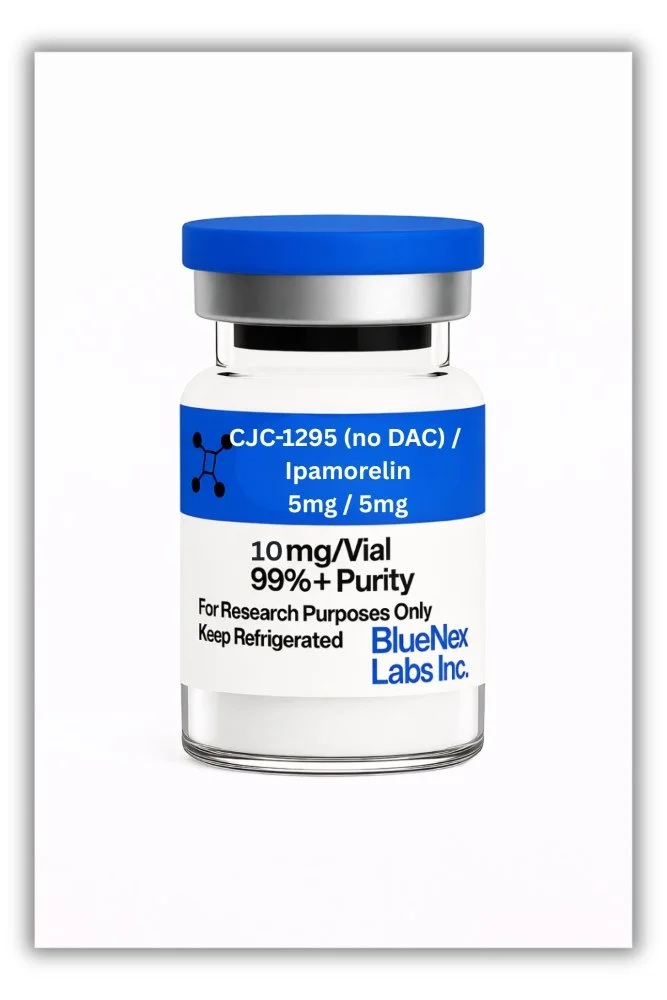
🧬 CJC‑1295 (No DAC) + Ipamorelin Peptide Blend
Dual‑Pathway GHRH & GHSR‑1a Research Peptides for Endocrine Signaling & Receptor‑Pathway Studies (Canada)
CJC‑1295 (No DAC) + Ipamorelin is a high‑purity, research‑grade dual‑peptide formulation widely referenced in laboratory research involving endocrine signaling, receptor co‑activation, intracellular messenger integration, and peptide‑receptor kinetics.
Supplied by BlueNexLabs, this formulation combines CJC‑1295 (No DAC)—a short‑acting GHRH analog—with Ipamorelin, a selective GHSR‑1a agonist. Together, they support controlled investigation of parallel receptor systems under Research‑Use‑Only (RUO) conditions in Canadian research environments.
🔬 Overview of the CJC‑1295 (No DAC) + Ipamorelin Research Model
This dual‑peptide system is commonly used as a model platform for studying how GHRH receptor (GHRH‑R) signaling and growth hormone secretagogue receptor (GHSR‑1a) signaling behave independently and in combination.
Unlike DAC‑modified peptides, CJC‑1295 (No DAC) lacks a drug‑affinity complex, resulting in short‑window receptor engagement. This property makes it particularly useful for high‑resolution kinetic studies and time‑course experiments focused on pulsatile receptor activation patterns.
When paired with Ipamorelin, researchers can explore dual‑pathway signaling architecture without long‑acting peptide confounders.
🧪 What Is CJC‑1295 (No DAC) + Ipamorelin?
This formulation contains two distinct research peptides:
CJC‑1295 (No DAC)
Synthetic GHRH analog without DAC modification
Used in laboratory models of GHRH‑R binding and cAMP‑linked signaling
Short in‑vitro half‑life supports temporal resolution studies
Ipamorelin
Selective GHSR‑1a pentapeptide agonist
Used in studies of Ca²⁺ mobilization and receptor‑bias behavior
Demonstrates predictable, receptor‑specific signaling in vitro
Together, this combination enables dual‑axis endocrine signaling research under controlled laboratory conditions.
📡 Mechanistic Research Overview (Audit‑Safe)
🧬 Dual‑Receptor Pathway Activation
Used to study simultaneous GHRH‑R and GHSR‑1a engagement
Supports analysis of receptor crosstalk and pathway amplification
Applied in comparative single‑ vs. dual‑receptor studies
⚙️ Intracellular Messenger Integration
Referenced in research examining cAMP signaling (GHRH‑R)
Supports studies of Ca²⁺ mobilization (GHSR‑1a)
Enables mapping of convergent vs. divergent transcriptional responses
🔁 Receptor Bias & Kinetic Behavior
Applied in assays measuring β‑arrestin recruitment and receptor internalization
Used for receptor recycling and ligand‑dependent trafficking studies
Supports short‑window kinetic modeling due to No‑DAC design
🧱 Molecular & Chemical Characteristics
Type: Dual‑peptide research formulation
Form: Lyophilized powder
Fill Size:
5 mg CJC‑1295 (No DAC)
5 mg Ipamorelin
Identity Verification:
Each peptide independently verified via Mass Spectrometry (MS)
Purity confirmed by HPLC / UPLC
Structural & Biochemical Notes
CJC‑1295 (No DAC):
Short‑acting GHRH analog without albumin‑binding modification
High solubility in polar buffers
Stability influenced by pH, ionic strength, and temperature
Ipamorelin:
Selective GHSR‑1a agonist with low off‑target activity in vitro
Predictable solubility and low nonspecific binding
Stability improves in mildly acidic buffer systems
Combined Behavior:
Supports dual‑axis signaling analysis (cAMP, Ca²⁺, MAPK, CREB)
Low aggregation risk when properly buffered
Suitable for time‑course and receptor‑bias experiments
🔬 Research Focus Areas
This dual‑peptide formulation is commonly referenced in research involving:
Endocrine‑axis and receptor‑coactivation modeling
GHRH‑R and GHSR‑1a signaling comparison studies
Intracellular second‑messenger integration
Receptor‑bias and internalization kinetics
Peptide–peptide interaction and solubility analysis
Analytical method development for multi‑peptide systems
Its short‑acting design supports controlled, high‑resolution research workflows.
❄️ Storage & Handling Guidelines
Lyophilized (Unreconstituted)
Store at –20 °C, protected from light and moisture
Allow vial to reach room temperature before opening
Peptides are hygroscopic — minimize humidity exposure
Reconstituted
Store at 2–8 °C for short‑term research use only
Prepare minimal working volumes
Use sterile, low‑binding labware
Avoid repeated vial punctures
General Handling
Avoid repeated freeze–thaw cycles; aliquot if needed
Use appropriate buffer systems to maintain stability
Minimize oxygen exposure during preparation
📄 Certificate of Analysis & Documentation
Each batch supplied by BlueNexLabs includes audit‑ready documentation, ensuring traceability and reproducibility:
MS identity confirmation (each peptide)
HPLC / UPLC purity profiles
Solvent system disclosure
Lot and batch traceability
Research‑Use‑Only (RUO) designation
🔗 View Certificate of Analysis (COA)
🔗 Learn About Our Testing Standards
🔗 Explore the BlueNexLabs Research Peptide Catalog
🇨🇦 Supplied for Canadian Research Laboratories
BlueNexLabs supplies CJC‑1295 (No DAC) + Ipamorelin research peptides to laboratories across Vancouver, Toronto, Montreal, Calgary, Edmonton, Ottawa, and throughout Canada.
Why Researchers Choose BlueNexLabs
🇨🇦 Canada‑wide domestic shipping
📄 COA‑verified, traceable batches
🧪 Audit‑safe RUO labeling
⚡ Fast fulfillment & responsive support
🔬 Research‑focused endocrine‑pathway peptide catalog
⚠️ Compliance Notice
This product is supplied strictly for laboratory research use only (RUO).
Not for human or veterinary use.
No medical, therapeutic, cosmetic, diagnostic, or performance‑related claims are made or implied.
🧬 CJC‑1295 (No DAC) + Ipamorelin Peptide Blend
Dual‑Pathway GHRH & GHSR‑1a Research Peptides for Endocrine Signaling & Receptor‑Pathway Studies (Canada)
CJC‑1295 (No DAC) + Ipamorelin is a high‑purity, research‑grade dual‑peptide formulation widely referenced in laboratory research involving endocrine signaling, receptor co‑activation, intracellular messenger integration, and peptide‑receptor kinetics.
Supplied by BlueNexLabs, this formulation combines CJC‑1295 (No DAC)—a short‑acting GHRH analog—with Ipamorelin, a selective GHSR‑1a agonist. Together, they support controlled investigation of parallel receptor systems under Research‑Use‑Only (RUO) conditions in Canadian research environments.
🔬 Overview of the CJC‑1295 (No DAC) + Ipamorelin Research Model
This dual‑peptide system is commonly used as a model platform for studying how GHRH receptor (GHRH‑R) signaling and growth hormone secretagogue receptor (GHSR‑1a) signaling behave independently and in combination.
Unlike DAC‑modified peptides, CJC‑1295 (No DAC) lacks a drug‑affinity complex, resulting in short‑window receptor engagement. This property makes it particularly useful for high‑resolution kinetic studies and time‑course experiments focused on pulsatile receptor activation patterns.
When paired with Ipamorelin, researchers can explore dual‑pathway signaling architecture without long‑acting peptide confounders.
🧪 What Is CJC‑1295 (No DAC) + Ipamorelin?
This formulation contains two distinct research peptides:
CJC‑1295 (No DAC)
Synthetic GHRH analog without DAC modification
Used in laboratory models of GHRH‑R binding and cAMP‑linked signaling
Short in‑vitro half‑life supports temporal resolution studies
Ipamorelin
Selective GHSR‑1a pentapeptide agonist
Used in studies of Ca²⁺ mobilization and receptor‑bias behavior
Demonstrates predictable, receptor‑specific signaling in vitro
Together, this combination enables dual‑axis endocrine signaling research under controlled laboratory conditions.
📡 Mechanistic Research Overview (Audit‑Safe)
🧬 Dual‑Receptor Pathway Activation
Used to study simultaneous GHRH‑R and GHSR‑1a engagement
Supports analysis of receptor crosstalk and pathway amplification
Applied in comparative single‑ vs. dual‑receptor studies
⚙️ Intracellular Messenger Integration
Referenced in research examining cAMP signaling (GHRH‑R)
Supports studies of Ca²⁺ mobilization (GHSR‑1a)
Enables mapping of convergent vs. divergent transcriptional responses
🔁 Receptor Bias & Kinetic Behavior
Applied in assays measuring β‑arrestin recruitment and receptor internalization
Used for receptor recycling and ligand‑dependent trafficking studies
Supports short‑window kinetic modeling due to No‑DAC design
🧱 Molecular & Chemical Characteristics
Type: Dual‑peptide research formulation
Form: Lyophilized powder
Fill Size:
5 mg CJC‑1295 (No DAC)
5 mg Ipamorelin
Identity Verification:
Each peptide independently verified via Mass Spectrometry (MS)
Purity confirmed by HPLC / UPLC
Structural & Biochemical Notes
CJC‑1295 (No DAC):
Short‑acting GHRH analog without albumin‑binding modification
High solubility in polar buffers
Stability influenced by pH, ionic strength, and temperature
Ipamorelin:
Selective GHSR‑1a agonist with low off‑target activity in vitro
Predictable solubility and low nonspecific binding
Stability improves in mildly acidic buffer systems
Combined Behavior:
Supports dual‑axis signaling analysis (cAMP, Ca²⁺, MAPK, CREB)
Low aggregation risk when properly buffered
Suitable for time‑course and receptor‑bias experiments
🔬 Research Focus Areas
This dual‑peptide formulation is commonly referenced in research involving:
Endocrine‑axis and receptor‑coactivation modeling
GHRH‑R and GHSR‑1a signaling comparison studies
Intracellular second‑messenger integration
Receptor‑bias and internalization kinetics
Peptide–peptide interaction and solubility analysis
Analytical method development for multi‑peptide systems
Its short‑acting design supports controlled, high‑resolution research workflows.
❄️ Storage & Handling Guidelines
Lyophilized (Unreconstituted)
Store at –20 °C, protected from light and moisture
Allow vial to reach room temperature before opening
Peptides are hygroscopic — minimize humidity exposure
Reconstituted
Store at 2–8 °C for short‑term research use only
Prepare minimal working volumes
Use sterile, low‑binding labware
Avoid repeated vial punctures
General Handling
Avoid repeated freeze–thaw cycles; aliquot if needed
Use appropriate buffer systems to maintain stability
Minimize oxygen exposure during preparation
📄 Certificate of Analysis & Documentation
Each batch supplied by BlueNexLabs includes audit‑ready documentation, ensuring traceability and reproducibility:
MS identity confirmation (each peptide)
HPLC / UPLC purity profiles
Solvent system disclosure
Lot and batch traceability
Research‑Use‑Only (RUO) designation
🔗 View Certificate of Analysis (COA)
🔗 Learn About Our Testing Standards
🔗 Explore the BlueNexLabs Research Peptide Catalog
🇨🇦 Supplied for Canadian Research Laboratories
BlueNexLabs supplies CJC‑1295 (No DAC) + Ipamorelin research peptides to laboratories across Vancouver, Toronto, Montreal, Calgary, Edmonton, Ottawa, and throughout Canada.
Why Researchers Choose BlueNexLabs
🇨🇦 Canada‑wide domestic shipping
📄 COA‑verified, traceable batches
🧪 Audit‑safe RUO labeling
⚡ Fast fulfillment & responsive support
🔬 Research‑focused endocrine‑pathway peptide catalog
⚠️ Compliance Notice
This product is supplied strictly for laboratory research use only (RUO).
Not for human or veterinary use.
No medical, therapeutic, cosmetic, diagnostic, or performance‑related claims are made or implied.

BlueNex Labs Inc. is a cutting-edge distributor in the field of peptide research and development.