Cerebroprotein - Research Grade Peptide

$15.00

Cerebroprotein is a porcine‑derived neuropeptide and amino‑acid complex studied for its involvement in neurotrophic signaling, synaptic plasticity, and neuronal survival pathways. Because it contains a diverse mixture of low‑molecular‑weight peptides and biologically active amino acids, cerebroprotein is frequently used in research exploring how peptide complexes influence central nervous system (CNS) function and neuroprotective mechanisms.

In laboratory models, cerebroprotein has been examined for its potential roles in:

  • Neurotrophic factor modulation, including pathways associated with neuronal growth and maintenance

  • Synaptic plasticity, supporting studies on learning, memory, and adaptive neural communication

  • Neuronal survival, particularly under conditions of metabolic or oxidative stress

  • Neuroinflammatory regulation, including cytokine‑related signaling pathways

  • Mitochondrial and metabolic support within neural tissues

Because of its broad biochemical profile and relevance to CNS regulatory processes, cerebroprotein is commonly researched in models focused on neuroprotection, cognitive function, neuroinflammatory modulation, and age‑related neuronal resilience. Its complex mixture of peptides and amino acids makes it a valuable tool for studying how multi‑component biological extracts influence brain signaling, cellular recovery, and overall neural health.

Type: Peptide–amino acid hydrolysate

Molecular Weight Range: <10 kDa (peptide fraction)

For research purposes only
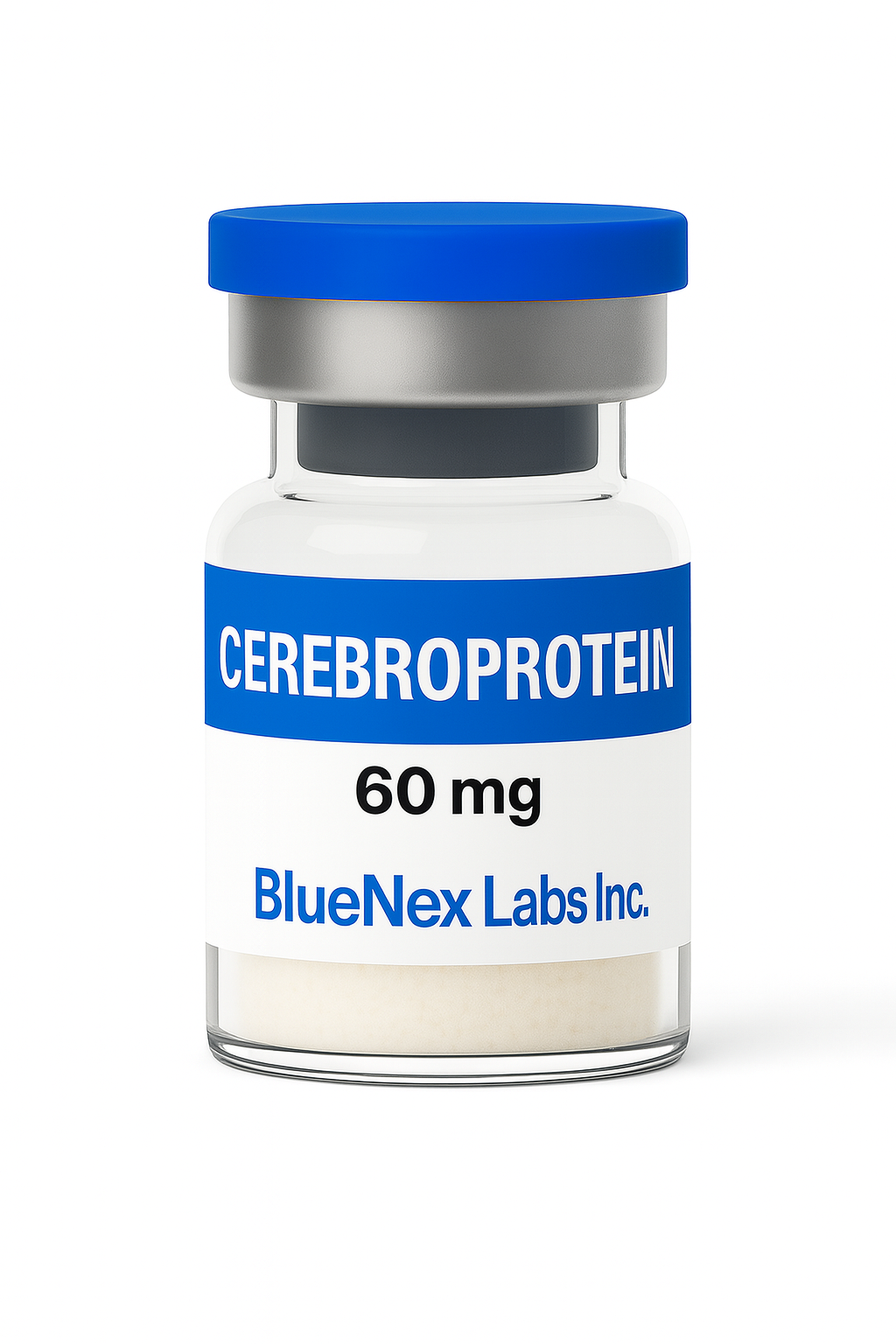
Cerebroprotein is a porcine‑derived neuropeptide and amino‑acid complex studied for its involvement in neurotrophic signaling, synaptic plasticity, and neuronal survival pathways. Because it contains a diverse mixture of low‑molecular‑weight peptides and biologically active amino acids, cerebroprotein is frequently used in research exploring how peptide complexes influence central nervous system (CNS) function and neuroprotective mechanisms.

In laboratory models, cerebroprotein has been examined for its potential roles in:

  • Neurotrophic factor modulation, including pathways associated with neuronal growth and maintenance

  • Synaptic plasticity, supporting studies on learning, memory, and adaptive neural communication

  • Neuronal survival, particularly under conditions of metabolic or oxidative stress

  • Neuroinflammatory regulation, including cytokine‑related signaling pathways

  • Mitochondrial and metabolic support within neural tissues

Because of its broad biochemical profile and relevance to CNS regulatory processes, cerebroprotein is commonly researched in models focused on neuroprotection, cognitive function, neuroinflammatory modulation, and age‑related neuronal resilience. Its complex mixture of peptides and amino acids makes it a valuable tool for studying how multi‑component biological extracts influence brain signaling, cellular recovery, and overall neural health.

Type: Peptide–amino acid hydrolysate

Molecular Weight Range: <10 kDa (peptide fraction)

For research purposes only