Research · 2026-06-21
Peptide delivery and bioavailability
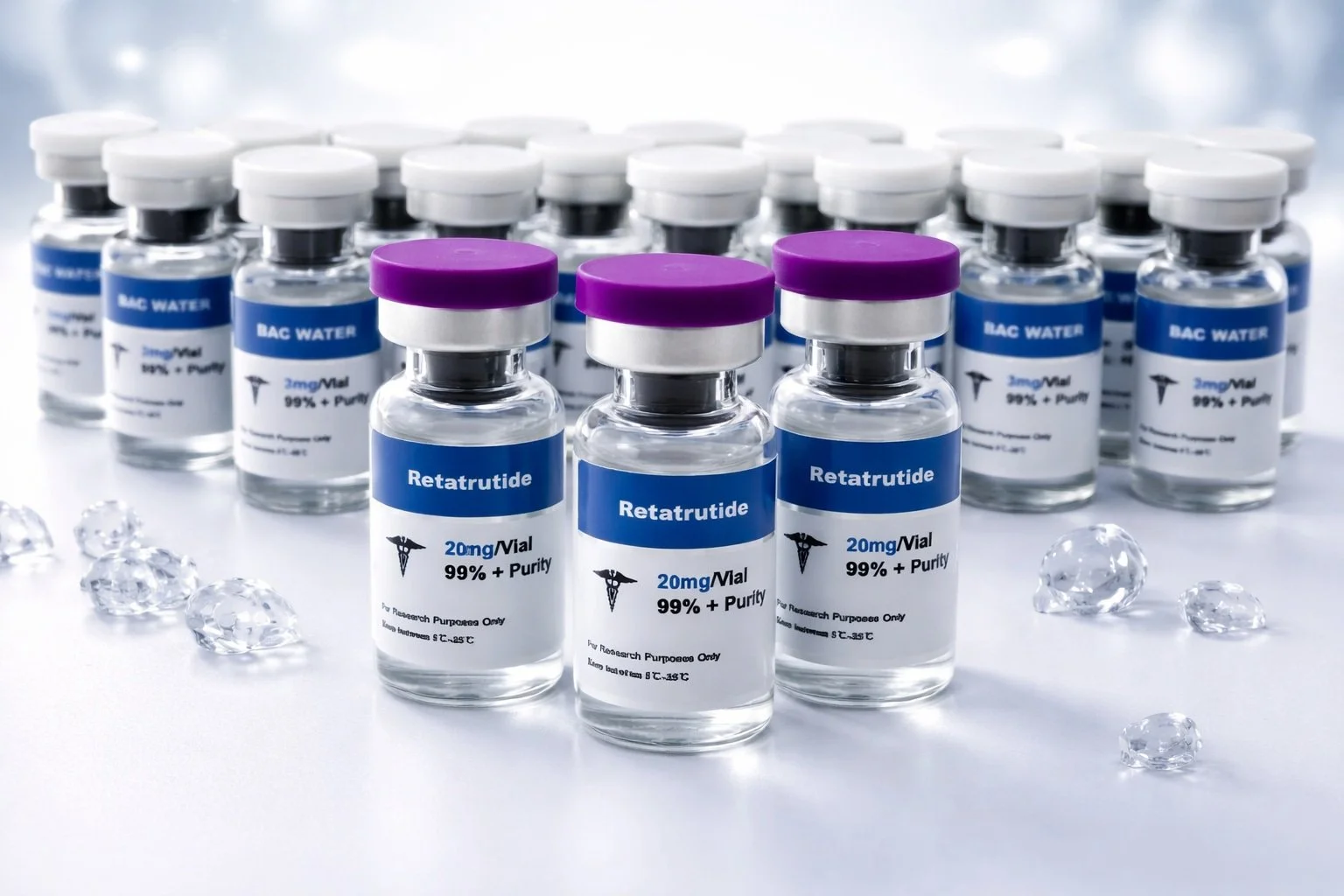
One of the most important challenges in modern peptide research is not the peptide itself—but how it is delivered and maintained in a usable, biologically active form. In 2026, advances in peptide delivery systems, formulation science, and stability engineering are changing how researchers approach these compounds. For Canadian laboratories and research buyers working with research-use-only (RUO) peptides, understanding bioavailability and delivery is critical for: Experimental reliability Reproducibility of results Accurate interpretation of biochemical interactions This article from BlueNexLabs explores the latest developments in peptide delivery and why they matter in the Canadian research landscape.
What Is Peptide Bioavailability?
Bioavailability refers to how effectively a peptide: Remains stable Reaches its target environment Maintains structural integrity Peptides are inherently fragile molecules, and their function depends on maintaining their structure in solution. They are susceptible to: Degradation Aggregation Structural modification This is why delivery systems have become a major focus of peptide research.
Why Peptide Delivery Is a Key Challenge
Unlike small-molecule compounds, peptides face several inherent limitations: 1.
Instability in Aqueous Solutions
Peptides can degrade through hydrolysis, oxidation, or aggregation when dissolved in water. 2.
Poor Membrane Permeability
Peptides are larger and more complex, making it difficult for them to pass through biological barriers. 3.
Short Functional Lifespan
Once reconstituted, many peptides have limited stability windows due to environmental exposure. 4.
Sensitivity to Conditions
Factors like temperature, pH, and light can rapidly alter peptide integrity. These challenges explain why delivery optimization is now a primary research focus, not just an afterthought. Key Peptide Delivery Innovations in 2026 1.
Lipid & Fatty Acid Conjugation
Researchers are modifying peptides by attaching lipid chains to: Improve stability Extend functional lifespan Reduce degradation This approach has already proven effective in major peptide drugs and is expanding into broader research applications. 2.
Nanoparticle & Encapsulation Technologies
Encapsulation techniques are being studied to: Protect peptides from environmental stress Provide controlled release Improve interaction with biological systems Examples include: Lipid nanoparticles Polymer-based carriers These are considered one of the most promising directions in peptide delivery research. [nordicalabs.ca] 3.
Peptide Cyclization & Structural Engineering
Cyclized peptides (ring-shaped structures) show: Higher resistance to degradation Improved structural stability Enhanced binding properties This is especially important for peptides prone to aggregation or instability. 4. Cell-Penetrating Peptides (CPPs) CPPs are specialized sequences that help transport peptides into cells. They are being explored for: Improved uptake in experimental models Increased interaction efficiency 5.
Oral Peptide Delivery Research Historically, peptides required non-oral delivery due to instability. However, recent research shows significant progress in: Oral formulations Stability-enhancing modifications Absorption technologies This represents one of the most rapidly evolving areas in peptide science. [nordicalabs.ca] Functional Availability: The New Standard in Peptide Research In 2026, researchers are shifting focus from purity alone → functional performance.
Even a high-purity peptide may: Aggregate Become biologically inactive Bind incorrectly due to structural changes Factors affecting functional availability include: Surface adsorption Conformational shifts Molecular self-association This means delivery and formulation are just as important as purity. Implications for Canadian Researchers 1.
Increased Focus on Storage & Handling
Proper storage conditions are essential for maintaining peptide integrity. 2.
Importance of Reliable Suppliers
Canadian researchers are increasingly prioritizing: Verified COAs Proper packaging and shipping Temperature-controlled delivery 3.
Growing Regulatory Awareness In Canada:
Peptides are supplied for research use only (RUO) Marketing claims are closely monitored Proper documentation and labeling are critical This makes supplier transparency a key factor in procurement decisions.
Why Delivery Matters for Research Accuracy
Poor peptide delivery can lead to: False-negative results Reduced apparent activity Experimental inconsistency For example: Aggregated peptides may not interact with targets Degraded peptides may yield misleading results Understanding delivery systems ensures that observed outcomes reflect true peptide behavior.
BlueNexLabs Approach to Peptide Integrity At
BlueNexLabs, peptide sourcing is aligned with modern research expectations: Emphasis on high-purity, lab-verified materials Focus on proper storage and handling protocols Commitment to research-use-only compliance in Canada This ensures that researchers receive materials suitable for controlled experimental environments. Conclusion Peptide delivery and bioavailability are now central to peptide science—not secondary considerations.
As the field evolves in 2026, the focus is shifting toward: Stability functional availability advanced delivery systems For Canadian researchers working with peptides, understanding these factors is essential for producing reliable, reproducible results.
Research-use only. BlueNex Labs does not provide medical or veterinary advice. Confirm your institution’s policies before purchase.