🧬 DSIP (10mg) — High‑Purity Neuropeptide for Stress‑Response, Neuroendocrine & Cellular‑Signaling Research
Research-Grade DSIP Peptide for Laboratory Investigation of Neuroendocrine Communication, Circadian Biology & Stress-Response Pathways
DSIP (Delta Sleep-Inducing Peptide) 10mg is a high-purity synthetic research peptide supplied for controlled laboratory investigation involving neuropeptide signaling, neuroendocrine pathway mapping, circadian biology models, and peptide-mediated cellular communication studies.
Originally characterized through neurophysiology research, DSIP has remained a subject of scientific interest due to its relationship with central signaling networks, biological timing mechanisms, and stress-adaptation pathways. Modern research applications continue to examine DSIP as a model compound for understanding complex interactions between peptides, cellular receptors, transcriptional regulation, and neuroendocrine systems.
BlueNexLabs provides DSIP as a research-use-only (RUO) material manufactured for laboratory environments requiring documented identity, analytical verification, and consistent batch quality.
Each batch is supplied with analytical documentation supporting laboratory traceability, including characterization through techniques such as mass spectrometry (MS) and chromatographic purity analysis (HPLC/UPLC).
For laboratory research use only. Not intended for human or veterinary use.
What Is DSIP (Delta Sleep-Inducing Peptide)?
DSIP, or Delta Sleep-Inducing Peptide, is a synthetic nonapeptide originally identified during investigations into endogenous neuropeptide activity and sleep-associated physiological processes.
Although its name originates from early observations involving delta-wave sleep patterns, current scientific interest extends beyond sleep research. DSIP is commonly investigated as a model peptide for studying:
Neuroendocrine communication networks
Central nervous system signaling pathways
Circadian rhythm-associated molecular processes
Stress-response adaptation mechanisms
Peptide-receptor interactions
Cellular signaling communication
Research involving DSIP provides insight into how short peptide sequences can influence complex biological signaling environments and how neuropeptides participate in communication between molecular pathways.
Related reading:
→ Learn more about peptide fundamentals
→ Understanding peptide structure and stability
DSIP Research Applications & Scientific Interest
1. Neuroendocrine Signaling Research
Neuroendocrine systems involve communication between neural pathways and endocrine signaling networks. DSIP has been studied as a research model for investigating peptide-mediated signaling processes involving central regulatory systems.
Laboratory investigations may examine:
Peptide interaction with neuroendocrine signaling pathways
Cellular response patterns following peptide exposure
Molecular signaling cascades associated with neuroendocrine regulation
Communication between peptide signals and downstream cellular pathways
DSIP provides researchers with a compact peptide model for exploring how signaling molecules participate in complex biological communication networks.
2. Stress-Response & Cellular Adaptation Models
Cellular systems constantly respond to environmental and metabolic stressors. Research involving DSIP examines potential relationships between neuropeptide signaling and stress-adaptation mechanisms.
Experimental models may investigate:
Oxidative stress response markers
Cellular adaptation signaling
Molecular stress pathways
Peptide-mediated regulatory mechanisms
These studies contribute to broader understanding of how biological systems maintain equilibrium during changing cellular conditions.
Related research:
→ Explore peptide signaling pathways
3. Circadian Biology & Chronobiology Research
Circadian biology examines biological timing systems that regulate rhythmic cellular processes.
DSIP has been investigated within research environments studying:
Circadian-linked transcriptional activity
Biological timing mechanisms
Molecular communication between signaling pathways
Sleep-wake regulatory models
Researchers studying chronobiology often use peptide-based models to examine how signaling molecules interact with biological timing networks.
DSIP Molecular & Structural Overview
Research Classification
Compound: Delta Sleep-Inducing Peptide (DSIP)
Category: Synthetic research neuropeptide
Format: Lyophilized powder
Research designation: Research Use Only (RUO)
Analytical verification: MS and HPLC/UPLC characterization
DSIP is supplied as a stable lyophilized material designed for controlled laboratory handling and analytical investigation.
Analytical Characterization & Quality Documentation
BlueNexLabs DSIP batches are supported by documentation intended to provide researchers with confidence in material identity and consistency.
Available documentation may include:
Mass Spectrometry (MS)
Mass spectrometry analysis is used to confirm molecular identity by evaluating peptide mass characteristics.
HPLC / UPLC Purity Analysis
Chromatographic analysis provides researchers with information regarding sample purity profiles and analytical consistency.
Batch Traceability
Documentation supports:
Access the Certificates of Analysis.
DSIP Research Pathway Areas
DSIP is commonly referenced in laboratory research involving:
Neurobiology
Neuropeptide signaling systems
Central communication pathways
Molecular neurobiology models
Cellular Signaling
Stress Biology
Cellular adaptation models
Stress-associated signaling markers
Environmental response pathways
Circadian Research
Biological rhythm investigations
Transcriptional regulation models
Chronobiological signaling studies
Why Researchers Study DSIP
DSIP remains scientifically interesting because peptides provide researchers with valuable models for understanding biological communication.
Short peptide sequences allow scientists to investigate:
Structure-function relationships
Molecular recognition processes
Signaling pathway interactions
Cellular communication mechanisms
Because of its history in neurophysiology research, DSIP continues to appear in experimental discussions involving neuropeptide biology and regulatory signaling systems.
DSIP Research Supply in Canada
BlueNexLabs supplies DSIP for qualified research environments throughout Canada, including laboratories and institutions in:
BlueNexLabs focuses on:
✓ Research-use-only labeling
✓ Batch documentation transparency
✓ Analytical verification
✓ Consistent laboratory supply
✓ Canada-focused fulfillment
Explore BlueNexLabs research products.
Storage & Laboratory Handling Information
For maintaining peptide stability during research storage:
Lyophilized Material
Recommended storage considerations:
Store in a controlled cold environment
Protect from moisture and direct light
Minimize unnecessary temperature fluctuations
Reconstituted Research Material
Researchers should follow established laboratory protocols regarding:
For additional information:
https://www.bluenexlabs.com/research-knowledge-canada-peptides/blog/peptide-storage-guidelines-canada
Research Compliance Statement
DSIP (Delta Sleep-Inducing Peptide) supplied by BlueNexLabs is intended exclusively for laboratory research applications.
This material is:
✓ Not approved for human use
✓ Not approved for veterinary use
✓ Not intended as a dietary supplement
✓ Not intended for therapeutic applications
✓ Not intended for diagnosis, treatment, or prevention of disease
BlueNexLabs provides research materials for scientific investigation only.
Frequently Asked Questions About DSIP Research
Is DSIP approved for human use?
No. DSIP supplied by BlueNexLabs is intended exclusively for laboratory research purposes and is not approved for human or veterinary applications.
What type of research uses DSIP?
DSIP is referenced in experimental research involving neuropeptide signaling, neuroendocrine pathways, circadian biology, cellular communication, and stress-response models.
How is DSIP verified?
Research batches may include analytical documentation such as mass spectrometry identity confirmation and chromatographic purity analysis.
Why are peptides studied in laboratories?
Peptides provide researchers with valuable molecular tools for examining biological signaling, receptor interactions, and cellular communication mechanisms.
DSIP is supplied for laboratory research only. Not for human or veterinary use. No therapeutic, sleep‑related, or performance‑related claims are made or implied.
🧬 DSIP (10mg) — High‑Purity Neuropeptide for Stress‑Response, Neuroendocrine & Cellular‑Signaling Research
Research-Grade DSIP Peptide for Laboratory Investigation of Neuroendocrine Communication, Circadian Biology & Stress-Response Pathways
DSIP (Delta Sleep-Inducing Peptide) 10mg is a high-purity synthetic research peptide supplied for controlled laboratory investigation involving neuropeptide signaling, neuroendocrine pathway mapping, circadian biology models, and peptide-mediated cellular communication studies.
Originally characterized through neurophysiology research, DSIP has remained a subject of scientific interest due to its relationship with central signaling networks, biological timing mechanisms, and stress-adaptation pathways. Modern research applications continue to examine DSIP as a model compound for understanding complex interactions between peptides, cellular receptors, transcriptional regulation, and neuroendocrine systems.
BlueNexLabs provides DSIP as a research-use-only (RUO) material manufactured for laboratory environments requiring documented identity, analytical verification, and consistent batch quality.
Each batch is supplied with analytical documentation supporting laboratory traceability, including characterization through techniques such as mass spectrometry (MS) and chromatographic purity analysis (HPLC/UPLC).
For laboratory research use only. Not intended for human or veterinary use.
What Is DSIP (Delta Sleep-Inducing Peptide)?
DSIP, or Delta Sleep-Inducing Peptide, is a synthetic nonapeptide originally identified during investigations into endogenous neuropeptide activity and sleep-associated physiological processes.
Although its name originates from early observations involving delta-wave sleep patterns, current scientific interest extends beyond sleep research. DSIP is commonly investigated as a model peptide for studying:
Neuroendocrine communication networks
Central nervous system signaling pathways
Circadian rhythm-associated molecular processes
Stress-response adaptation mechanisms
Peptide-receptor interactions
Cellular signaling communication
Research involving DSIP provides insight into how short peptide sequences can influence complex biological signaling environments and how neuropeptides participate in communication between molecular pathways.
Related reading:
→ Learn more about peptide fundamentals
→ Understanding peptide structure and stability
DSIP Research Applications & Scientific Interest
1. Neuroendocrine Signaling Research
Neuroendocrine systems involve communication between neural pathways and endocrine signaling networks. DSIP has been studied as a research model for investigating peptide-mediated signaling processes involving central regulatory systems.
Laboratory investigations may examine:
Peptide interaction with neuroendocrine signaling pathways
Cellular response patterns following peptide exposure
Molecular signaling cascades associated with neuroendocrine regulation
Communication between peptide signals and downstream cellular pathways
DSIP provides researchers with a compact peptide model for exploring how signaling molecules participate in complex biological communication networks.
2. Stress-Response & Cellular Adaptation Models
Cellular systems constantly respond to environmental and metabolic stressors. Research involving DSIP examines potential relationships between neuropeptide signaling and stress-adaptation mechanisms.
Experimental models may investigate:
Oxidative stress response markers
Cellular adaptation signaling
Molecular stress pathways
Peptide-mediated regulatory mechanisms
These studies contribute to broader understanding of how biological systems maintain equilibrium during changing cellular conditions.
Related research:
→ Explore peptide signaling pathways
3. Circadian Biology & Chronobiology Research
Circadian biology examines biological timing systems that regulate rhythmic cellular processes.
DSIP has been investigated within research environments studying:
Circadian-linked transcriptional activity
Biological timing mechanisms
Molecular communication between signaling pathways
Sleep-wake regulatory models
Researchers studying chronobiology often use peptide-based models to examine how signaling molecules interact with biological timing networks.
DSIP Molecular & Structural Overview
Research Classification
Compound: Delta Sleep-Inducing Peptide (DSIP)
Category: Synthetic research neuropeptide
Format: Lyophilized powder
Research designation: Research Use Only (RUO)
Analytical verification: MS and HPLC/UPLC characterization
DSIP is supplied as a stable lyophilized material designed for controlled laboratory handling and analytical investigation.
Analytical Characterization & Quality Documentation
BlueNexLabs DSIP batches are supported by documentation intended to provide researchers with confidence in material identity and consistency.
Available documentation may include:
Mass Spectrometry (MS)
Mass spectrometry analysis is used to confirm molecular identity by evaluating peptide mass characteristics.
HPLC / UPLC Purity Analysis
Chromatographic analysis provides researchers with information regarding sample purity profiles and analytical consistency.
Batch Traceability
Documentation supports:
Access the Certificates of Analysis.
DSIP Research Pathway Areas
DSIP is commonly referenced in laboratory research involving:
Neurobiology
Neuropeptide signaling systems
Central communication pathways
Molecular neurobiology models
Cellular Signaling
Stress Biology
Cellular adaptation models
Stress-associated signaling markers
Environmental response pathways
Circadian Research
Biological rhythm investigations
Transcriptional regulation models
Chronobiological signaling studies
Why Researchers Study DSIP
DSIP remains scientifically interesting because peptides provide researchers with valuable models for understanding biological communication.
Short peptide sequences allow scientists to investigate:
Structure-function relationships
Molecular recognition processes
Signaling pathway interactions
Cellular communication mechanisms
Because of its history in neurophysiology research, DSIP continues to appear in experimental discussions involving neuropeptide biology and regulatory signaling systems.
DSIP Research Supply in Canada
BlueNexLabs supplies DSIP for qualified research environments throughout Canada, including laboratories and institutions in:
BlueNexLabs focuses on:
✓ Research-use-only labeling
✓ Batch documentation transparency
✓ Analytical verification
✓ Consistent laboratory supply
✓ Canada-focused fulfillment
Explore BlueNexLabs research products.
Storage & Laboratory Handling Information
For maintaining peptide stability during research storage:
Lyophilized Material
Recommended storage considerations:
Store in a controlled cold environment
Protect from moisture and direct light
Minimize unnecessary temperature fluctuations
Reconstituted Research Material
Researchers should follow established laboratory protocols regarding:
For additional information:
https://www.bluenexlabs.com/research-knowledge-canada-peptides/blog/peptide-storage-guidelines-canada
Research Compliance Statement
DSIP (Delta Sleep-Inducing Peptide) supplied by BlueNexLabs is intended exclusively for laboratory research applications.
This material is:
✓ Not approved for human use
✓ Not approved for veterinary use
✓ Not intended as a dietary supplement
✓ Not intended for therapeutic applications
✓ Not intended for diagnosis, treatment, or prevention of disease
BlueNexLabs provides research materials for scientific investigation only.
Frequently Asked Questions About DSIP Research
Is DSIP approved for human use?
No. DSIP supplied by BlueNexLabs is intended exclusively for laboratory research purposes and is not approved for human or veterinary applications.
What type of research uses DSIP?
DSIP is referenced in experimental research involving neuropeptide signaling, neuroendocrine pathways, circadian biology, cellular communication, and stress-response models.
How is DSIP verified?
Research batches may include analytical documentation such as mass spectrometry identity confirmation and chromatographic purity analysis.
Why are peptides studied in laboratories?
Peptides provide researchers with valuable molecular tools for examining biological signaling, receptor interactions, and cellular communication mechanisms.
DSIP is supplied for laboratory research only. Not for human or veterinary use. No therapeutic, sleep‑related, or performance‑related claims are made or implied.
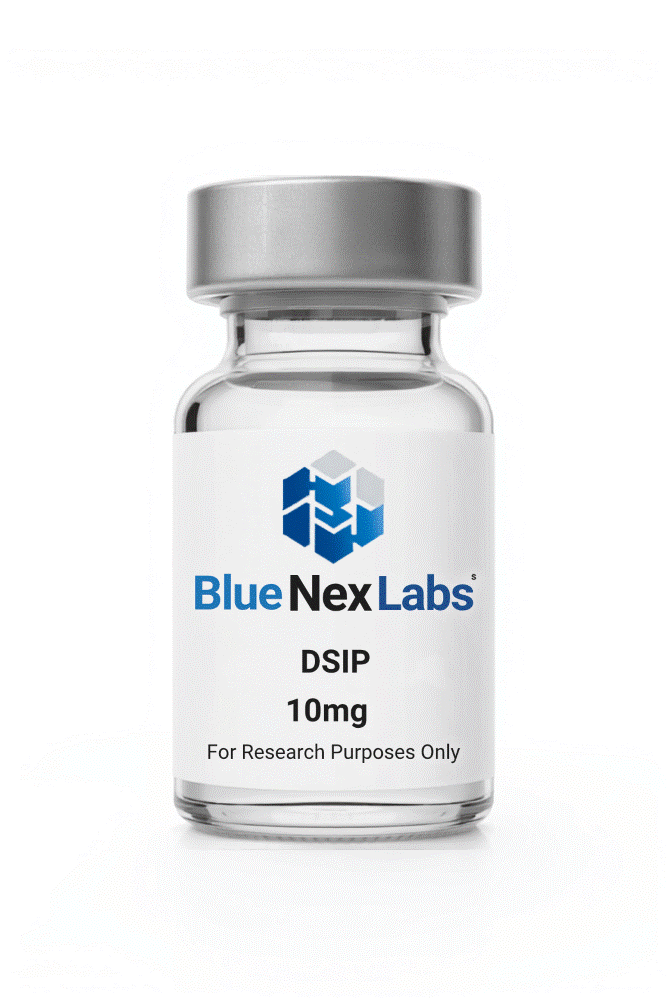 Image 1 of 1