Kisspeptin Peptide: Advanced Research Overview, Mechanism, Storage, and Scientific Applications
What Is Kisspeptin?
Kisspeptin is a naturally occurring peptide that serves as one of the most important signaling molecules within the body's neuroendocrine communication network. Encoded by the KISS1 gene, Kisspeptin has become a major focus of modern scientific research due to its role in regulating communication between the brain and reproductive hormone pathways.
Researchers studying endocrine physiology frequently investigate Kisspeptin because it sits near the top of the hormonal signaling hierarchy, acting as a key messenger between the hypothalamus and the downstream pathways associated with reproductive biology, neuroendocrine communication, and hormonal regulation.
Its interaction with the KISS1 receptor (KISS1R/GPR54) has made Kisspeptin one of the most extensively studied peptides in reproductive and endocrine research, with growing scientific interest across multiple disciplines including developmental biology, neuroscience, metabolism, and hormone signaling.
Understanding the Kisspeptin Signaling Pathway
Kisspeptin functions by binding to the KISS1R receptor, a specialized receptor located on neurons involved in hormonal communication. This highly specific interaction initiates a cascade of intracellular signaling events that influence the release of gonadotropin-releasing hormone (GnRH), a critical component of the hypothalamic-pituitary-gonadal (HPG) axis.
Because Kisspeptin operates upstream of several important endocrine signaling pathways, researchers often use it to study:
✅ Hypothalamic signaling mechanisms
✅ Neuroendocrine communication networks
✅ Hormone pulse generation patterns
✅ Reproductive physiology pathways
✅ Developmental maturation signaling
✅ Endocrine feedback regulation
✅ Cellular receptor activation and signaling
Its targeted mechanism and well-characterized receptor activity make Kisspeptin a valuable tool for controlled laboratory investigations.
Why Researchers Are Interested in Kisspeptin
Scientific interest in Kisspeptin continues to expand due to its unique position within multiple biological systems.
Reproductive Biology Research
Kisspeptin is widely studied for its involvement in reproductive hormone signaling and the regulation of neuroendocrine communication pathways associated with fertility-related research.
Neuroendocrine Research
Researchers frequently utilize Kisspeptin when exploring how the brain coordinates hormonal responses through complex signaling networks.
Hypothalamic-Pituitary-Gonadal (HPG) Axis Studies
As a major upstream regulator of the HPG axis, Kisspeptin remains a central topic in studies involving endocrine communication and hormonal pathway regulation.
Receptor Signaling Investigations
The highly selective interaction between Kisspeptin and KISS1R provides researchers with a useful model for studying receptor-mediated signaling and cellular communication.
Developmental and Physiological Research
Scientists continue investigating the role of Kisspeptin in developmental signaling, neuropeptide interactions, and broader endocrine system dynamics.
Key Characteristics of Kisspeptin
Naturally occurring neuropeptide
Encoded by the KISS1 gene
Specifically targets the KISS1R (GPR54) receptor
Important component of HPG axis signaling
Highly researched in endocrine and neuroendocrine science
Extensively referenced in peer-reviewed literature
Suitable for advanced laboratory investigations
Valuable model for studying hormone communication pathways
Common Laboratory Research Applications
Kisspeptin is frequently utilized in studies involving:
Neuroendocrine Communication
Researchers investigate how Kisspeptin facilitates communication between the nervous system and endocrine pathways.
Hormonal Signaling Pathways
Laboratory studies often examine the peptide's role in coordinating hormonal messaging networks.
Reproductive System Research
Kisspeptin remains one of the most important peptides used when exploring reproductive signaling mechanisms.
Cellular Signaling Studies
Its receptor-specific activity makes Kisspeptin useful for evaluating intracellular signaling processes and receptor activation models.
Peptide Biology Research
Scientists continue to expand knowledge regarding Kisspeptin's role in complex neuropeptide communication systems.
Storage and Handling Guidelines for Research Peptides
Proper storage is critical for preserving peptide integrity and maintaining long-term stability during research applications.
Lyophilized (Unreconstituted) Kisspeptin
For long-term laboratory storage:
Store in a freezer between -20°C and -80°C
Protect from moisture and direct light
Keep vials sealed until ready for use
Avoid repeated temperature fluctuations
Reconstituted Kisspeptin
Once reconstituted:
Store according to established laboratory protocols
Refrigerate when appropriate for short-term research use
Minimize repeated freeze-thaw cycles
Maintain sterile handling procedures throughout preparation
For a complete guide to peptide storage, handling practices, reconstitution considerations, and stability recommendations, see our detailed resource:
👉How to Store
Proper storage practices help support consistency, stability, and reliability across laboratory research projects.
Why Choose BlueNexLabs Kisspeptin?
BlueNexLabs is committed to supplying high-quality research peptides suitable for scientific, laboratory, and educational applications.
BlueNexLabs Quality Standards
✅ High-purity research peptide material
✅ Batch-specific quality testing
✅ Transparent documentation and verification
✅ Controlled manufacturing environments
✅ Secure packaging and handling procedures
✅ Reliable inventory and supply consistency
✅ Research-focused customer support
For additional research resources, visit:
👉 Research Topics
👉 Certificate of Analysis
Frequently Asked Questions
What is Kisspeptin?
Kisspeptin is a naturally occurring peptide encoded by the KISS1 gene that plays an important role in neuroendocrine communication and reproductive signaling research.
What receptor does Kisspeptin bind to?
Kisspeptin primarily interacts with the KISS1 receptor (KISS1R/GPR54), a receptor involved in hormone-signaling pathways.
Why is Kisspeptin commonly studied?
Researchers investigate Kisspeptin because of its central role in the hypothalamic-pituitary-gonadal axis and its influence on neuroendocrine signaling networks.
How should Kisspeptin be stored?
Lyophilized Kisspeptin is generally stored frozen and protected from moisture and light. Detailed storage information can be found in our Peptide Storage Guide.
Is Kisspeptin approved for human use?
No. BlueNexLabs Kisspeptin is supplied strictly for laboratory, scientific, and educational research purposes.
Compliance Disclaimer
FOR RESEARCH USE ONLY.
Kisspeptin is intended exclusively for laboratory, educational, and scientific research applications. This product is not intended for human consumption, veterinary use, therapeutic use, diagnostic use, or medical application. BlueNexLabs makes no claims regarding any use outside controlled research environments. Purchasers are responsible for complying with all applicable regulations governing the acquisition, handling, storage, and use of research materials.
Kisspeptin Peptide: Advanced Research Overview, Mechanism, Storage, and Scientific Applications
What Is Kisspeptin?
Kisspeptin is a naturally occurring peptide that serves as one of the most important signaling molecules within the body's neuroendocrine communication network. Encoded by the KISS1 gene, Kisspeptin has become a major focus of modern scientific research due to its role in regulating communication between the brain and reproductive hormone pathways.
Researchers studying endocrine physiology frequently investigate Kisspeptin because it sits near the top of the hormonal signaling hierarchy, acting as a key messenger between the hypothalamus and the downstream pathways associated with reproductive biology, neuroendocrine communication, and hormonal regulation.
Its interaction with the KISS1 receptor (KISS1R/GPR54) has made Kisspeptin one of the most extensively studied peptides in reproductive and endocrine research, with growing scientific interest across multiple disciplines including developmental biology, neuroscience, metabolism, and hormone signaling.
Understanding the Kisspeptin Signaling Pathway
Kisspeptin functions by binding to the KISS1R receptor, a specialized receptor located on neurons involved in hormonal communication. This highly specific interaction initiates a cascade of intracellular signaling events that influence the release of gonadotropin-releasing hormone (GnRH), a critical component of the hypothalamic-pituitary-gonadal (HPG) axis.
Because Kisspeptin operates upstream of several important endocrine signaling pathways, researchers often use it to study:
✅ Hypothalamic signaling mechanisms
✅ Neuroendocrine communication networks
✅ Hormone pulse generation patterns
✅ Reproductive physiology pathways
✅ Developmental maturation signaling
✅ Endocrine feedback regulation
✅ Cellular receptor activation and signaling
Its targeted mechanism and well-characterized receptor activity make Kisspeptin a valuable tool for controlled laboratory investigations.
Why Researchers Are Interested in Kisspeptin
Scientific interest in Kisspeptin continues to expand due to its unique position within multiple biological systems.
Reproductive Biology Research
Kisspeptin is widely studied for its involvement in reproductive hormone signaling and the regulation of neuroendocrine communication pathways associated with fertility-related research.
Neuroendocrine Research
Researchers frequently utilize Kisspeptin when exploring how the brain coordinates hormonal responses through complex signaling networks.
Hypothalamic-Pituitary-Gonadal (HPG) Axis Studies
As a major upstream regulator of the HPG axis, Kisspeptin remains a central topic in studies involving endocrine communication and hormonal pathway regulation.
Receptor Signaling Investigations
The highly selective interaction between Kisspeptin and KISS1R provides researchers with a useful model for studying receptor-mediated signaling and cellular communication.
Developmental and Physiological Research
Scientists continue investigating the role of Kisspeptin in developmental signaling, neuropeptide interactions, and broader endocrine system dynamics.
Key Characteristics of Kisspeptin
Naturally occurring neuropeptide
Encoded by the KISS1 gene
Specifically targets the KISS1R (GPR54) receptor
Important component of HPG axis signaling
Highly researched in endocrine and neuroendocrine science
Extensively referenced in peer-reviewed literature
Suitable for advanced laboratory investigations
Valuable model for studying hormone communication pathways
Common Laboratory Research Applications
Kisspeptin is frequently utilized in studies involving:
Neuroendocrine Communication
Researchers investigate how Kisspeptin facilitates communication between the nervous system and endocrine pathways.
Hormonal Signaling Pathways
Laboratory studies often examine the peptide's role in coordinating hormonal messaging networks.
Reproductive System Research
Kisspeptin remains one of the most important peptides used when exploring reproductive signaling mechanisms.
Cellular Signaling Studies
Its receptor-specific activity makes Kisspeptin useful for evaluating intracellular signaling processes and receptor activation models.
Peptide Biology Research
Scientists continue to expand knowledge regarding Kisspeptin's role in complex neuropeptide communication systems.
Storage and Handling Guidelines for Research Peptides
Proper storage is critical for preserving peptide integrity and maintaining long-term stability during research applications.
Lyophilized (Unreconstituted) Kisspeptin
For long-term laboratory storage:
Store in a freezer between -20°C and -80°C
Protect from moisture and direct light
Keep vials sealed until ready for use
Avoid repeated temperature fluctuations
Reconstituted Kisspeptin
Once reconstituted:
Store according to established laboratory protocols
Refrigerate when appropriate for short-term research use
Minimize repeated freeze-thaw cycles
Maintain sterile handling procedures throughout preparation
For a complete guide to peptide storage, handling practices, reconstitution considerations, and stability recommendations, see our detailed resource:
👉How to Store
Proper storage practices help support consistency, stability, and reliability across laboratory research projects.
Why Choose BlueNexLabs Kisspeptin?
BlueNexLabs is committed to supplying high-quality research peptides suitable for scientific, laboratory, and educational applications.
BlueNexLabs Quality Standards
✅ High-purity research peptide material
✅ Batch-specific quality testing
✅ Transparent documentation and verification
✅ Controlled manufacturing environments
✅ Secure packaging and handling procedures
✅ Reliable inventory and supply consistency
✅ Research-focused customer support
For additional research resources, visit:
👉 Research Topics
👉 Certificate of Analysis
Frequently Asked Questions
What is Kisspeptin?
Kisspeptin is a naturally occurring peptide encoded by the KISS1 gene that plays an important role in neuroendocrine communication and reproductive signaling research.
What receptor does Kisspeptin bind to?
Kisspeptin primarily interacts with the KISS1 receptor (KISS1R/GPR54), a receptor involved in hormone-signaling pathways.
Why is Kisspeptin commonly studied?
Researchers investigate Kisspeptin because of its central role in the hypothalamic-pituitary-gonadal axis and its influence on neuroendocrine signaling networks.
How should Kisspeptin be stored?
Lyophilized Kisspeptin is generally stored frozen and protected from moisture and light. Detailed storage information can be found in our Peptide Storage Guide.
Is Kisspeptin approved for human use?
No. BlueNexLabs Kisspeptin is supplied strictly for laboratory, scientific, and educational research purposes.
Compliance Disclaimer
FOR RESEARCH USE ONLY.
Kisspeptin is intended exclusively for laboratory, educational, and scientific research applications. This product is not intended for human consumption, veterinary use, therapeutic use, diagnostic use, or medical application. BlueNexLabs makes no claims regarding any use outside controlled research environments. Purchasers are responsible for complying with all applicable regulations governing the acquisition, handling, storage, and use of research materials.
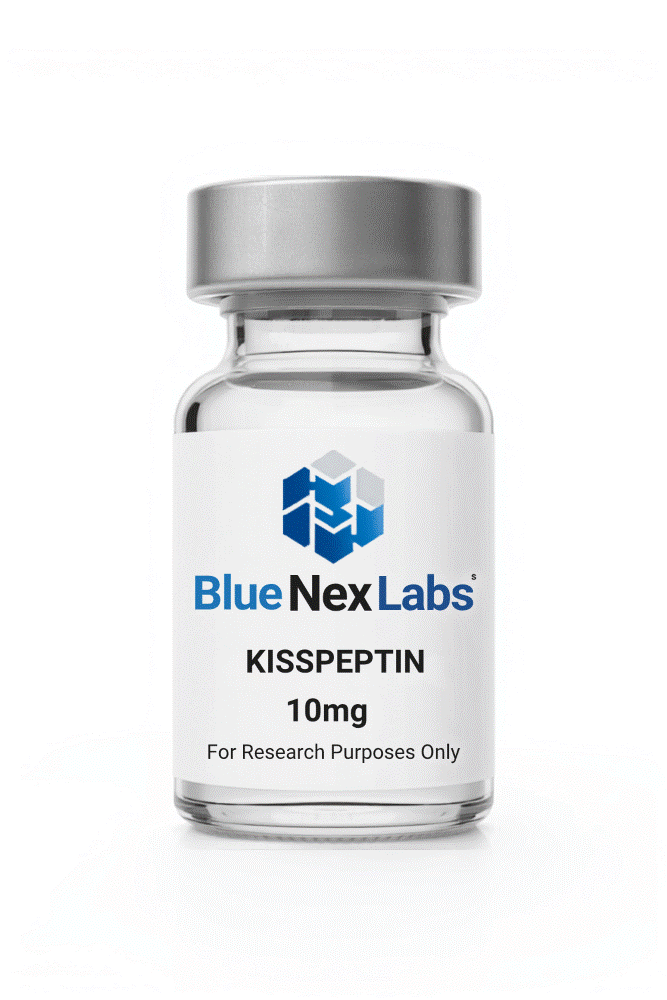 Image 1 of 1