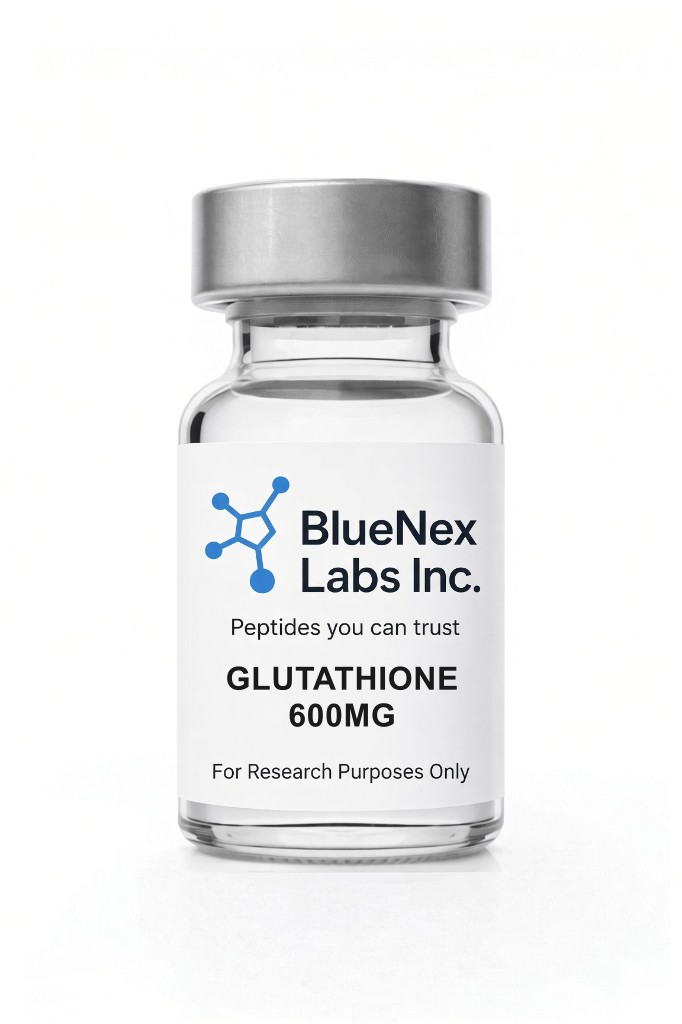
Glutathione 600mg Research Peptide Canada
Research use only. Not for human or veterinary use.
This catalog URL serves the 600mg glutathione research fill. It is a laboratory redox reagent, not a consumer supplement. Research-use only.
Glutathione
Glutathione is a naturally occurring tripeptide—composed of glutamine, cysteine, and glycine—widely studied for its central role in redox balance, oxidative stress regulation, and cellular defense mechanisms. As one of the body’s primary endogenous antioxidants, glutathione is a key molecule of interest in research exploring how cells maintain redox homeostasis, detoxification capacity, and resilience against reactive oxygen species (ROS).
In laboratory models, glutathione is examined for its involvement in:
- Oxidative stress modulation and free‑radical neutralization
- Redox cycling and maintenance of cellular redox equilibrium
- Detoxification pathways, including conjugation reactions
- Mitochondrial protection and energy‑related redox processes
- Immune‑related antioxidant mechanisms
- Enzymatic interactions, such as those involving glutathione peroxidase and glutathione reductase
Because of its broad biochemical relevance, glutathione remains a foundational molecule in research focused on cellular protection, metabolic resilience, aging biology, and oxidative stress–related pathways. Its tripeptide structure and versatile redox activity make it an essential model compound for understanding how cells respond to environmental and metabolic stressors.
🔬 Research Applications (Non‑Medical)
- Widely used in redox‑biology research exploring oxidative stress, thiol chemistry, and intracellular antioxidant systems.
- Supports studies involving glutathione cycling, detoxification pathways, and cellular redox buffering.
- Applied in analytical method development for thiol quantification and stability profiling.
🧬 Molecular Characteristics
- Type: Tripeptide (γ‑Glu‑Cys‑Gly).
- Form: High‑mass lyophilized powder (1500mg).
- Biochemical Notes:
- Central to glutathione‑dependent redox reactions in experimental systems.
- Highly reactive thiol group; oxidation state affects analytical behavior.
- Stability: Sensitive to air and light; oxidizes readily.
❄️ Storage & Handling
- Store at –20°C, sealed and protected from light.
- Minimize oxygen exposure; handle quickly during weighing.
- Reconstituted solutions should be kept at 2–8°C and used immediately.
📄 Documentation / COA Visibility
- COA includes purity, identity (MS), and oxidation‑state notes.
- RUO‑only; not for human consumption.
Vial size
$40.00CAD
17 in stock · SKU SQ8518008
Molecular characteristics
- form
- Lyophilized powder
- purity
- ≥99% (COA verified)
- use
- Research use only
Documentation (HPLC / UPLC, MS, COA)
Batch Certificates of Analysis are added to the certificates library when published. This page does not invent lot numbers.
Questions about laboratory procurement? Contact BlueNex Labs.