Catalog group
Metabolic Research Peptides, Canada
This category groups incretin and metabolic-pathway research peptides fulfilled in Canada. It is a catalog landing, not a product page and not a clinical overview.
BlueNex Labs lists GLP-1, GIP, glucagon-receptor, and amylin-analog research solids together so laboratories can browse related vials without mixing SKU intent. Each card below is a buy-intent product URL with its own milligram size, price, and Certificate of Analysis when a lot is published. Educational write-ups of trial status, receptor class, and 2026 literature live on the research hub — for example the Retatrutide trial recap and the GLP-1 peptide research note. Those articles do not sell vials. Research-use only. Not for human or veterinary use. Canada-only shipping. Open a product page to see price and availability, or the certificates library for batch reports.
Research-use only. Not for human or veterinary use. Browse the full catalog · View COA library · Contact for laboratory procurement questions.
Research categories
Weight Management
Metabolic & Appetite Signaling
Incretin and metabolic pathway research peptides.
Repair & Rejuvenation
Biological & Cellular
Tissue, recovery, and cellular signaling research tools.
Cellular Energy
Cellular Energy & Mitochondrial
Mitochondrial and cellular energy research compounds.
Growth Hormone
Growth Hormone Secretagogues
GHRH analogues and ghrelin-mimetic research peptides.
Cognitive Research
Cognitive & Neuroscience
Neuropeptides used in cognitive and sleep research models.
Other Compounds
Other Research Compounds
Reconstitution supplies and additional laboratory materials.
Vitamin Blends
Vitamin Blends
Vitamin and nutrient blend research materials.
Materials in this group
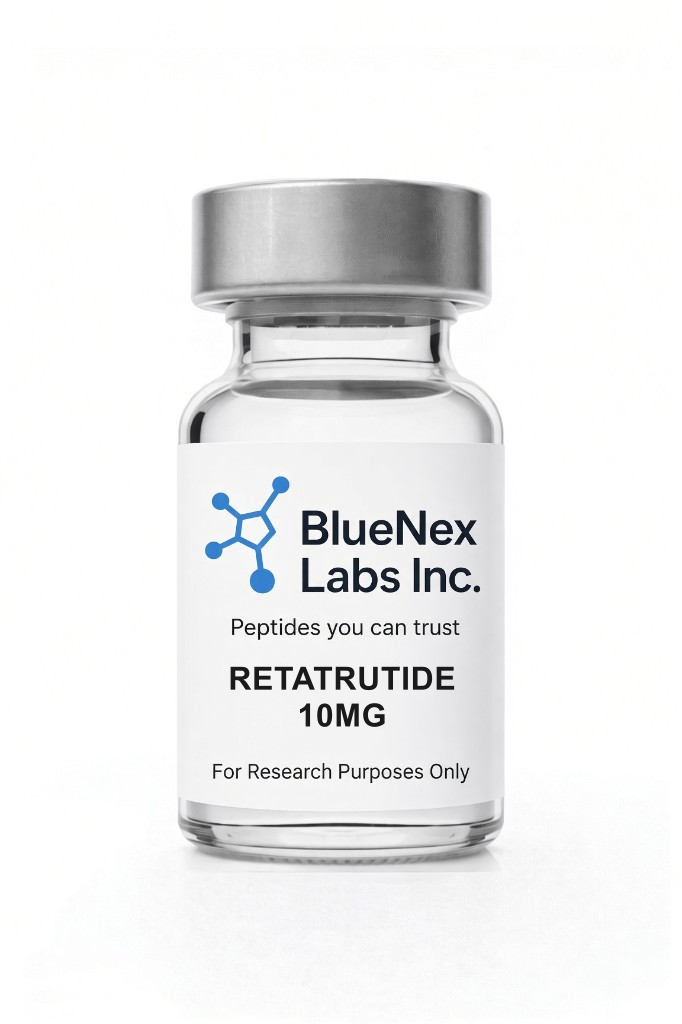
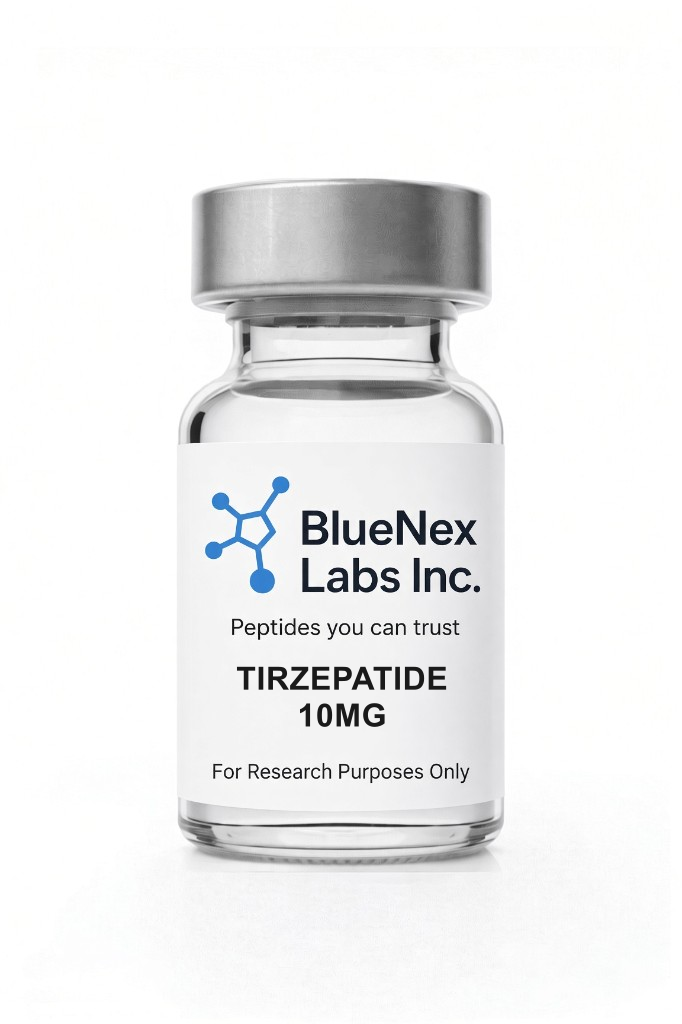
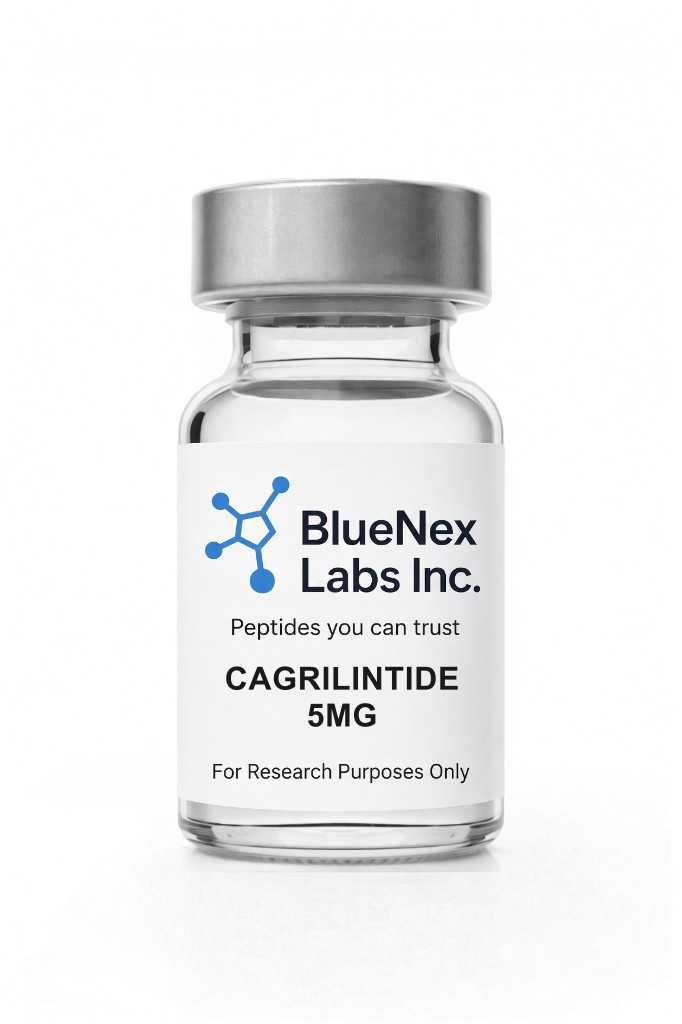
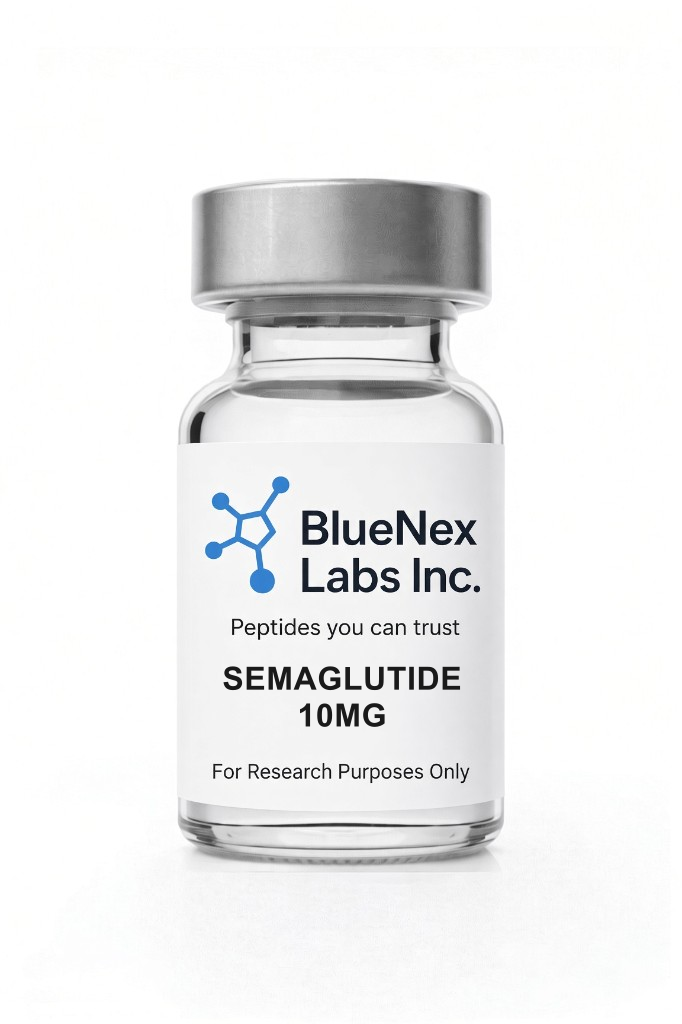
Incretin and metabolic-pathway research
Metabolic and incretin research peptides are short amino-acid chains used to study receptor signaling in glucose-handling, energy-balance, and gut-hormone models. In the laboratory they are tools for mapping how glucagon-like peptide-1 (GLP-1), glucose-dependent insulinotropic polypeptide (GIP), and related receptors behave when a defined ligand is present.
BlueNex Labs groups this catalog around those pathways so a Canadian lab can compare single-agonist, dual-agonist, and triple-agonist research materials without mixing them into unrelated tissue-signaling SKUs. Typical questions in this literature include receptor selectivity, downstream cyclic AMP or calcium readouts, and how peptide sequence changes alter binding in cell-based assays. None of those questions imply an approved human indication in Canada.
The current shop list in this category includes lyophilized retatrutide, tirzepatide, semaglutide, and cagrilintide vials. Each listing is research-use only. Where a Certificate of Analysis exists, the product page and the certificates library point at the same Janoshik lot so identity and purity can be checked before an experiment is planned.
Canadian fulfilment matters here because incretin analogues are frequently delayed or seized when they move as consumer parcels across a border. Domestic Canada Post Xpresspost from Metro Vancouver keeps the chain on one postal network. Interac checkout is the only payment method; there is no card form on the site.
For context on published trial programmes versus catalog RUO lots, see the research notes on GLP-1 peptide research in 2026 and retatrutide trial status. Those articles summarize public clinical literature. They are not product instructions and they do not claim Health Canada or FDA approval for any BlueNex Labs vial.
When you evaluate a lot, confirm the vial size on the COA, the reported mass or HPLC purity, and any endotoxin result. A 10 mg report does not document a 30 mg vial from a different fill. Sold-out sizes stay visible on the card so inventory status is honest; they cannot be added to the cart.
Materials in this group are sold for laboratory and in-vitro work. They are not medicines, foods, cosmetics, or veterinary products, and BlueNex Labs does not provide administration guidance. Research-use-only labeling is not a Health Canada authorization.