Image 1 of 1
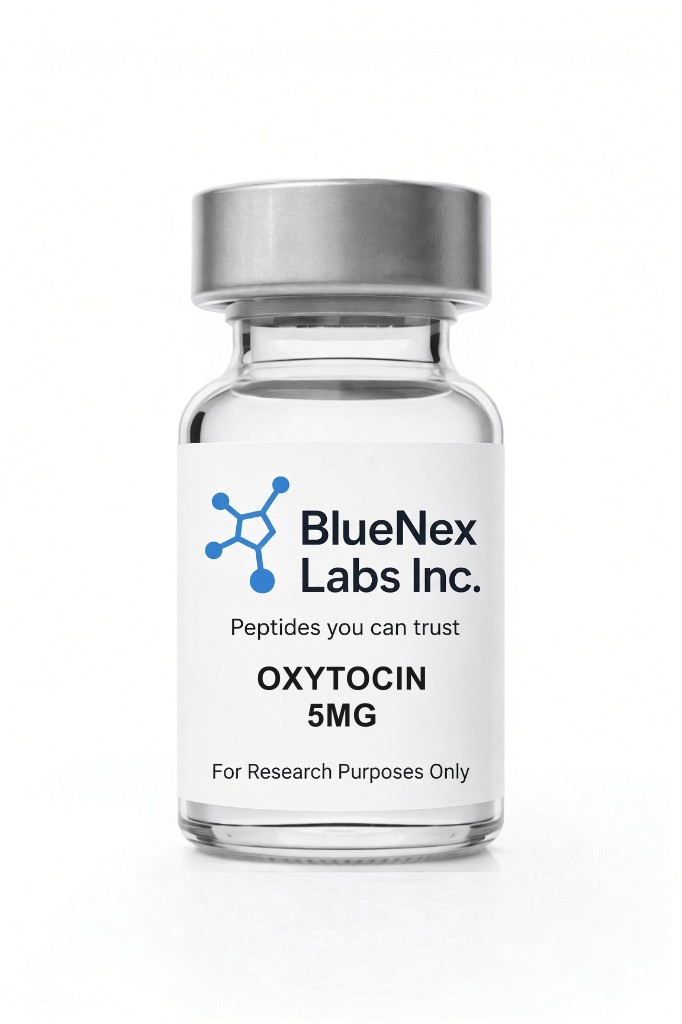
Oxytocin 5mg - Research Grade Peptide
ORDER HERE
🧬 Oxytocin (5mg) — High‑Purity Neuropeptide for Social‑Behavior, Stress‑Response & Receptor‑Signaling Research
Oxytocin (5mg) is a research-grade synthetic nonapeptide that replicates the naturally occurring oxytocin sequence found in mammals. As one of the most extensively studied peptide hormones in modern scientific literature, Oxytocin is widely utilized in laboratory investigations involving receptor biology, cellular communication, neuroendocrine signaling, and peptide-mediated molecular interactions.
Its well-characterized biochemical profile and highly specific interaction with the oxytocin receptor (OXTR) have made it a valuable model peptide for researchers seeking to better understand cellular signaling mechanisms, receptor activation dynamics, and complex communication networks within biological systems.
BlueNexLabs supplies high-purity Oxytocin (5mg) to research facilities across Canada, including Vancouver, Calgary, Edmonton, Toronto, Ottawa, Montreal, Winnipeg, Halifax, and Quebec City.
🔍 What Is Oxytocin?
What Is Oxytocin?
Oxytocin is a cyclic peptide composed of nine amino acids linked together by a characteristic disulfide bond. This compact molecular structure contributes to its stability and receptor specificity, making it a frequently studied compound within neuropeptide and receptor signaling research.
Because its biological pathways have been thoroughly characterized, Oxytocin is regularly used as a reference molecule in laboratory studies focused on cellular communication systems, peptide-receptor interactions, molecular signaling networks, and neuroendocrine pathway analysis.
Oxytocin receptor (OXTR) interaction studies
Neuropeptide signaling investigations
Cellular communication research
Receptor activation and regulation analysis
Signal-transduction pathway mapping
Molecular pharmacology research
Comparative peptide science
📡 Mechanistic Overview
🔷 Neuromodulatory & Behavioral Signaling
Referenced in studies involving social‑behavior pathways
Supports mapping of OXTR‑mediated signaling cascades
Used in models examining peptide‑driven neuromodulation
🔶 Stress‑Response & Adaptation Pathways
Applied in research involving stress‑response markers
Supports investigations into cellular resilience and adaptive signaling
Used in multi‑pathway neuroendocrine modeling
🔵 Peptide–Receptor Interaction Dynamics
Examined in OXTR‑binding affinity studies
Supports structural‑interaction modeling and receptor‑activation mapping
Used in comparative studies vs. other neuropeptide analogs
🧱 Molecular Characteristics
Oxytocin remains one of the most recognizable research peptides due to its simple structure, established receptor selectivity, and extensive scientific history. Its molecular properties make it suitable for both biological and analytical laboratory investigations.
Peptide Class: Cyclic Nonapeptide
Format: Lyophilized Powder
Fill Amount: 5mg per vial
Molecular Formula: C43H66N12O12S2
Molecular Weight: Approximately 1007 Da
Identity: Matches endogenous Oxytocin sequence
Research Designation: Research Use Only (RUO)
Oxytocin Receptor (OXTR) Research
One of the primary areas of Oxytocin research involves its interaction with the oxytocin receptor (OXTR), a G-protein coupled receptor associated with multiple cellular signaling pathways. Researchers frequently utilize Oxytocin when examining receptor activity, binding characteristics, intracellular messenger systems, and downstream signaling events.
Receptor-binding affinity studies
Ligand-receptor interaction analysis
Receptor activation mechanisms
Signal-transduction pathway evaluation
Comparative peptide-receptor investigations
Cellular response profiling
🔬 Research Focus Areas
Oxytocin is referenced in research involving:
Social‑behavior and neuromodulation modeling
Stress‑response and neuroendocrine pathway studies
Peptide‑receptor interaction assays
Transcriptional‑cascade and signaling‑pathway mapping
Comparative neuropeptide analysis
Multi‑pathway behavioral‑signaling investigations
Its clean mechanistic profile makes it suitable for controlled, pathway‑specific research environments across Canada.
Oxytocin Receptor (OXTR) Research
One of the primary areas of Oxytocin research involves its interaction with the oxytocin receptor (OXTR), a G-protein coupled receptor associated with multiple cellular signaling pathways. Researchers frequently utilize Oxytocin when examining receptor activity, binding characteristics, intracellular messenger systems, and downstream signaling events.
Receptor-binding affinity studies
Ligand-receptor interaction analysis
Receptor activation mechanisms
Signal-transduction pathway evaluation
Comparative peptide-receptor investigations
Cellular response profiling
Neuropeptide & Neuroendocrine Signaling Research
Oxytocin occupies a unique position within neuropeptide research due to its role in communication between neural and endocrine systems. In laboratory settings, researchers often investigate how Oxytocin participates in complex signaling networks and contributes to coordinated cellular responses.
Its well-established biological profile makes it particularly useful in models designed to explore communication between cells, signaling integration across biological systems, and peptide-mediated regulatory pathways.
Neuroendocrine signaling studies
Cell-to-cell communication models
Peptide messenger investigations
Regulatory signaling analysis
Neural-network signaling research
Multi-pathway communication studies
Analytical & Biochemical Applications
Beyond receptor biology, Oxytocin is frequently used as a reference material for peptide characterization and analytical chemistry workflows. Its well-defined molecular profile allows researchers to validate methodologies and evaluate peptide quality, stability, and structural integrity.
Mass spectrometry investigations
HPLC and UPLC analytical methods
Peptide purity assessment
Stability and degradation profiling
Structural characterization studies
Analytical method development
Key Research Areas
Oxytocin is commonly referenced in scientific literature involving:
Oxytocin receptor biology
Neuropeptide signaling
Cellular communication networks
Signal-transduction pathways
Molecular pharmacology
Experimental peptide research
Peptide-receptor interaction studies
Comparative neuropeptide investigations
Neuroendocrine communication research
Biological signaling pathway analysis
🇨🇦 Optimized for Canadian Research Environments
Canadian Research Peptide Supply
BlueNexLabs provides research-grade Oxytocin and other laboratory peptides throughout Canada. By combining strict quality control standards with batch traceability and responsive customer support, researchers can access dependable peptide materials for advanced laboratory applications.
📄 Documentation & COA Visibility
Quality Verification & Analytical Testing
Every batch of Oxytocin supplied by BlueNexLabs undergoes analytical testing to support consistency, traceability, and laboratory reproducibility. Product documentation is designed to assist researchers with quality verification requirements.
Mass Spectrometry (MS) identity confirmation
HPLC purity testing
Batch traceability records
Certificate of Analysis (COA)
Lot-specific documentation
Research-use-only verification
View Certificates of Analysis (COAs)
❄️ Storage & Handling
Store lyophilized peptide at –20°C, protected from light and humidity
Reconstituted solutions should be stored at 2–8°C
Avoid repeated freeze–thaw cycles
Use sterile technique during preparation
Frequently Asked Questions
What type of peptide is Oxytocin?
Oxytocin is a cyclic nonapeptide consisting of nine amino acids connected through a disulfide bond, resulting in a compact and highly characterized molecular structure.
Why is Oxytocin commonly used in research?
Its receptor biology, signaling pathways, and molecular characteristics have been extensively studied, making it a valuable model peptide for laboratory investigations.
What receptor does Oxytocin primarily interact with?
Oxytocin is primarily associated with the oxytocin receptor (OXTR), which is commonly examined in receptor-binding and signaling pathway studies.
How is peptide identity verified?
Identity is typically confirmed through analytical techniques such as Mass Spectrometry (MS) and purity testing via HPLC or UPLC methods.
Does BlueNexLabs provide COAs?
Yes. Certificates of Analysis are available to support product verification, traceability, and laboratory documentation requirements.
⚠️ Compliance Notice
Research Use Only
Oxytocin (5mg) is supplied exclusively for laboratory research purposes. This product is not intended for human consumption, veterinary use, therapeutic applications, diagnostic procedures, or clinical use. No claims regarding treatment, prevention, physiological effects, safety, efficacy, or performance are expressed or implied.
ORDER HERE
🧬 Oxytocin (5mg) — High‑Purity Neuropeptide for Social‑Behavior, Stress‑Response & Receptor‑Signaling Research
Oxytocin (5mg) is a research-grade synthetic nonapeptide that replicates the naturally occurring oxytocin sequence found in mammals. As one of the most extensively studied peptide hormones in modern scientific literature, Oxytocin is widely utilized in laboratory investigations involving receptor biology, cellular communication, neuroendocrine signaling, and peptide-mediated molecular interactions.
Its well-characterized biochemical profile and highly specific interaction with the oxytocin receptor (OXTR) have made it a valuable model peptide for researchers seeking to better understand cellular signaling mechanisms, receptor activation dynamics, and complex communication networks within biological systems.
BlueNexLabs supplies high-purity Oxytocin (5mg) to research facilities across Canada, including Vancouver, Calgary, Edmonton, Toronto, Ottawa, Montreal, Winnipeg, Halifax, and Quebec City.
🔍 What Is Oxytocin?
What Is Oxytocin?
Oxytocin is a cyclic peptide composed of nine amino acids linked together by a characteristic disulfide bond. This compact molecular structure contributes to its stability and receptor specificity, making it a frequently studied compound within neuropeptide and receptor signaling research.
Because its biological pathways have been thoroughly characterized, Oxytocin is regularly used as a reference molecule in laboratory studies focused on cellular communication systems, peptide-receptor interactions, molecular signaling networks, and neuroendocrine pathway analysis.
Oxytocin receptor (OXTR) interaction studies
Neuropeptide signaling investigations
Cellular communication research
Receptor activation and regulation analysis
Signal-transduction pathway mapping
Molecular pharmacology research
Comparative peptide science
📡 Mechanistic Overview
🔷 Neuromodulatory & Behavioral Signaling
Referenced in studies involving social‑behavior pathways
Supports mapping of OXTR‑mediated signaling cascades
Used in models examining peptide‑driven neuromodulation
🔶 Stress‑Response & Adaptation Pathways
Applied in research involving stress‑response markers
Supports investigations into cellular resilience and adaptive signaling
Used in multi‑pathway neuroendocrine modeling
🔵 Peptide–Receptor Interaction Dynamics
Examined in OXTR‑binding affinity studies
Supports structural‑interaction modeling and receptor‑activation mapping
Used in comparative studies vs. other neuropeptide analogs
🧱 Molecular Characteristics
Oxytocin remains one of the most recognizable research peptides due to its simple structure, established receptor selectivity, and extensive scientific history. Its molecular properties make it suitable for both biological and analytical laboratory investigations.
Peptide Class: Cyclic Nonapeptide
Format: Lyophilized Powder
Fill Amount: 5mg per vial
Molecular Formula: C43H66N12O12S2
Molecular Weight: Approximately 1007 Da
Identity: Matches endogenous Oxytocin sequence
Research Designation: Research Use Only (RUO)
Oxytocin Receptor (OXTR) Research
One of the primary areas of Oxytocin research involves its interaction with the oxytocin receptor (OXTR), a G-protein coupled receptor associated with multiple cellular signaling pathways. Researchers frequently utilize Oxytocin when examining receptor activity, binding characteristics, intracellular messenger systems, and downstream signaling events.
Receptor-binding affinity studies
Ligand-receptor interaction analysis
Receptor activation mechanisms
Signal-transduction pathway evaluation
Comparative peptide-receptor investigations
Cellular response profiling
🔬 Research Focus Areas
Oxytocin is referenced in research involving:
Social‑behavior and neuromodulation modeling
Stress‑response and neuroendocrine pathway studies
Peptide‑receptor interaction assays
Transcriptional‑cascade and signaling‑pathway mapping
Comparative neuropeptide analysis
Multi‑pathway behavioral‑signaling investigations
Its clean mechanistic profile makes it suitable for controlled, pathway‑specific research environments across Canada.
Oxytocin Receptor (OXTR) Research
One of the primary areas of Oxytocin research involves its interaction with the oxytocin receptor (OXTR), a G-protein coupled receptor associated with multiple cellular signaling pathways. Researchers frequently utilize Oxytocin when examining receptor activity, binding characteristics, intracellular messenger systems, and downstream signaling events.
Receptor-binding affinity studies
Ligand-receptor interaction analysis
Receptor activation mechanisms
Signal-transduction pathway evaluation
Comparative peptide-receptor investigations
Cellular response profiling
Neuropeptide & Neuroendocrine Signaling Research
Oxytocin occupies a unique position within neuropeptide research due to its role in communication between neural and endocrine systems. In laboratory settings, researchers often investigate how Oxytocin participates in complex signaling networks and contributes to coordinated cellular responses.
Its well-established biological profile makes it particularly useful in models designed to explore communication between cells, signaling integration across biological systems, and peptide-mediated regulatory pathways.
Neuroendocrine signaling studies
Cell-to-cell communication models
Peptide messenger investigations
Regulatory signaling analysis
Neural-network signaling research
Multi-pathway communication studies
Analytical & Biochemical Applications
Beyond receptor biology, Oxytocin is frequently used as a reference material for peptide characterization and analytical chemistry workflows. Its well-defined molecular profile allows researchers to validate methodologies and evaluate peptide quality, stability, and structural integrity.
Mass spectrometry investigations
HPLC and UPLC analytical methods
Peptide purity assessment
Stability and degradation profiling
Structural characterization studies
Analytical method development
Key Research Areas
Oxytocin is commonly referenced in scientific literature involving:
Oxytocin receptor biology
Neuropeptide signaling
Cellular communication networks
Signal-transduction pathways
Molecular pharmacology
Experimental peptide research
Peptide-receptor interaction studies
Comparative neuropeptide investigations
Neuroendocrine communication research
Biological signaling pathway analysis
🇨🇦 Optimized for Canadian Research Environments
Canadian Research Peptide Supply
BlueNexLabs provides research-grade Oxytocin and other laboratory peptides throughout Canada. By combining strict quality control standards with batch traceability and responsive customer support, researchers can access dependable peptide materials for advanced laboratory applications.
📄 Documentation & COA Visibility
Quality Verification & Analytical Testing
Every batch of Oxytocin supplied by BlueNexLabs undergoes analytical testing to support consistency, traceability, and laboratory reproducibility. Product documentation is designed to assist researchers with quality verification requirements.
Mass Spectrometry (MS) identity confirmation
HPLC purity testing
Batch traceability records
Certificate of Analysis (COA)
Lot-specific documentation
Research-use-only verification
View Certificates of Analysis (COAs)
❄️ Storage & Handling
Store lyophilized peptide at –20°C, protected from light and humidity
Reconstituted solutions should be stored at 2–8°C
Avoid repeated freeze–thaw cycles
Use sterile technique during preparation
Frequently Asked Questions
What type of peptide is Oxytocin?
Oxytocin is a cyclic nonapeptide consisting of nine amino acids connected through a disulfide bond, resulting in a compact and highly characterized molecular structure.
Why is Oxytocin commonly used in research?
Its receptor biology, signaling pathways, and molecular characteristics have been extensively studied, making it a valuable model peptide for laboratory investigations.
What receptor does Oxytocin primarily interact with?
Oxytocin is primarily associated with the oxytocin receptor (OXTR), which is commonly examined in receptor-binding and signaling pathway studies.
How is peptide identity verified?
Identity is typically confirmed through analytical techniques such as Mass Spectrometry (MS) and purity testing via HPLC or UPLC methods.
Does BlueNexLabs provide COAs?
Yes. Certificates of Analysis are available to support product verification, traceability, and laboratory documentation requirements.
⚠️ Compliance Notice
Research Use Only
Oxytocin (5mg) is supplied exclusively for laboratory research purposes. This product is not intended for human consumption, veterinary use, therapeutic applications, diagnostic procedures, or clinical use. No claims regarding treatment, prevention, physiological effects, safety, efficacy, or performance are expressed or implied.