Research · 2026-06-16
Why tesamorelin lots gel in the lab
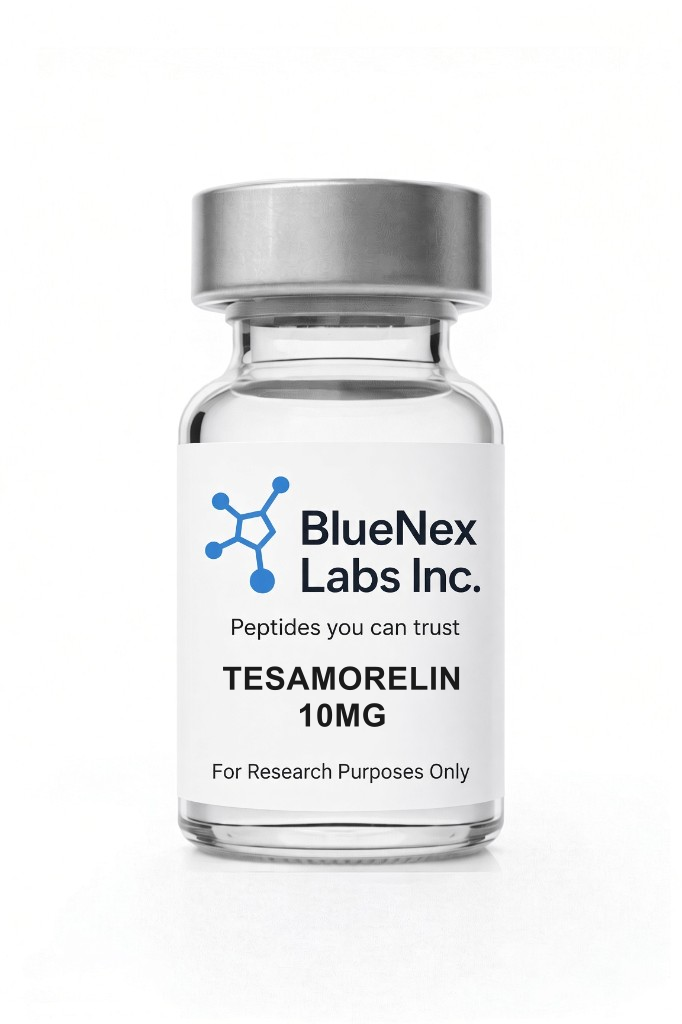
Peptide researchers and lab professionals occasionally notice an unusual issue during reconstitution: certain peptides—such as Tesamorelin and Kisspeptin —can form a gel-like consistency or visible clumps instead of dissolving into a clear solution. While this can be frustrating, it’s a well-known physical behavior of some peptide formulations and is usually preventable with proper handling techniques. This guide explains why peptides gel, what it means, and how to avoid it for optimal research use.
What Does “Peptide Gelling” Mean?
Peptide gelling occurs when a lyophilized (freeze-dried) peptide does not fully dissolve after adding solvent (typically bacteriostatic water or sterile water). Instead, it may: Form a thick, gel-like layer Appear cloudy or stringy Develop visible clumps or aggregates This phenomenon is most commonly seen in peptides with specific structural or chemical properties. Why Do Some Peptides Gel? 1.
Peptide Structure & Amino Acid Composition
Peptides like Tesamorelin and Kisspeptin have sequences that can promote self-association in solution. Hydrophobic (water-repelling) regions can cause molecules to stick together Certain sequences promote beta-sheet aggregation, leading to gel formation Larger or more complex peptides are more prone to this behavior 👉 In simple terms: some peptides naturally “want to bond” with themselves when exposed to liquid. 2. Rapid Reconstitution (Too Fast Mixing) One of the most common causes of gelling is adding solvent too quickly.
When water is injected forcefully into the vial: The peptide powder becomes unevenly saturated Localized concentrations form Aggregation begins before full dissolution This is especially common with delicate peptides like Tesamorelin. 3.
Temperature Effects
Temperature significantly impacts solubility: Cold solvent can slow dissolution and promote clumping Warmer (room temp) conditions generally improve solubility Sudden temperature changes can also stress the peptide structure, contributing to aggregation. 4.
Peptide Concentration Is Too High
Highly concentrated solutions are much more likely to gel. More peptide molecules = more interaction Increased likelihood of aggregation and viscosity changes This is often why higher mg vials (e.g., 10mg+) show more issues. 5. pH Sensitivity Some peptides are sensitive to pH levels: Certain environments encourage self-assembly Slight variations in solvent composition can affect stability Although bacteriostatic water is generally suitable, some peptides still react unpredictably.
How to Prevent
Peptides from Gelling ✅ 1. Add Solvent Slowly (Most Important) Inject the solvent slowly down the side of the vial Avoid spraying directly onto the peptide powder Let the liquid gently coat the vial interior 👉 This single step prevents most gelling issues. ✅ 2. Do NOT Shake the Vial Shaking causes mechanical stress This promotes aggregation and foam formation Instead: Gently swirl or roll the vial if needed Or let it sit undisturbed for full dissolution ✅ 3.
Use Room Temperature Solvent Avoid very cold bacteriostatic water Let it sit at room temperature before use This improves peptide solubility and reduces aggregation risk. ✅ 4.
Allow Time for Dissolution
Some peptides simply take longer to dissolve. Wait 5–15 minutes before assuming there’s an issue Many clumps dissolve on their own without intervention Patience is key—rushing leads to mistakes. ✅ 5.
Consider Dilution Strategy
If working with higher concentrations: Add slightly more solvent to reduce aggregation Lower concentration = better solubility ✅ 6.
Avoid Repeated Temperature Cycling
Constant refrigeration → room temp → refrigeration can stress peptides Try to keep storage conditions consistent What If a Peptide Has Already Gelled? If gelling has already occurred: Do not shake aggressively Let the vial sit at room temperature Gently swirl over time In many cases, the gel will gradually dissolve However, if the solution remains heavily aggregated or cloudy, it may not be ideal for further use in sensitive research contexts.
Are Certain
Peptides More Prone to Gelling? Yes—based on user reports and lab experience, the following are more likely to gel: Tesamorelin Kisspeptin CJC-1295 variants Some longer-chain or structurally complex peptides This does not indicate poor quality—it reflects normal biochemical behavior. In fact gelling peptides can be a sign of high concentration in some lots.
Key Takeaways
Peptide gelling is a common and avoidable issue It is usually caused by handling technique, not product quality Slow, careful reconstitution is the most effective solution Temperature, concentration, and peptide structure all play a role Final Thoughts Understanding peptide behavior is essential for achieving consistent, reliable research outcomes. If you’re working with peptides like Tesamorelin or Kisspeptin, proper reconstitution technique can make the difference between a smooth solution and frustrating clumping.
At BlueNexLabs, we prioritize quality and consistency in every batch, helping researchers work with confidence.
Research-use only. BlueNex Labs does not provide medical or veterinary advice. Confirm your institution’s policies before purchase.