
BlueNexLabs is a Vancouver, BC based distribution company serving all of Canada and all our main category peptides have Certificates of Analysis.
ORDER using the order button below or HERE. We will e-mail you an invoice with your Order Number, Products and Total Due and Payment Instructions (please wait for the email and be patient there is a short delay in response).
To keep costs low and affordable, we take E-Transfer Interact as payment and will ship products within 24 hours of payment and provide you with a tracking number.
FREE SHIPPING ON ALL ORDERS OVER $299, OR A $20 FLAT FEE.
Fast Shipping estimated at 1 - 3 business days.
All shipments are shipped using FedEx Express / Canada Post Priority and shipping takes 1-3 business days. Orders within main provinces such as British Columbia and Ontario are fastest.
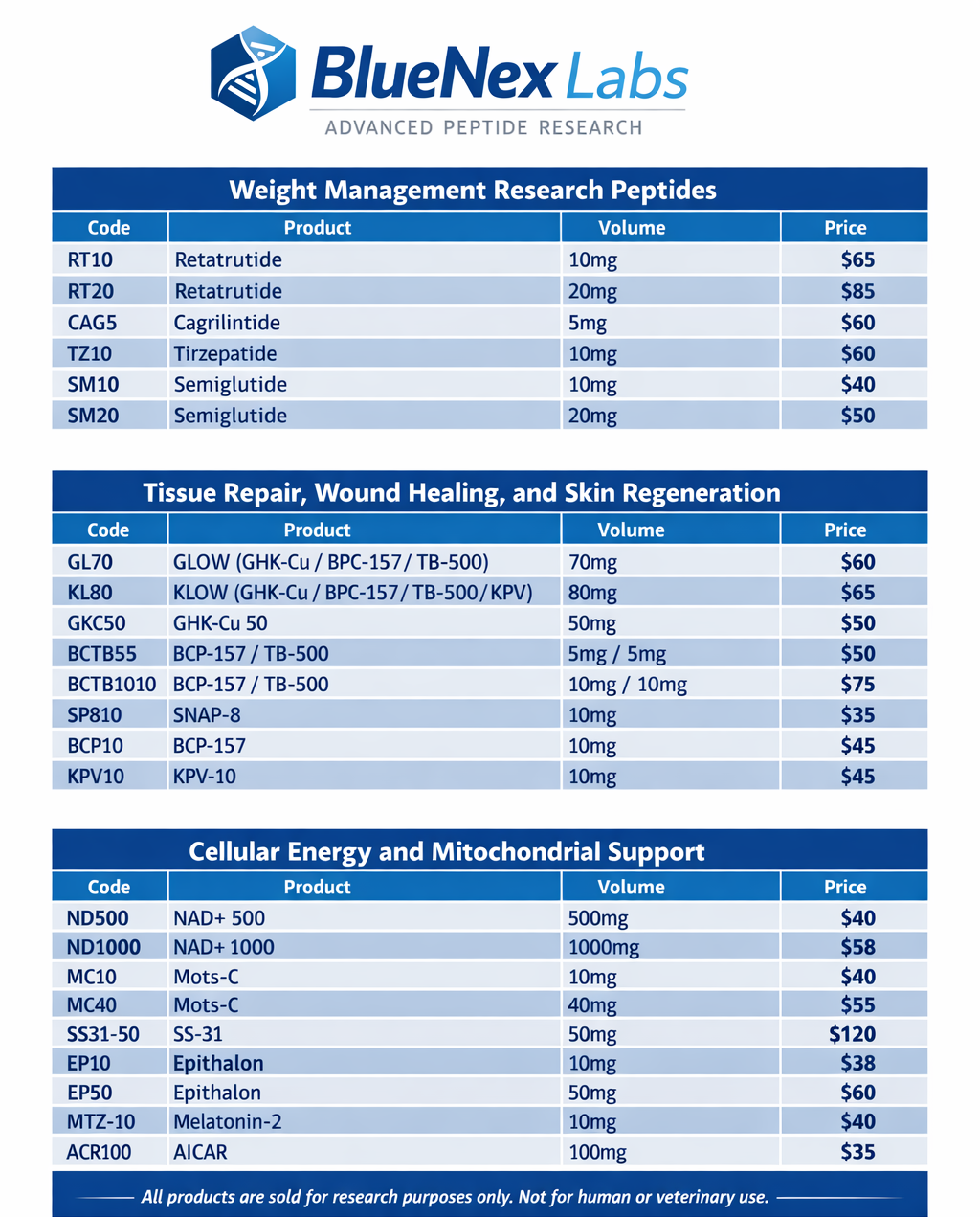
Research peptides that modulate metabolic pathways, appetite signaling, and energy balance through incretin, ghrelin, and hormone‑regulated mechanisms which include:
Metabolic and appetite‑signaling peptides have become essential tools in modern biochemical and metabolic research. These peptide classes help scientists investigate how cells regulate energy, respond to nutrients, and communicate through complex hormonal and neuroendocrine pathways. These compounds are positioned strictly as Research Use Only (RUO) materials, supporting Canadian laboratories studying metabolic function, appetite regulation, and cellular energy balance while remaining aligned with Health Canada’s regulatory expectations.
Metabolic Peptides in Cellular Energy Research
Metabolic peptides are widely used in in‑vitro models to explore how cells generate, store, and utilize energy. Researchers often examine their influence on:
Glucose uptake and insulin‑related pathways
Lipid oxidation and nutrient partitioning
Cellular stress responses and metabolic homeostasis
These peptides allow scientists to map the biochemical signals that maintain energy balance, making them valuable in studies related to obesity, insulin resistance, metabolic syndrome, and mitochondrial efficiency. As metabolic disorders continue to rise globally, metabolic peptides remain central to understanding the molecular drivers of energy regulation.
Appetite‑Signaling Peptides and Gut‑Brain Communication
Appetite‑signaling peptides complement metabolic research by helping scientists investigate how the body regulates hunger, satiety, and nutrient intake. These peptides are commonly used to study:
Gut‑brain axis signaling
Hypothalamic appetite pathways
Hormonal regulators of hunger and fullness
Neuroendocrine communication involved in feeding behavior
By examining these pathways, researchers gain insight into how appetite is controlled at the cellular and molecular levels, supporting deeper understanding of energy intake, metabolic adaptation, and nutrient‑driven signaling.
BlueNexLabs’ Role in Metabolic Research
We provide high‑purity, COA‑verified metabolic and appetite‑signaling peptides, transparent sourcing, and strict RUO labeling. This ensures Canadian researchers can explore metabolic pathways and appetite‑signaling mechanisms while maintaining full compliance with Health Canada’s regulatory framework.
Research peptides involved in tissue repair, wound healing, and skin regeneration pathways, supporting studies on cellular recovery, angiogenesis, and structural restoration which include:
BCP-157 / TB-500 - 5mg/5mg or 10mg/10mg
Tissue repair, wound healing, and skin regeneration peptides form one of the most active and rapidly expanding categories in modern biochemical research. These peptides are widely used in in‑vitro studies exploring how cells respond to injury, remodel damaged structures, and initiate regenerative processes.
Role of Tissue Repair Peptides in Regenerative Research
Tissue repair peptides are frequently used to study how cells respond to structural damage and initiate repair. Researchers often examine their influence on:
Fibroblast activity and collagen synthesis
Extracellular matrix remodeling
Cell migration and cytoskeletal organization
Inflammatory modulation during tissue recovery
These peptides help scientists map the biochemical signals that coordinate tissue restoration, making them valuable in research related to injury models, regenerative biology, and cellular repair mechanisms.
Wound‑Healing Peptides and Cellular Recovery
Wound‑healing peptides are commonly used in laboratory models focused on the early phases of cellular recovery. Research often explores their impact on:
Angiogenesis and microvascular formation
Keratinocyte behavior and re‑epithelialization
Inflammatory cytokine signaling
Cell‑to‑cell communication during wound closure
These pathways are central to understanding how tissues respond to acute damage and how cells coordinate the healing process.
Skin Regeneration Peptides and Dermal Research
Skin regeneration peptides support research into dermal repair, structural integrity, and cellular turnover. Scientists use them to investigate:
Collagen and elastin pathways
Dermal matrix stability
Oxidative stress responses in skin cells
Cellular rejuvenation and structural remodeling
This research helps clarify how skin maintains resilience, repairs damage, and adapts to environmental stressors.
BlueNexLabs’ Commitment to Regenerative Peptide Research
We provide high‑purity, COA‑verified tissue repair, wound‑healing, and skin regeneration peptides, transparent sourcing, and strict RUO labeling. This ensures researchers can explore regenerative pathways while maintaining full compliance with Health Canada’s regulatory framework.
Research peptides that support cellular energy production and mitochondrial function, enhancing studies on ATP generation, oxidative balance, and metabolic efficiency which include:
Cellular energy and mitochondrial support peptides are central to modern metabolic and bioenergetic research. These peptides help scientists investigate how cells generate ATP, regulate oxidative stress, maintain mitochondrial integrity, and adapt to changing energy demands. At BlueNexLabs, these compounds are offered strictly as Research Use Only (RUO) materials, supporting Canadian laboratories studying mitochondrial pathways, cellular energy metabolism, and bioenergetic signaling while remaining aligned with Health Canada’s regulatory expectations.
How Cellular Energy Peptides Support Bioenergetic Research
Cellular energy peptides are widely used in in‑vitro models to explore how cells produce and manage energy. Research often focuses on their influence on:
ATP synthesis and mitochondrial respiration
Glucose and fatty‑acid utilization pathways
AMPK‑related energy‑sensing mechanisms
Cellular resilience under metabolic stress
These peptides help researchers map the biochemical systems that maintain energy balance, making them valuable in studies related to metabolic efficiency, mitochondrial dysfunction, and cellular adaptation.
Mitochondrial Support Peptides in Regenerative and Metabolic Studies
Mitochondrial support peptides are frequently used to examine how cells maintain mitochondrial health and respond to oxidative stress. Scientists often investigate their role in:
Mitochondrial biogenesis and structural stability
Reactive oxygen species (ROS) modulation
Electron transport chain efficiency
Cell survival under energy‑limited conditions
These pathways are essential for understanding how mitochondria influence aging, metabolic disorders, and cellular repair processes.
Why These Peptides Matter in Modern Research
Cellular energy and mitochondrial support peptides allow researchers to explore how cells adapt to nutrient availability, environmental stressors, and fluctuating energy demands. Their relevance continues to grow as mitochondrial health becomes a major focus in metabolic, neurobiological, and regenerative research.
BlueNexLabs’ Commitment to Mitochondrial Research
We provide high‑purity, COA‑verified cellular energy and mitochondrial support peptides, transparent sourcing, and strict RUO labeling. This ensures researchers can investigate mitochondrial pathways and cellular energy systems while maintaining full compliance with Health Canada’s regulatory framework.
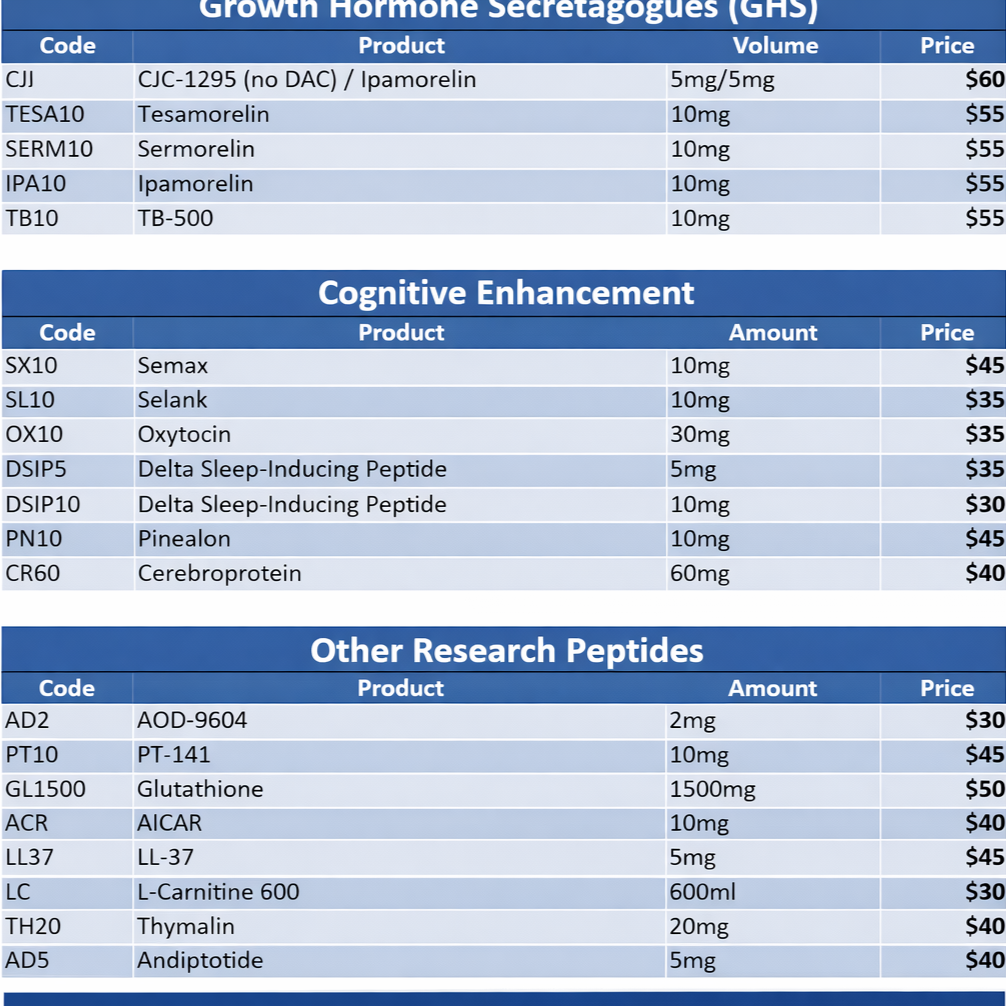
Research peptides that stimulate endogenous growth hormone release through GHRH and ghrelin‑receptor pathways, supporting studies on pituitary signaling, cellular growth, and metabolic regulation which include:
Growth hormone secretagogues (GHS) form one of the most studied categories in peptide‑based metabolic and endocrine research. These peptides are used in in‑vitro models to explore how the body’s natural growth hormone (GH) signaling pathways operate, particularly those involving the hypothalamus, pituitary gland, and metabolic regulation systems. OurGHS peptides are offered strictly as Research Use Only (RUO) materials, supporting Canadian laboratories investigating GH‑related pathways while remaining aligned with Health Canada’s regulatory expectations.
How Growth Hormone Secretagogues Function in Research
GHS peptides are commonly used to study how GH release is triggered and regulated at the cellular level. Research often focuses on their influence on:
Pituitary GH secretion pathways
Ghrelin receptor (GHS‑R1a) activation
Hypothalamic signaling mechanisms
Metabolic and endocrine communication networks
These peptides help researchers map the biochemical processes that regulate growth hormone dynamics, making them valuable in studies related to cellular growth, metabolic balance, and endocrine signaling.
Research Applications of GH‑Releasing Peptides
Growth hormone secretagogues are frequently used in laboratory models exploring:
Cellular regeneration and repair pathways
Energy metabolism and nutrient signaling
Circadian hormone rhythms
Interactions between GH, IGF‑1, and metabolic pathways
These studies help clarify how GH‑related signals influence cellular behavior, metabolic adaptation, and tissue‑level communication.
Why GHS Peptides Matter in Endocrine and Metabolic Research
GHS peptides allow scientists to examine how growth hormone interacts with broader biological systems, including appetite regulation, mitochondrial function, and metabolic homeostasis. Their relevance continues to grow as researchers explore the interconnected roles of GH, ghrelin, and metabolic signaling in cellular health.
BlueNexLabs’ Commitment to GH‑Pathway Research
We provide high‑purity, COA‑verified growth hormone secretagogues, transparent sourcing, and strict RUO labeling. This ensures researchers can investigate GH‑related pathways while maintaining full compliance with Health Canada’s regulatory framework.
Research peptides that modulate neurochemical pathways involved in cognition, memory, focus, and neuroplasticity, supporting studies on brain signaling and cognitive performance which include:
Cognitive enhancement peptides represent one of the most rapidly expanding areas in neurobiological and nootropic research. These compounds are widely used in in‑vitro and preclinical models to explore how the brain processes information, adapts to stress, forms memories, and maintains cognitive performance. Our cognitive peptides are offered strictly as Research Use Only (RUO) materials, supporting laboratories studying neurochemical pathways, synaptic signaling, and brain‑cell resilience while remaining aligned with Health Canada’s regulatory expectations.
Cognitive Pathways Studied With Nootropic Peptides
Cognitive enhancement peptides are frequently used to investigate how neurons communicate, adapt, and protect themselves from stress. Research often focuses on their influence on:
Neurotransmitter modulation and synaptic plasticity
Memory formation and learning pathways
Neurotrophic factors involved in brain‑cell growth
Stress‑response signaling and cognitive resilience
These peptides help researchers map the biochemical systems that support attention, memory retention, and cognitive processing, making them valuable in studies related to neuroplasticity, cognitive decline, and brain‑cell communication.
Neuroprotective and Brain‑Signaling Research Applications
Many cognitive peptides are also used in models exploring neuroprotection and cellular defense. Scientists often examine their effects on:
Oxidative stress and mitochondrial stability in neurons
Inflammatory signaling in neural tissue
Blood‑brain barrier interactions
Adaptive responses to cognitive load and environmental stressors
These pathways are central to understanding how the brain maintains long‑term function and resilience.
Why Cognitive Peptides Matter in Modern Neuroscience
Cognitive enhancement peptides allow researchers to explore how the brain regulates focus, memory, and information processing. Their relevance continues to grow as global interest in neurodegeneration, cognitive performance, and brain‑health research increases.
BlueNexLabs’ Commitment to Cognitive Research
We provide high‑purity, COA‑verified cognitive enhancement peptides, transparent sourcing, and strict RUO labeling. This ensures Canadian researchers can investigate neurochemical pathways and cognitive‑signaling mechanisms while maintaining full compliance with Health Canada’s regulatory framework.
Cognitive peptides continue to shape the future of neuroscience, offering powerful tools for studying memory, focus, neuroplasticity, and brain‑cell protection. It might be helpful to explore whether you want this category to emphasize neuroprotection, memory pathways, or synaptic signaling as the next layer of your catalog.

BlueNex Labs Inc. is a cutting-edge distributor in the field of peptide research and development.