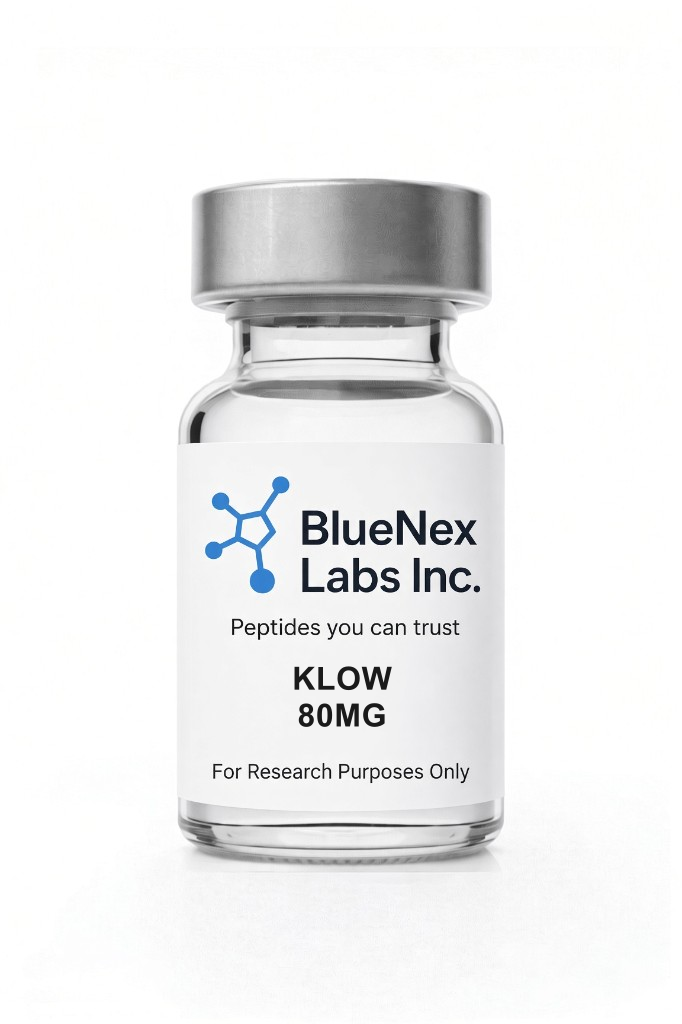
KLOW 80mg Research Peptide Canada
Research use only. Not for human or veterinary use.
KLOW 80mg combines four research peptides in one vial. A single-peptide COA does not document this SKU — open the KLOW lot section when published. Research-use only.
🧬 KLOW™ Peptide Blend
GHK-Cu 50mg • BPC-157 10mg • TB-500 10mg • KPV 10mg
KLOW™ is a research peptide blend that combines four extensively referenced peptide compounds into a single laboratory formulation. By integrating GHK-Cu, BPC-157, TB-500, and KPV, this blend provides researchers with a versatile platform for investigating interconnected biological systems, peptide interactions, extracellular matrix dynamics, cellular architecture, and signaling-network behavior.
Rather than focusing on a single experimental pathway, KLOW enables exploration of how multiple peptide classes may function within broader biological models. This makes it particularly useful for comparative, systems-based, and multi-factor research designs where several cellular processes are evaluated simultaneously.
BlueNexLabs supplies every batch with third-party analytical verification and lot-specific documentation to support reproducibility and laboratory transparency.
🔬 Inside the KLOW Formula
🟦 GHK-Cu (50mg)
GHK-Cu is a naturally occurring copper-binding tripeptide that has attracted scientific interest due to its association with gene-regulation research and cellular communication pathways.
Research involving GHK-Cu frequently explores:
- Gene-expression activity
- Extracellular matrix research
- Protein regulation models
- Cellular communication networks
- Copper-peptide interactions
🟧 BPC-157 (10mg)
BPC-157 is a synthetic pentadecapeptide regularly investigated within peptide research environments.
Published studies have explored:
- Cellular signaling systems
- Experimental peptide interaction models
- Cellular resilience pathways
- Structural cellular environments
- Biological communication networks
🟦 TB-500 (10mg)
TB-500 is a synthetic fragment of thymosin beta-4 frequently examined in studies involving cellular organization and structural dynamics.
Areas of scientific interest include:
- Cytoskeletal organization
- Actin-associated mechanisms
- Cellular architecture
- Cell-movement models
- Structural pathway research
🟪 KPV (10mg)
KPV is a short tripeptide composed of lysine, proline, and valine.
Research literature has referenced KPV in investigations involving:
- Cytokine-associated signaling
- Cellular communication systems
- NF-κB-related research pathways
- Peptide signaling environments
- Multi-factor cellular models
⚙️ Why Researchers Use Multi-Peptide Blends
Traditional peptide studies often focus on a single compound. Multi-peptide formulations such as KLOW allow investigators to explore broader experimental frameworks that may involve several biological systems operating simultaneously.
Potential research advantages include:
- Examination of multiple peptide classes within one model
- Comparative pathway-network studies
- Streamlined experimental design
- Investigation of peptide interaction environments
- Multi-domain cellular modeling
- Systems-based laboratory research
🌐 Research Areas Referenced Throughout Scientific Literature
The individual components contained within KLOW have been referenced in studies examining:
- Extracellular matrix dynamics
- Cellular communication networks
- Cytokine-signaling systems
- Structural protein pathways
- Cellular migration models
- Gene-expression research
- Peptide interaction mechanisms
- Cytoskeletal organization
- Biological signaling networks
- Multi-pathway cellular systems
Because each peptide contributes a distinct area of scientific interest, KLOW can serve as a convenient platform for laboratory projects investigating complex biological relationships.
🧪 Product Specifications
Composition Per Vial
GHK-Cu50mg / BPC-157 10mg / TB-500 10mg KPV10mg
Format
- Lyophilized powder
- Sterile research preparation
- Multi-peptide blend (GHK-Cu, BPC-157, TB-500, and KPV)
KLOW is a documented multi-peptide research blend. Each lot, when published, has its own Certificate of Analysis. A single-peptide report does not document this SKU.
Storage & Handling
- Store lyophilized material at –20 °C, protected from light and moisture
- Reconstituted solutions: 2–8 °C, short-term laboratory use only
- Avoid repeated freeze–thaw cycles; use sterile technique
Documentation
Batch Certificates of Analysis are listed in the certificates library when published. Match vial size and lot notes before assigning a lot to an assay.
Compliance Notice
Research-use only. Not for human or veterinary use. No medical, cosmetic, or performance claims are made or implied.
Molecular characteristics
- form
- Lyophilized powder
- purity
- ≥99% (COA verified)
- use
- Research use only
Documentation (HPLC / UPLC, MS, COA)
Published lots for this SKU are listed at the exact certificate section. Identity is typically confirmed by mass spectrometry; purity by HPLC / UPLC. A report for another peptide or fill size does not document this vial.
Questions about laboratory procurement? Contact BlueNex Labs.