Research · 2026-08-21
What is Melanotan? Receptor research
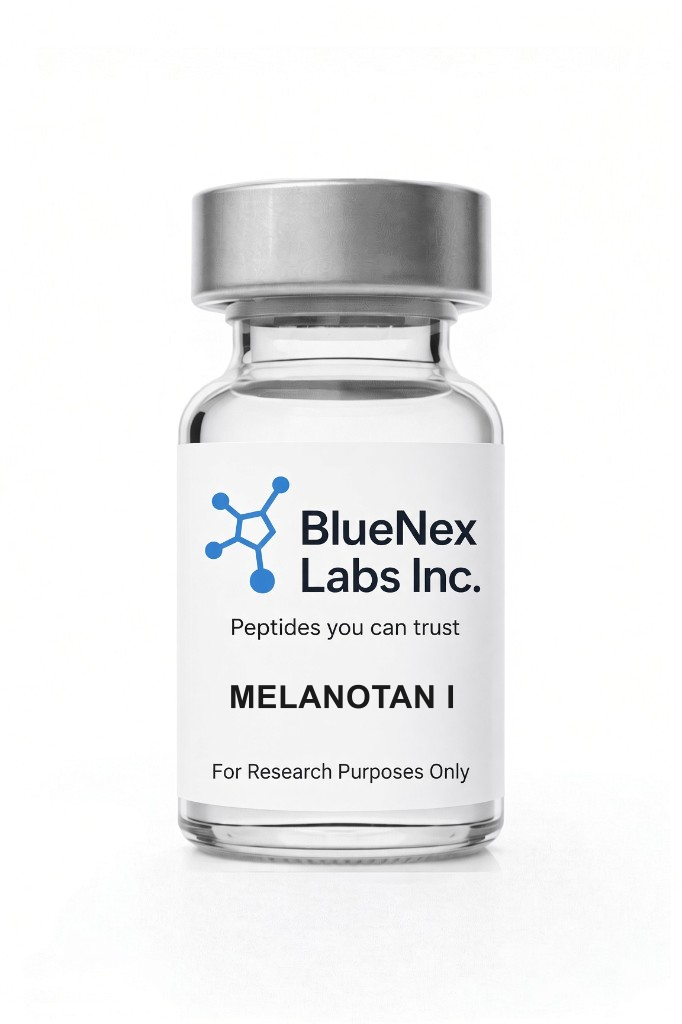
Melanotan I Melanotan I (MT-I) is a synthetic melanocortin peptide widely utilized within scientific research involving melanocortin receptor interactions, peptide pharmacology, and cellular signaling pathways. Structurally derived from alpha-melanocyte-stimulating hormone (α-MSH), Melanotan I has attracted significant interest due to its stability and receptor-binding characteristics, making it a valuable compound for laboratory investigations.
At BlueNexLabs, Melanotan I is offered exclusively for laboratory research purposes and analytical applications. Every batch undergoes rigorous quality control procedures designed to support consistency, purity, and research reliability.
Product Overview
Melanotan I is a synthetic analogue of the naturally occurring α-MSH peptide. Researchers have studied this compound for its interaction with melanocortin receptors, particularly within investigations focused on pigmentation biology, receptor selectivity, peptide stability, and molecular signaling mechanisms. Compared to naturally occurring α-MSH, Melanotan I was developed to provide greater resistance to enzymatic degradation, allowing researchers to examine receptor-mediated activity over extended experimental periods.
Its well-documented structure and extensive presence in scientific literature have made it a frequently referenced compound within peptide research.
Areas of Scientific Interest
Researchers may utilize Melanotan I in studies involving: Melanocortin receptor biology Peptide-receptor interactions Pigmentation pathway research Molecular and cellular signaling investigations Peptide stability and degradation studies Structure-activity relationship (SAR) analysis Experimental endocrinology models Laboratory-based pharmacological research These areas represent research interests only and are not intended as claims regarding efficacy, safety, or therapeutic potential.
Quality and Purity Standards
BlueNexLabs is committed to supplying research materials that meet high laboratory standards.
Quality Control Features
Third-party analytical testing High-purity research material Identity verification procedures Strict batch tracking Controlled manufacturing processes Comprehensive Certificate of Analysis (COA) availability when applicable Each lot is carefully evaluated to support research reproducibility and consistency across experimental applications.
Storage Recommendations
For optimal stability, researchers should: Store refrigerated according to laboratory requirements Protect from excessive heat and direct light Maintain sterile laboratory handling practices Follow all applicable storage and reconstitution protocols Proper storage conditions help preserve peptide integrity during research use. Research Significance Melanotan I remains an important compound within peptide science due to its close relationship to endogenous melanocortin signaling pathways.
Its enhanced stability compared to naturally occurring α-MSH has contributed to its continued relevance in laboratory investigations exploring receptor binding, molecular signaling, and peptide pharmacodynamics. As scientific understanding of melanocortin systems continues to evolve, Melanotan I remains a frequently referenced research compound for studies requiring a well-characterized synthetic melanocortin analogue.
For Research Use Only
Melanotan I is supplied strictly for laboratory research purposes. This product is not a drug, food, cosmetic, or natural health product. It is not intended for human or veterinary use, diagnosis, treatment, cure, or prevention of any disease.
Researchers are responsible for ensuring compliance with all applicable regulations and laboratory safety procedures.
Why Choose BlueNexLabs?
Canadian research peptide supplier Comprehensive quality control standards Batch-specific testing documentation Fast domestic shipping Professional customer support Commitment to research integrity and transparency BlueNexLabs proudly supports the scientific community by providing high-quality research materials for qualified laboratory and research applications.
Resaearch Applications
Melanotan I is frequently incorporated into laboratory investigations examining the behavior and functionality of melanocortin receptor systems.
Melanocortin Receptor Research
Researchers employ Melanotan I to investigate receptor binding characteristics and signaling activity associated with melanocortin receptors. These studies contribute to a broader understanding of receptor pharmacology and cellular communication networks.
Peptide Stability Studies
The enhanced stability of Melanotan I compared to endogenous α-MSH makes it useful for examining peptide degradation rates, molecular durability, and long-term receptor engagement under controlled research conditions.
Structure-Activity Relationship Research
Scientists often utilize Melanotan I when exploring how specific peptide modifications influence receptor interactions, binding affinity, and biological signaling pathways.
Cellular Signaling Investigations
Melanotan I has been incorporated into experiments designed to evaluate intracellular signaling mechanisms and receptor-mediated cellular responses.
Comparative Peptide Research
Researchers may also compare Melanotan I with other melanocortin analogues to better understand differences in receptor activation profiles, molecular stability, and signaling characteristics.
Why Researchers Choose Melanotan I
Several characteristics contribute to Melanotan I's continued popularity within laboratory research environments: Enhanced Stability The peptide exhibits greater resistance to enzymatic degradation than naturally occurring α-MSH, allowing researchers to study receptor interactions over extended observation periods.
Well-Characterized Compound
Melanotan I has been widely discussed within peptide and receptor research literature, providing scientists with a substantial body of reference material and experimental data. Consistent Receptor Activity Its receptor-binding characteristics make it a useful investigative tool for studies focusing on melanocortin signaling and molecular pharmacology.
Established Research History
Few melanocortin analogues have been studied as extensively as Melanotan I, contributing to its recognition within academic and research communities.
BlueNexLabs Quality Standards At
BlueNexLabs, quality assurance is an essential component of our research peptide supply process. Each batch of Melanotan I undergoes rigorous analytical evaluation to help ensure that researchers receive material suitable for demanding laboratory applications.
Our Quality Control Process Includes:
Third-party purity analysis High-performance liquid chromatography (HPLC) testing Identity verification procedures Batch-specific quality tracking Controlled manufacturing practices Comprehensive product documentation Certificate of Analysis (COA) availability when applicable This commitment to quality helps support reproducible laboratory results and research confidence.
Storage and Handling
To maintain peptide integrity, researchers should follow appropriate storage procedures: Recommended Storage Conditions Store refrigerated according to laboratory requirements Protect from prolonged exposure to heat Keep away from direct sunlight Minimize repeated freeze-thaw cycles Utilize proper laboratory-grade handling practices Follow institutional storage protocols Proper handling and storage contribute significantly to preserving peptide stability and analytical performance.
Product Benefits for Research Laboratories
Researchers often select BlueNexLabs Melanotan I because of:
High-purity research material
Reliable batch-to-batch consistency
Comprehensive quality assurance procedures
Transparent testing standards
Fast Canadian shipping
Responsive customer support
Detailed product documentation
Commitment to research-focused supply
Frequently Studied Characteristics
When reviewing scientific literature involving Melanotan I, researchers commonly examine: Melanocortin receptor binding Peptide stability characteristics Molecular signaling pathways Ligand-receptor interactions Cellular response mechanisms Peptide pharmacology models Structure-function relationships Receptor selectivity studies These research areas continue to contribute to the broader understanding of melanocortin biology and peptide science.
Why Buy Melanotan I from BlueNexLabs?
BlueNexLabs is committed to providing Canadian researchers with documented research peptides backed by rigorous testing, transparent quality standards, and dependable service. Our focus on purity verification, analytical testing, and customer support allows research professionals to source materials with confidence. Whether your laboratory is conducting peptide characterization studies, receptor signaling investigations, or melanocortin-focused research, BlueNexLabs strives to provide the quality and consistency required for professional research applications.
Research Use Only Disclaimer
Melanotan I is intended strictly for laboratory research purposes. This product is not intended for human consumption, veterinary use, therapeutic applications, diagnosis, treatment, cure, or prevention of any disease. BlueNexLabs supplies this product exclusively for scientific, educational, and analytical research conducted by qualified professionals.
What Does “Melanotan” Mean?
“Melanotan” does not describe one single chemical substance. It is commonly used to refer to two different synthetic melanocortin analogues: Melanotan I, abbreviated MT-I Melanotan II, abbreviated MT-II Both arose from research into modified α-MSH analogues. Researchers sought peptide structures that would be more resistant to rapid enzymatic degradation and more useful as reproducible laboratory tools than the endogenous peptide.
Native peptide hormones can be challenging experimental reagents because they may: Degrade quickly in biological matrices Undergo oxidation Be cleaved by proteolytic enzymes Display short-lived receptor engagement Produce variable results if storage and handling are not standardized Chemical modifications can improve experimental stability, but they may also change receptor affinity, receptor selectivity and downstream signaling.
For that reason, a modified peptide cannot automatically be assumed to behave identically to the endogenous molecule from which it was derived.
Understanding Alpha-MSH
Alpha-MSH is produced through processing of the larger proopiomelanocortin, or POMC, precursor. Melanocortin-derived signaling molecules participate in a complex network of receptor-mediated biological processes. In skin biology, α-MSH can be produced locally and act as a paracrine signaling factor.
Human melanocytes express MC1R, and activation of this receptor contributes to the regulation of eumelanin synthesis and melanocyte responses to oxidative and ultraviolet-related stress. MC1R variants can also affect receptor function and pigmentation phenotype, illustrating how receptor genetics may influence experimental outcomes. [pmc.ncbi.nlm.nih.gov] For laboratory researchers, α-MSH and its synthetic analogues can therefore serve as tools for studying:
Ligand–receptor recognition
G-protein-coupled receptor activation
Intracellular second-messenger signaling
Melanocyte biology
Pigment-related molecular pathways
Peptide stability
Receptor selectivity
Structure–activity relationships
Cellular responses to environmental stress
These scientific applications do not establish that research-grade
Melanotan materials are approved or suitable for use in people.
What Is Melanotan I?
Melanotan I Structure and Classification
Melanotan I is generally described as a linear synthetic analogue of α-MSH. It retains the 13-residue framework associated with α-MSH while incorporating strategic substitutions intended to improve molecular stability. Melanotan I is also associated with the scientific name afamelanotide, although commercial research material and an authorized finished pharmaceutical product should not be treated as equivalent.
A laboratory peptide vial does not become an approved medication merely because its listed active sequence resembles an ingredient used in a regulated pharmaceutical product. The linear architecture of Melanotan I gives it greater structural similarity to α-MSH than the shorter cyclic configuration of Melanotan II. Nevertheless, the amino-acid substitutions within MT-I materially affect its biochemical properties.
Important structural features of Melanotan I include:
A linear peptide backbone
Thirteen amino-acid residues
Structural similarity to endogenous α-MSH
Norleucine substitution at position 4
D-phenylalanine substitution at position 7
Increased resistance to certain degradation pathways
Strong scientific association with
MC1R-centered research
The norleucine substitution helps avoid the oxidation susceptibility associated with methionine, while the use of a D-amino acid can alter susceptibility to enzymatic cleavage. Together, these changes make MT-I a useful model for studying how targeted modifications influence peptide stability and receptor behavior.
Melanotan I and MC1R Research
Melanotan I is most strongly associated with investigations centered on the melanocortin 1 receptor. MC1R is expressed by melanocytes and is a central receptor in pigment-related signaling. MC1R is a G-protein-coupled receptor.
Activation can stimulate intracellular signaling involving cyclic adenosine monophosphate, better known as cAMP. Researchers may examine how this signaling cascade affects downstream transcriptional processes, pigment-related enzymes and cellular stress responses. Research into the broader MC1R pathway has identified roles in: Eumelanin synthesis Melanocyte homeostasis Oxidative-stress responses DNA-damage responses Cellular adaptation to solar radiation Genotype-dependent pigmentation biology The exact result obtained in an MT-I experiment can depend on receptor expression, cell type, assay design, peptide concentration, exposure period and the quality of the reference material.
The established importance of MC1R in human melanocyte biology does not mean that every proposed use of an MC1R-active compound is clinically validated.
Common Laboratory Research Areas for Melanotan I
Melanotan I may be investigated in appropriately designed non-clinical research involving: 1. Receptor-binding assays Researchers can examine how MT-I interacts with melanocortin receptor preparations or receptor-expressing cellular systems. 2. Peptide stability studies The stability of MT-I may be compared with native α-MSH under controlled analytical conditions, including exposure to selected enzymes, temperatures, buffers or biological matrices. 3.
Structure–activity relationship research By comparing α-MSH and modified analogues, researchers can investigate how individual amino-acid substitutions influence receptor affinity and peptide durability. 4. Cell-signaling experiments Receptor-expressing cells may be used to examine changes in cAMP or other predefined signaling endpoints following exposure under an approved laboratory protocol. 5. Melanocyte biology MT-I may be included in mechanistic studies examining pigment-cell signaling, gene expression, cellular stress responses or related molecular pathways. 6.
Analytical-method development Laboratories may use characterized peptide material to develop or validate chromatography and mass-spectrometry methods.
What Is Melanotan II?
Melanotan II Structure and Classification Melanotan
II is a shorter, cyclic synthetic melanocortin analogue. Its cyclic structure distinguishes it from the longer linear architecture of Melanotan I. Cyclization constrains the peptide into a more rigid three-dimensional conformation.
In peptide chemistry, conformational constraint can influence: Receptor-binding affinity Receptor-subtype selectivity Enzymatic resistance Molecular stability Biological persistence in an experimental model Reproducibility of receptor engagement Melanotan II is typically characterized as a cyclic heptapeptide with a lactam bridge. The bridge locks part of the molecule into a defined arrangement, reducing some of the conformational freedom associated with linear peptides.
Key structural characteristics include:
A cyclic peptide architecture
Seven amino-acid residues A compact molecular structure A conformationally constrained pharmacophore
Broad melanocortin receptor activity
Experimental relevance beyond
MC1R-only models
The term “stronger” is not a scientifically sufficient way to distinguish MT-II from MT-I. The more important consideration is that MT-II can interact broadly with several melanocortin receptor subtypes, creating a different receptor-pharmacology profile.
Melanotan II and Broad Melanocortin Receptor Research Melanotan
II is frequently described as a less selective or broader melanocortin receptor agonist. It has been studied in relation to multiple melanocortin receptors, commonly including:
MC1R MC3R MC4R MC5R That broader activity can make
MT-II useful as a comparative research tool, but it also complicates interpretation.
A measured cellular response may not be attributable to one receptor unless the experimental model carefully controls receptor expression. Researchers may address this issue through: Receptor-specific cell lines Selective antagonists Knockout or knockdown models Competitive binding assays Receptor-expression profiling Parallel positive and negative controls Concentration-response analysis Orthogonal confirmation methods Without these controls, attributing a response exclusively to MC1R may be inappropriate in a model containing several melanocortin receptor subtypes.
Common Laboratory Research Areas for Melanotan II
Within properly controlled research settings, MT-II may be investigated in: 1. Comparative receptor pharmacology Researchers may compare response profiles across cells expressing different melanocortin receptors. 2. Cyclic-peptide stability studies MT-II provides a useful example of how cyclization can affect structural stability and susceptibility to degradation. 3.
Ligand-binding investigations The compound may be included in competitive or direct binding studies involving melanocortin receptor preparations. 4. Pharmacophore research Researchers can evaluate how a constrained peptide presents the core amino acids responsible for receptor recognition. 5. Second-messenger assays MT-II may be used in laboratory systems designed to measure cAMP or another predefined receptor-linked endpoint. 6.
Comparative analogue studies Experiments may compare MT-II with α-MSH, MT-I or other carefully selected melanocortin ligands. Melanotan I vs.
Melanotan II: Key Differences Structural Comparison
The most obvious distinction is the peptide architecture: Melanotan I is linear Melanotan II is cyclic Melanotan I contains 13 residues Melanotan II contains seven residues MT-I more closely preserves the extended α-MSH framework MT-II compresses the principal receptor-binding region into a constrained structure A cyclic peptide is not simply a smaller version of a linear peptide. Cyclization changes the molecule’s conformational freedom and can alter how the pharmacophore is presented to the receptor-binding pocket.
Receptor-Activity Comparison
Melanotan I is most commonly associated with MC1R-centered scientific research, whereas Melanotan II is known for broader interaction across several melanocortin receptor subtypes. This distinction affects experimental design: MT-I may be appropriate where researchers want a model centered more closely on pigment-related MC1R signaling. MT-II may be appropriate where the objective is to compare activity across multiple melanocortin receptors.
MT-II may require more extensive receptor-specific controls. Neither peptide should be assumed to produce identical results across different cell lines or species. Receptor-expression data should be reviewed before interpreting a response.
A compound’s observed activity also depends on assay-specific factors. Binding affinity, functional potency and maximum signaling response are related measurements, but they are not interchangeable.
Linear Versus Cyclic Peptide Design
Linear peptides typically have greater conformational flexibility. That flexibility may permit several molecular conformations, but it can also expose bonds to enzymatic cleavage. Cyclic peptides are geometrically constrained.
This can: Reduce conformational variability Increase resistance to selected proteases Improve binding in certain receptor systems Broaden or narrow receptor selectivity Change solubility or aggregation behavior Affect analytical retention and ionization Cyclization does not guarantee superior performance. Whether it is beneficial depends entirely on the scientific objective and experimental system. How Melanocortin Receptor Signaling Is Studied Melanocortin receptors belong to the G-protein-coupled receptor family.
In many experimental models, receptor activation is evaluated through changes in cAMP. A simplified research model may involve: A ligand binds to a melanocortin receptor. The receptor undergoes a conformational change.
An associated G protein is activated. Adenylyl cyclase activity changes. Intracellular cAMP levels change.
Downstream signaling proteins are engaged. Transcriptional or functional cellular responses may follow. Researchers should avoid assuming that receptor binding automatically predicts a specific downstream outcome.
Functional selectivity, receptor density, desensitization, internalization and cell-specific signaling components can all influence the result. Useful assay types can include:
Competitive ligand-binding assays cAMP accumulation assays
Reporter-gene assays
Receptor internalization studies
Gene-expression analysis
Protein-expression analysis
Enzyme-activity measurements
Microscopy-based cellular assays
Time-course studies
Concentration-response experiments
Choosing Between MT-I and
MT-II for
Research The appropriate peptide is determined by the research question—not by claims about
one option being universally better. MT-I may be considered when the study focuses on: MC1R-centered signaling Melanocyte receptor biology Linear α-MSH analogue comparisons Pigment-pathway molecular research Stability differences between native and modified linear peptides MC1R-focused assay development MT-II may be considered when the study focuses on: Broad melanocortin receptor activation Cyclic peptide pharmacology Conformationally constrained ligand design Receptor-subtype comparison Cross-receptor signaling Comparative structure–activity relationships Experimental questions to address before selecting a compound Researchers should determine: Which receptors are expressed by the model?
Is receptor selectivity required?
Is the assay measuring binding or functional response?
Which reference ligand will be used?
Are receptor-specific controls available?
Is the peptide identity independently confirmed?
Is purity adequate for the intended analytical method?
Does the model require a linear or cyclic comparator?
How will peptide degradation be monitored?
What statistical approach will distinguish specific from nonspecific effects?
Why Peptide Purity Is Important
A peptide sample is rarely evaluated solely by the mass of material in a vial. Researchers must also consider chemical identity, chromatographic purity, peptide content, counterions, residual solvents, water content and possible degradation products. A sample described as “high purity” could still contain:
Deletion sequences
Truncated peptides
Oxidized species
Deamidated material
Residual synthesis reagents
Counterions Moisture Residual solvents
Particulate contamination
Microbial or endotoxin contamination
The relevance of each parameter depends on the intended experiment. For example, chromatographic purity alone does not establish sterility, biological activity or suitability for administration.
High-Performance Liquid
Chromatography High-performance liquid chromatography, or HPLC, is commonly used to separate the primary peptide peak from detectable impurities. An HPLC report may provide: Retention time Main-peak area Relative peak-area percentage Chromatographic conditions Detection wavelength Column details Solvent system Batch or sample identification HPLC purity is generally based on relative signal area under specified test conditions.
It should not automatically be interpreted as the exact percentage of active peptide by total vial weight. For meaningful interpretation, an HPLC document should be traceable to the same lot as the supplied material. Mass Spectrometry Mass spectrometry supports identity verification by measuring mass-to-charge signals associated with the analyte.
A mass-spectrometry report may help determine whether the detected compound is consistent with the expected molecular mass. However, a matching mass signal alone does not establish: Overall chromatographic purity Exact peptide content Sterility Endotoxin status Biological activity Absence of every possible contaminant HPLC and mass spectrometry are therefore complementary. HPLC primarily supports separation and relative purity assessment, while mass spectrometry supports molecular identity.
Certificate of Analysis
A batch-specific Certificate of Analysis should clearly identify the tested lot and the analytical results associated with it. A useful COA may include:
Product name
Batch or lot number
Testing date
Expected molecular information
Observed analytical result
HPLC purity
Mass-spectrometry findings
Appearance Storage statement
Laboratory identification
Approval or review information
Researchers should be cautious with generic reports that cannot be connected to the
lot received. Documentation should support traceability rather than serve as a purely promotional image.
Storage and Laboratory Handling Considerations
Peptide stability can be influenced by temperature, light, oxygen, moisture, pH, repeated temperature changes and the composition of the experimental solution. General laboratory considerations include:
Following the batch-specific storage documentation
Protecting materials from unnecessary light exposure
Avoiding uncontrolled heat and humidity
Maintaining accurate inventory records
Limiting repeated temperature cycling
Using calibrated laboratory equipment
Recording preparation dates and experimental conditions
Preventing cross-contamination
Disposing of materials according to institutional procedures
A laboratory should develop handling conditions from validated stability information and the requirements of its protocol. Generic online instructions should not replace institutionally approved procedures. BlueNexLabs does not provide human dosing, injection, cosmetic-use or self-administration guidance.
Canadian Regulatory and Safety Context
Canadian businesses and researchers should clearly distinguish laboratory research material from an authorized therapeutic product. Health Canada issued a public advisory updated on April 9, 2026, warning consumers about unauthorized injectable peptide drugs sold online. The advisory specifically listed Melanotan I and Melanotan II among examples of unauthorized injectable peptide drugs and stated that unauthorized products have not been assessed for safety, efficacy and quality.
Health Canada advised consumers not to buy or use such unauthorized injectable products. The advisory also noted that unauthorized online products may: Contain too much or too little of a listed ingredient Contain none of the declared ingredient Include undeclared or unknown ingredients Contain microbial, particulate, solvent or heavy-metal contamination Be manufactured or stored improperly Be incorrectly labelled Create risks of infection or allergic reaction [recalls-ra....canada.ca] This regulatory context makes careful website wording essential.
A “research use only” statement should be supported by the overall presentation of the product and should not appear beside contradictory consumer-use claims. BlueNexLabs product information should therefore avoid: Human-use instructions Injection instructions Dosing schedules Cosmetic promises Therapeutic claims Before-and-after imagery implying personal use Claims that a research material is safe for people Suggestions that a COA makes a product medically approved Language presenting an unapproved compound as a substitute for medical care Research Material Is Not the Same as an Approved Drug One of the most important distinctions in online peptide content is the difference between: A chemical compound used as a laboratory material A regulated pharmaceutical product containing a related active substance An approved drug is evaluated as a complete finished product.
That evaluation can involve:
A defined formulation
Controlled manufacturing
Validated dose consistency
Stability testing
Sterility assurance where applicable
Packaging controls
Clinical safety evidence
Clinical efficacy evidence
Contraindications and warnings
Pharmacovigilance Regulatory oversight
A laboratory peptide accompanied by HPLC and mass-spectrometry results has not automatically undergone this entire process. Analytical confirmation is valuable for research quality, but it does not transform the material into an authorized drug.
Common Misconceptions About Melanotan I and Melanotan II “MT-I and
MT-II are the same compound” They are related α-MSH analogues, but they differ in sequence length, structure and receptor pharmacology. “MT-II is just a stronger form of MT-I” This is an oversimplification. MT-II has a compact cyclic structure and broader receptor activity.
The difference is pharmacological, not merely a ranking of strength. “A high HPLC percentage proves the product is safe” HPLC can support relative purity under specified analytical conditions. It does not by itself establish safety, sterility, endotoxin status or suitability for human use.
“A research-use label proves regulatory compliance” A disclaimer alone is insufficient if the remainder of a webpage promotes personal use or provides consumer administration instructions. “Afamelanotide and every MT-I vial are interchangeable” A regulated finished pharmaceutical product and a research chemical are not interchangeable, even where they are described using related compound names. “Receptor binding guarantees a predictable biological result” Experimental outcomes also depend on receptor density, cell type, signaling bias, exposure duration, ligand stability and assay methodology.
Designing Reproducible Melanotan Experiments Reproducibility requires more than ordering the same named peptide. Researchers should document: Supplier Product designation Lot number COA reference Purity result Identity result Storage history Preparation method Buffer composition Experimental concentration Exposure duration Cell passage number Receptor-expression profile Positive controls Negative controls Number of replicates Statistical analysis plan When comparing MT-I and MT-II, equimolar experimental design may be more informative than comparing only equal masses because the peptides have different molecular weights.
Researchers should also distinguish: Technical replicates from biological replicates Binding affinity from functional potency Maximum response from potency Statistical significance from biological relevance Receptor activation from downstream phenotype In-vitro observations from clinical conclusions Why Experimental Controls Matter Broad melanocortin agonists can produce responses through more than one receptor. Appropriate controls help determine whether the observed result reflects the intended mechanism.
Potential controls include:
Vehicle-only controls
Untreated controls
Native α-MSH comparators
Known receptor-selective reference ligands
Receptor-negative cell lines
Receptor-transfected cell lines
Competitive antagonists
Knockdown or knockout models
Time-matched controls
Degradation controls
Independent analytical confirmation
Researchers should predefine primary endpoints and avoid selecting only favorable results after data
collection. Frequently Asked Questions Are Melanotan I and Melanotan II identical? No.
MT-I is a longer linear α-MSH analogue, while MT-II is a shorter cyclic peptide. Their structural differences contribute to different receptor profiles and research applications.
Which peptide is more selective?
MT-I is generally associated more closely with MC1R-centered research. MT-II is known for broader activity across several melanocortin receptors.
Why is MT-II cyclic?
Cyclization constrains the peptide’s three-dimensional conformation. This can influence receptor affinity, enzymatic stability and receptor-subtype activity.
Are research-grade Melanotans approved for personal use?
No. BlueNexLabs supplies these materials strictly for laboratory research. Health Canada has warned consumers against unauthorized injectable peptide products, including products identified as Melanotan I and II. [recalls-ra....canada.ca] Does HPLC verify peptide identity?
HPLC is primarily used for chromatographic separation and relative purity assessment. Molecular identity is more directly supported by methods such as mass spectrometry.
Does a COA prove medical safety?
No. A COA can document selected laboratory tests, but it does not establish clinical safety, therapeutic efficacy or regulatory authorization.
Can MT-I and MT-II be substituted for one another experimentally?
Not automatically. Their different structures and receptor profiles can produce different responses. Any substitution should be scientifically justified and validated.
Why should the lot number match the COA?
Matching identifiers help demonstrate that the analytical report corresponds to the supplied batch rather than a generic or unrelated sample.
What does “for research use only” mean?
It means the material is intended for legitimate laboratory, analytical or scientific work and is not offered for consumption, injection, cosmetic application, self-experimentation, diagnosis or treatment.
BlueNexLabs and Research Quality
BlueNexLabs serves the Canadian research market by providing laboratory materials with an emphasis on transparent product identification, batch documentation and compliance-conscious communication. Researchers evaluating a peptide supplier should look for: Clear compound identification Batch-specific documentation Traceable lot numbers Accessible analytical results Transparent research-use restrictions Professional packaging and labeling Appropriate storage information Responsive documentation support No unsupported medical claims No personal-use instructions BlueNexLabs recognizes that reliable research begins with clear documentation and scientifically accurate product information.
Conclusion Melanotan I and Melanotan
II belong to the same broad family of synthetic melanocortin peptides, but they are not interchangeable. Melanotan I is a linear α-MSH analogue most often associated with MC1R-centered investigations. Melanotan II is a shorter cyclic analogue with broader activity across several melanocortin receptor subtypes.
Their contrasting architectures make them useful for comparative peptide chemistry, receptor pharmacology, cell signaling and structure–activity relationship research. For researchers, the most important considerations are not consumer-oriented claims but: Correct compound identity Batch traceability Appropriate analytical testing Receptor-aware experimental design Suitable positive and negative controls Accurate interpretation of HPLC and mass-spectrometry data Clear separation between laboratory research and human use Compliance with institutional and Canadian requirements Health Canada’s April 9, 2026 advisory specifically identified Melanotan I and Melanotan II among unauthorized injectable peptide products that consumers should not buy or use.
BlueNexLabs accordingly presents these compounds solely as controlled laboratory research materials—not as drugs, cosmetics or products for personal use. [recalls-ra....canada.ca] BlueNexLabs Research-Use Disclaimer Melanotan I and Melanotan II are sold strictly for laboratory research, analytical testing and scientific investigation. They are not intended for human or veterinary consumption, injection, ingestion, cosmetic use, compounding, diagnosis, treatment, cure, mitigation or prevention of any disease or condition.
Product information provided by BlueNexLabs is educational and is not medical advice. Purchasers are responsible for complying with applicable laws, institutional requirements and laboratory safety procedures.
Research-use only. BlueNex Labs does not provide medical or veterinary advice. Confirm your institution’s policies before purchase.