
Research · 2026-07-14
By Alice Kay · Last reviewed 7 Oct 2026
Peptides in muscle-biology lab models
Research-use notice: This article summarizes published scientific literature for educational purposes. It is not medical advice and does not provide dosing, administration or human-use information. Findings described in the literature do not apply to any BlueNex Labs product, which is supplied only for in-vitro laboratory research and not for human or animal use.
Direct answer
How papers group secretagogue, tissue-signalling, and mitochondrial ligands in muscle-biology models. Research-use laboratory notes — not a fitness protocol.
Scope
Metabolic & energy-signaling models. Incretin, mitochondrial, and secretagogue literature. These notes summarize published models — they are not catalog pages.
This note does not claim that Alice Kay authored any cited paper.
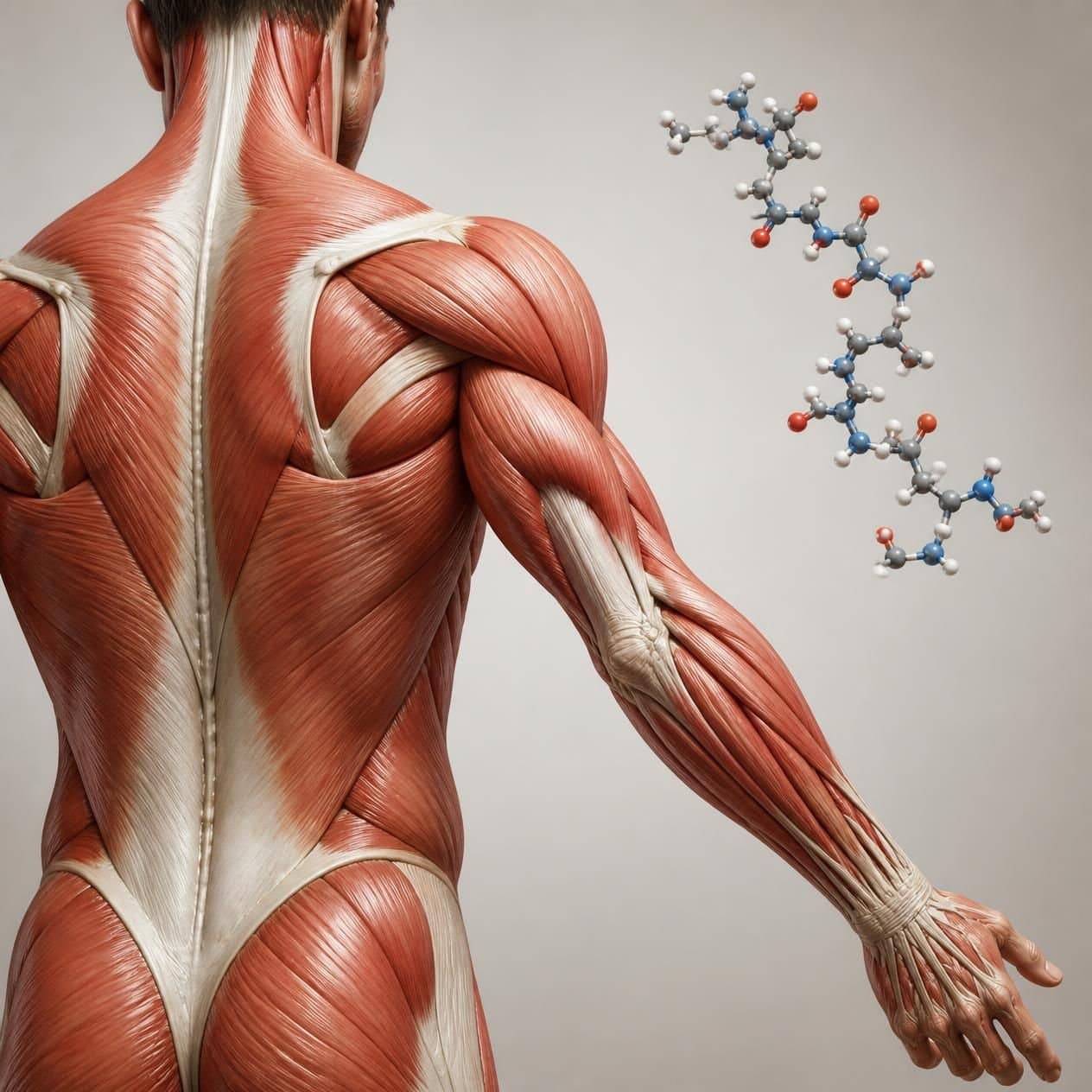
The leftover search phrase “muscle growth peptides” mixes three different literatures: exercise-physiology papers on muscle protein turnover, authorized medicines studied in defined clinical programs, and laboratory ligands sold as research-use-only solids. This note keeps those categories apart. BlueNex Labs catalogues research-use-only materials. It does not sell a training program, a dietary supplement, or instructions for personal use.
Exercise-physiology literature is a different field
Muscle protein synthesis versus breakdown is a standard framework in training-science papers. Those papers manipulate load, nutrition, and rest in human or animal exercise models. A lyophilized research peptide is not a substitute for that literature.
How peptides appear in adjacent laboratory work
Growth-hormone secretagogues such as CJC-1295 / ipamorelin, sermorelin, and tesamorelin are studied at GHRH or ghrelin receptors. Tissue-signalling peptides such as BPC-157 and TB-500 appear in cell-migration and cytoskeletal models. Mitochondrial reagents such as MOTS-c, SS-31 10 mg, SS-31 50 mg, and AICAR are used in energy-metabolism assays. Shop category names are research taxonomy, not intended use.
Anti-doping codes (including WADA lists) and prescription-drug law can still apply to human use even when a vial is labelled research use only. This article does not advise athletes and does not describe administration.
Evaluating a laboratory lot
Use batch Certificates of Analysis in the library, match identity and purity to the vial, and stay inside the institution’s RUO purchasing policy. See the Terms and FAQ. Open the catalogue only when the purchase is for laboratory work.
FAQ
Are these dietary supplements? No. In this catalogue they are research compounds.
Does this page describe personal use? No. It describes research categories only.
What does research use only mean? Laboratory and in-vitro work, not human or veterinary use.
References
This note does not add a separate citation list. Named papers, when the body links them, stay in the text above.
Research use only. BlueNex Labs does not provide medical or veterinary advice. Confirm your institution’s policies before purchase. Lot-file rules for this note are on the documentation standards page. By Alice Kay.